
Russia's accusations against Ukraine for disrupting prisoner exchanges: ISW identifies multiple goals of the statement
It appears that the Kremlin uses the prisoner exchange policy as another rhetorical tactic to undermine decision-making in Ukraine.
 Follow us on Google
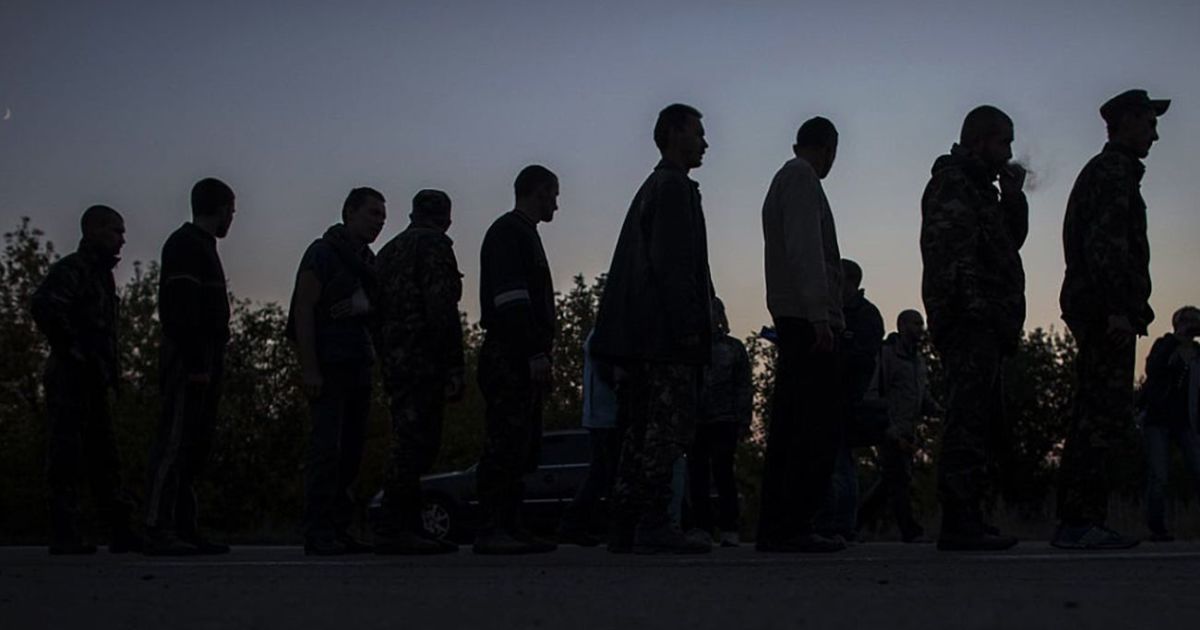
Prisoners / Photo: Defence Intelligence of the Ministry of Defence of Ukraine
Russia has accused Ukraine of halting the exchange of prisoners of war (POWs) in recent months amidst reports of widespread mistreatment of Ukrainian POWs by Russian forces. The statement from Russia serves multiple purposes.
This is detailed in a report by the Institute for the Study of War (ISW).
Russian Commissioner for Human Rights, Tatyana Moskalkova, accused Ukraine of making "unfounded demands" that led to a pause in POW exchanges over the past few months. She claimed that Russia had done everything possible to maintain dialogue with the Ukrainian government and the International Committee of the Red Cross regarding POW issues.
However, Petro Yatsenko, a representative of the Coordination Headquarters for the Treatment of POWs, noted in November 2023 that it was Russia who had unilaterally suspended the exchanges during the summer of that year for unknown reasons.
The last exchange of POWs between Russia and Ukraine took place on February 8, 2024, facilitated by the United Arab Emirates.
Radio Free Europe/Radio Liberty recently reported that Ukraine had to open a third camp for Russian POWs, partly due to Russia's "de facto blockade of exchanges" and partly due to the increasing number of Russian deserters who had become POWs. This aligns with several recent statements from Ukraine indicating that Russian officials were obstructing the continuation of exchanges.
Since the last POW exchange, Russia has committed numerous apparent abuses against Ukrainian captives, including extrajudicial executions and using POWs as human shields on the battlefield, both of which are violations of the Geneva Convention. There are also allegations of managing a "black market" for selling POWs to Russian paramilitary groups.
Russia also employs a battalion composed primarily of Ukrainian POWs, which is another flagrant violation of the Geneva Convention on POWs.
"Moskalkova's accusations that Ukraine is responsible for halting the POW exchanges may be an attempt to rhetorically shift the blame onto Ukraine and obscure the well-documented list of Russian abuses against Ukrainian POWs. It could potentially stir discontent within Ukrainian society or hinder Western support for Ukraine," the analysts concluded.
According to the ISW, it appears that the Kremlin uses the prisoner exchange policy as another rhetorical tactic to undermine decision-making in Ukraine.
Read also:
Yevlash explains why not all Russian cruise missiles were shot down at night
French instructors in Ukraine: an expert explained which assistance would be most effective