
Russia Uses Purchased Microchips for Washing Machines and Breast Pumps to Create Drones: Sanctions Are Powerless
The EU leaders hope to influence Russia's drone production through sanctions adopted at the end of the year in the 9th package.
 Follow us on Google
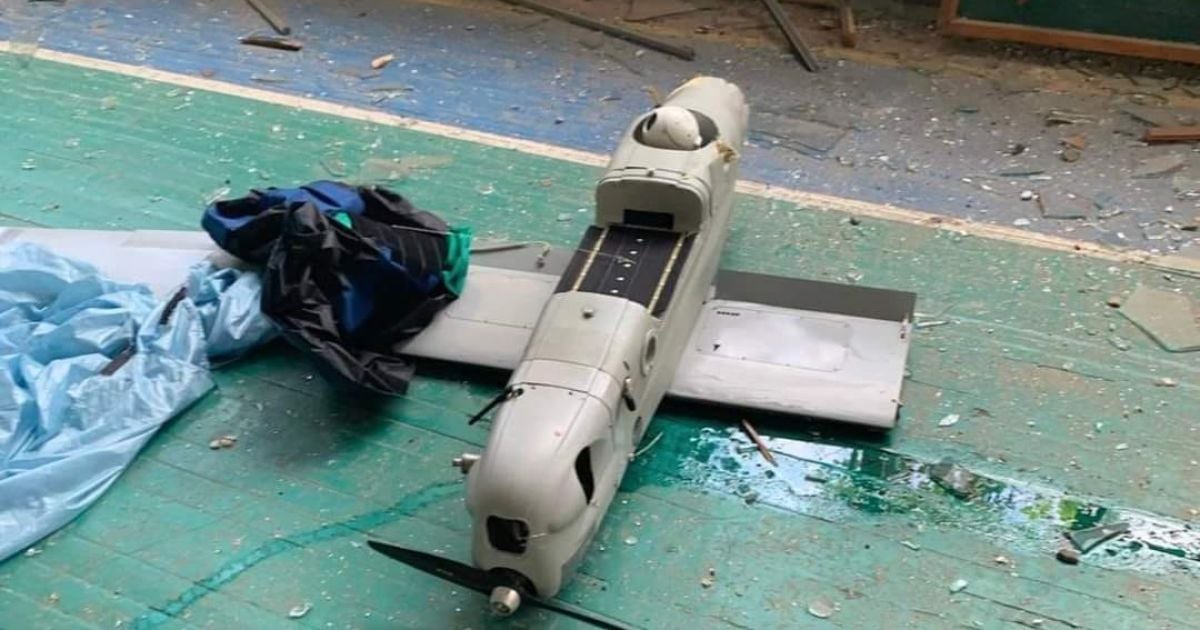
The fleet of drones that bomb Ukrainian cities is replenished by Russia through a flexible supply chain that circumvents sanctions, according to an investigation conducted jointly by Reuters correspondents, opposition Russian journalists and British military experts, TSN reports.
The investigators are convinced: Moscow still receives Western components for drones through shell companies. In 2022 alone, Russia made purchases worth more than $25 million, including from companies in the United States and Israel.
Six months before Russia's full-scale invasion, the Ukrainian military shot down an enemy drone in the Donetsk region. Its wreckage bears the markings and serial number of an Israeli company, despite the fact that the Russian military-industrial complex has been under international sanctions since 2014. Nothing has changed during the full-scale war. For example, recently, the Ukrainian Air Force landed an enemy Orlan-10 UAV, which also consisted of Western components, on the front lines. In particular, it used French thermal imagers.
In mid-December, international investigators exposed the secret chain through which Western parts for drones were supplied to Russia. Their material is based on research by analysts at the Ukrainian Economic Security Council, who were the first to discover the shadowy scheme. "When sanctions were to be imposed in 2014 against the Russian military-industrial complex, they began to use so-called "shell companies". They started setting up companies in Russia and China to purchase commercial microelectronics. Let me emphasize this. That is, they use commercial chips that you can buy anywhere, in any marketplace in the world. That's why they use shell companies, which means mass purchases. We are not talking about one or two chips. There are 500-1000 chips, and they have a lot of schemes. That's why they assemble a drone like Orlan," Anton Mykytiuk, an expert at the Economic Security Council of Ukraine, explains.
The Economic Security Council has concluded that since the beginning of the invasion, the aggressor country has been massively importing microchips for refrigerators, washing machines, and even breast pumps for several months in order to use these consumer electronics to produce weapons, primarily drones.
"Almost all chip manufacturers say they do not supply to Russia. It is true that they do not supply their components to Russia directly, but they supply to distributors in China, who then supply to Russia. Systemic changes are needed to prevent Russia from receiving any microelectronics components at all. Because chips are critical equipment, meaning that without chips, the Orlan will not be able to fly at all. So if we can remove this, we will deal a major blow to the Russian military industry," the expert adds.
It is not known for certain how many such commercial chips the Russians purchased after February 24, but the damage from Russian "Orlans" stuffed with imported electronics at the front is tangible, according to the Ukrainian military. This drone is one of the means of targeting enemy artillery.
Purchases through small, unknown foreign companies continue to this day. "Not so long ago, there was information that a shipment of components for drones was detained in Italy. Traditionally, Russia buys through the United Arab Emirates. That is, the volumes are not the same, the price will be higher, but Russia now has a huge amount of such free funds, and it can buy at any price," military expert Mykhailo Zhyrokhov says.
Experts admit that it is extremely difficult to stop this. "The financial and economic system of the world is so branched that it is impossible to control where a chip goes in the microwave, whether it is assembled in China or goes to Russia. To completely block everything is a way to nowhere, and no Western manufacturer will do it," adds Zhirokhov.
The EU leaders hope to influence Russia's drone production through sanctions adopted at the end of the year in the 9th package. It prohibits the sale of engines for copters not only directly to Russia, but also to third countries that can resell them to Russia. Without engines, the chips will be useless in circumventing the sanctions.
Read also:
Gazprom Starts Its Own Private Military Company: Defence Intelligence Reports Details
Invaders Attempt to "Push Through" Ukrainian Defense in Two Eastern Directions - Ground Forces