
Russian Army Turns Ukraine’s Largest Nuclear Plant Into a Military Base
Russian troops intimidate and terrorize the NPP workers. Some plant employees are abducted and held for ransom. According to WJS, more than 40 people of plant’s 11,000 workers are currently being held captive.

 Follow us on Google
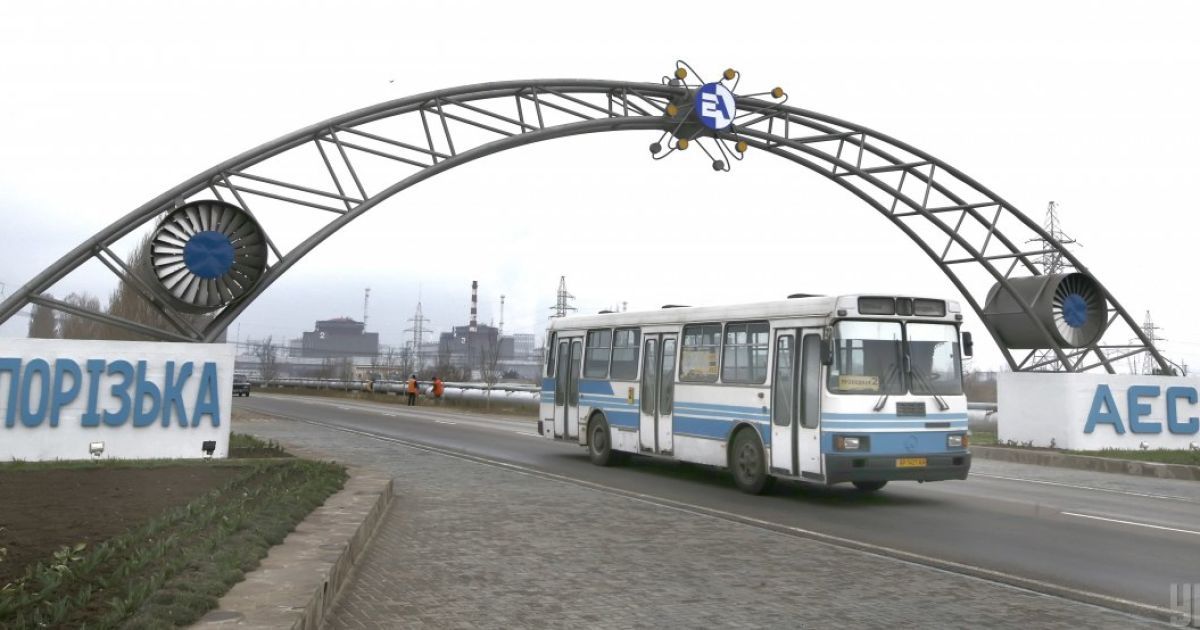
The Russian army is transforming Europe’s largest nuclear power plant into a military base overlooking an active front, intensifying a months-long safety crisis for the vast facility and its thousands of staff, The Wall Street Jouranl reports.
At the Zaporizhzhia Nuclear Power Plant, more than 500 Russian soldiers who seized the facility in March recently have deployed heavy artillery batteries, and laid anti-personnel mines along the shores of the reservoir whose water cools its six reactors.
The Ukrainian army holds the towns dotted on the opposite shore, some 3 miles away, but sees no easy way to attack the plant, given the inherent danger of artillery battles around active nuclear reactors.
According to WSJ, in June the Russian forces deployed Smerch and Grad MRLS systems, as well as tanks and AMPVs in the shadow of the nuclear plant building. The earth around the plant is carved with trenches, with military guard dogs stationed out of a makeshift kennel. Senior technicians from Rosatom, Russia’s state atomic energy corporation, have set up a base in a guarded bunker beneath the plant.
"They are keeping it like a base for their artillery. They understand that Ukraine will not answer their attacks from the plant", said a European official posted to the nearby city of Zaporizhzhia, which remains in Ukrainian control.
Zaporizhzhia employees and their families fear the plant’s growing militarization could lead to another nuclear disaster in Ukraine.
According to WSJ, last week, the IAEA was in the dark for three days about conditions inside Zaporizhzhia NPP.
Previously, the Ukrainian state energy company Energoatom, which still manages the plant, said Russian troops were threatening to drain the cooling pools to find any weapons they suspected Ukrainian resistance fighters had hidden underwater. That could pose a serious challenge to the plant, which relies on a steady flow of filtered water to cool its reactors and spent fuel rods.
The IAEA, which has for months unsuccessfully tried to negotiate agreement and safe passage to conduct an inspection of the site, says nearly all of what it calls the seven pillars of nuclear safety have been compromised at Zaporizhzhia. These include the physical integrity of the building, regular off-site monitoring of radiation, and the steady flow of spare parts, fuel and supplies.
The primary and immediate risk is to the plant’s staff. The duress of the occupation poses the danger, nuclear specialists said, that workers would commit stress-induced errors, or simply leave their stations to seek refuge in Ukrainian-held territory just across the river.
The abductions, once focused on plant workers suspected of joining or supporting the Ukrainian self-defense units, have widened in the past few weeks, workers and residents say. Increasingly, Russian forces are holding and ransoming civilian workers regardless of their loyalties and taking more women in addition to men.
“The invaders have another major activity, kidnapping for money,” said Dmytro Orlov, the mayor of the nearby city of Enerhodar, which he fled after Russian soldiers seized it. “Every day we receive two or three reports of new kidnappings. People are being abducted en masse.”
Suspected Ukrainian spies have been taken away for days and often weeks, beaten, tortured and denied food, according to workers and plant management. In May, a 53-year-old maintenance technician, Serhii Shvets, was shot by the Russians, accused of passing information to Ukraine’s defense forces.
“There can be no good radiation safety at a nuclear power plant where personnel are living in an occupied city whose population is terrorized,” said Mark Zhelezniak, professor at Japan’s Fukushima Institute of Environmental Radioactivity.
Read also: