
The First Response Team Has Stayed in Bakhmut to Extinguish Fires Caused by Shell Explosions and Rescue Locals from the Rubble
All of them are locals and cannot abandon their hometown without help.
 Follow us on Google
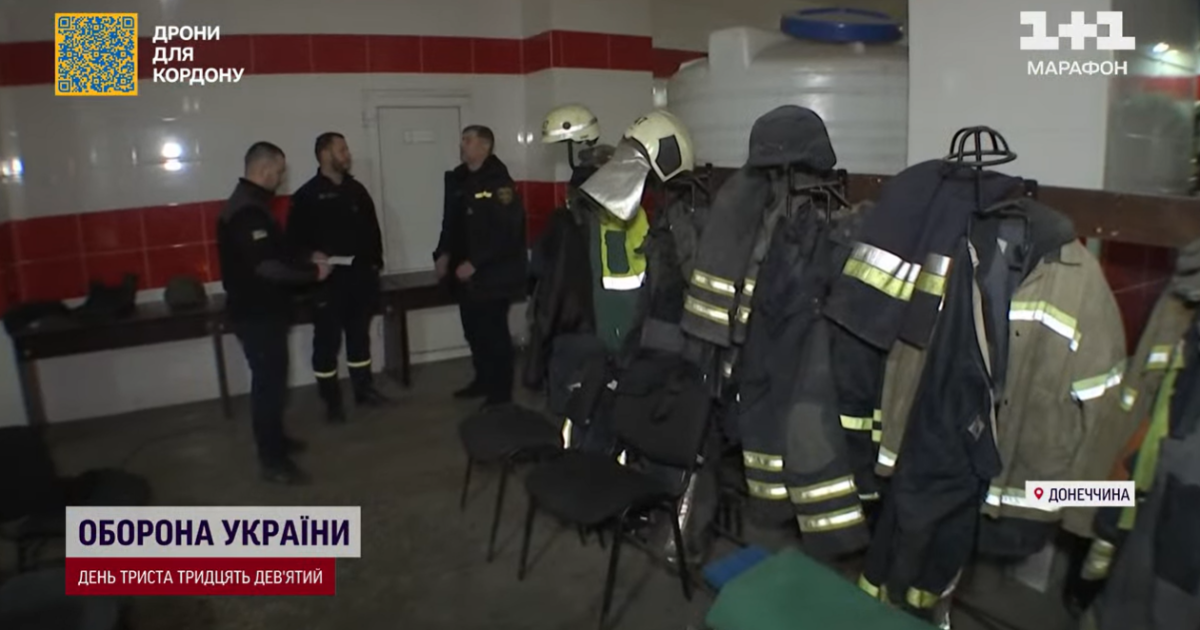
In Bakhmut, surrounded by warfare, a group of rescuers is still extinguishing fires, clearing rubble and pulling people out from under it. Despite the shelling and destruction, these people have remained at their jobs for 11 months in a row and have been responding to calls, seemingly in places where only the army can get through, TSN reports.
Yurii, Mykyta and Oleksandr are locals and they remain on duty in their home city Bakhmut. Their only iron horse is a fire truck, which has already been slightly damaged by a shell. "It hit the facade and shattered the glass," the rescuers show.
They are working with a dog whose name is simply "The Sheepdog". They are the only ones left in Bakhmut to extinguish fires after explosions, dismantle rubble after Russian artillery strikes and pull people out from under it. "There are still locals who are very resilient and hardened. It's hard work," says Yurii Halych, head of the State Emergency Service unit.
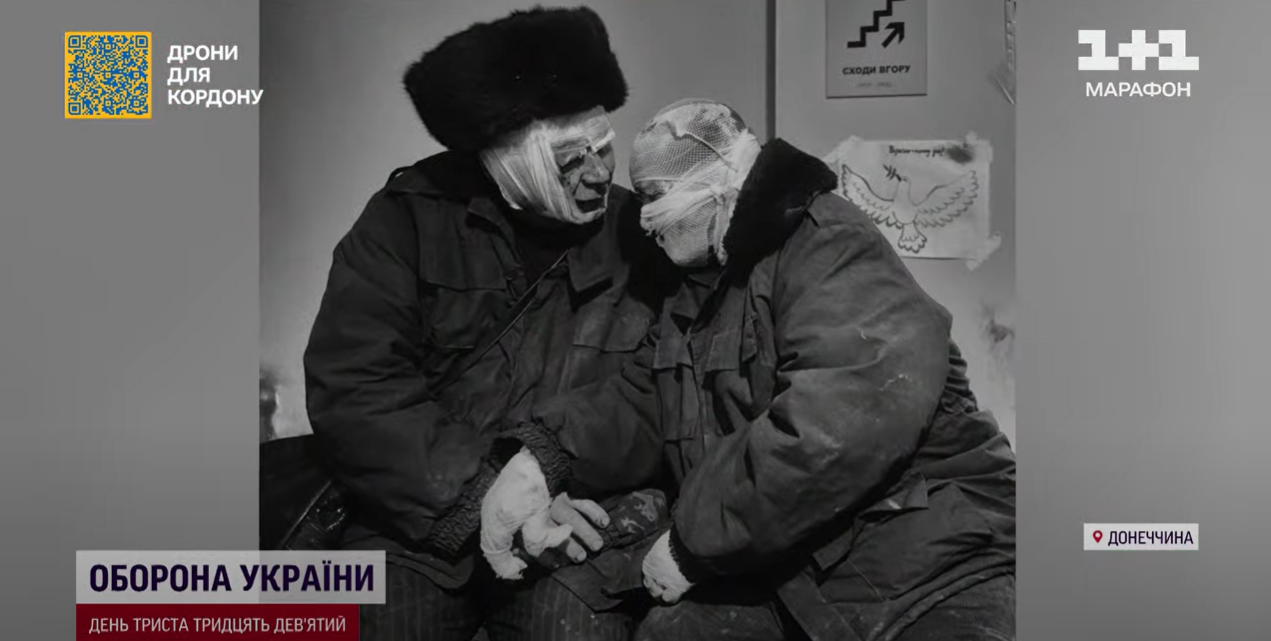
The unit of these guys also rescued elderly people who were injured by shrapnel from a Russian shell, and their photo, taken by a Dutch photographer Andy Van Wezel, went viral. The photo went viral on social media within seconds of its publication. Even the wife of the President of Ukraine, Olena Zelenska, tweeted about the photo: "The missile destroyed this couple's house. It took away their happy, carefree future, but there is something that Russia could not take away from them. Each other."
This elderly couple owes their salvation, and thus their lives, to the local rescuers. "There was no severe damage, no rubble. I had shrapnel wounds - my face and hands were damaged. There was no fire, no burning," the rescuers recall.
In a city where explosions are still going on, the guys can tell by the sound what is flying and where. "It's a shell. This sound is already familiar to us. This is either Zabakhmutka or Opytne area. It's somewhere there. It is still far away. If the outcoming and incoming sounds fo in a quick sequence, then it's a tank shell. You can tell the difference between 150 and 200 caliber, and MLRS as well," the guys say during the interview about the shelling, which they seem to no longer care about.
Eleven months into the war, their duties have turned into one continuous working day. Their families are far away, their homes have been damaged by shelling, and their place of work is a new home. They didn't leave, they say, because they had no orders and no desire to leave their hometown. "We need to help. We are also a great hope for the locals. If the rescuers are here, it means they are representatives of the authorities. It means that the state has not abandoned us. It cares and does everything to protect us," the rescuers say.
The fire station has become a "Point of Invincibility" where people come to get technical water and some food, and volunteers come here. "This is our home, and we are trying to save at least something," the State Emergency Service officers say.
Read also:
Russian Attacked Residential District in Kostiantynivka with Missiles: Human Casualties
Podoliak Names the Military Equipment AFU Needs to Counterattack and Dominate the Battlefield
Violent Fighting Continues: Ukrainian Armed Forces Report on the Situation near Soledar