
Peacekeepers for Ukraine: What’s really behind the West’s promises
Military expert Ihor Kozii breaks down the diplomatic games and real obstacles.

 Follow us on Google
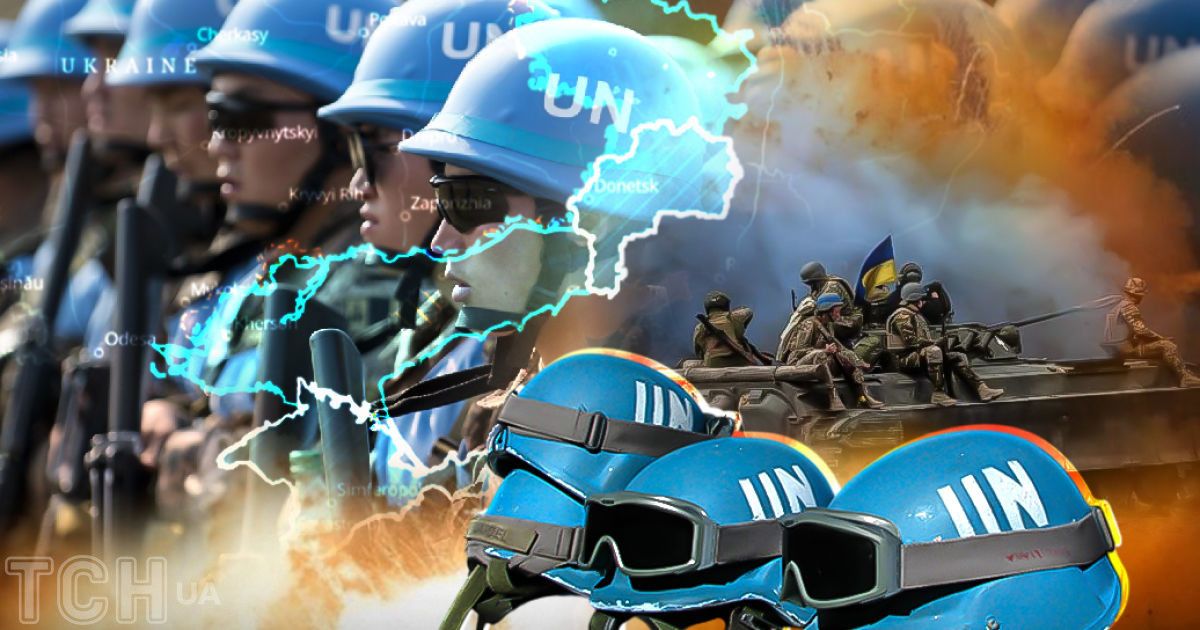
Will there be peacekeepers in Ukraine?
Statements by European partners about a possible deployment of peacekeeping missions to Ukraine provoke immediate and aggressive reactions from the Kremlin. The Russian Federation threatens the world with a Third World War, creating significant barriers to the implementation of such initiatives.
Military expert Ihor Kozii explains why Ukraine lacks direct leverage in this process and what hidden pitfalls lie on the path to peace.
International mechanisms: does Kyiv have any influence?
Ihor Kozii notes that, unfortunately, Ukraine does not have its own mechanisms for deploying peacekeeping missions. Such decisions fall exclusively under the authority of the United Nations (UN), the Organization for Security and Co-operation in Europe (OSCE), and the European Union (EU), and only with the appropriate mandate.
"Of course, we can request such a deployment from the European community. Ukraine can appeal to a particular international organization and deliver a statement of intent during a session," the expert explains.
However, this is merely a request — not a direct instrument of influence.
Russia’s "no": The main obstacle to peacekeepers
Although initiatives for peacekeeping missions have been voiced several times by France, Germany, and the UK, these statements are always accompanied by cautious wording: "possible," "likely," "we would like to." This indicates that for now, these are only intentions — far from reality.
"Such a decision can only be made if Russia, as a member of these organizations, votes in favor. That’s the paradox," Kozii points out. "I believe that in the UN Security Council, the Russians will never vote for this and will do everything to delay such a vote."
This creates an absurd situation where the aggressor country can block peacekeeping missions aimed at resolving a conflict it started.
Interstate decision: Is there an alternative path?
Another possible option is a decision made directly between countries, on a bilateral or multilateral level. However, no such consolidated interstate declarations or joint actions have been observed so far.
“There hasn’t been a case where, for example, the French made a statement and deployed peacekeepers, or the Germans coordinated such a decision with the French and announced the deployment of their peacekeepers to Ukraine,” the expert says.
He emphasizes that in Europe, there is also manipulation surrounding this sensitive topic, and a strong dependency on public sentiment.
Europeans are actively organizing training missions, but as Kozii notes, “in wartime conditions, this does not satisfy Ukraine — and certainly does not save us. What we need is a standing army.”
Number and functions of peacekeepers: Uncertainty remains
Previously, a number between 30,000 and 50,000 peacekeepers was discussed, along with possible deployment zones in Ukraine. However, Ihor Kozii points out that it is extremely difficult to determine the required number without a clear understanding of their functions.
“It’s one thing if their role is to maintain public order or guard military facilities. It’s a completely different issue if they are to carry out more complex tasks under wartime conditions,” he explains.
“As it stands, no one really understands anything — people just talk about it without proper analysis or planning, and everything remains at the preliminary discussion stage,” Kozii concludes.
According to the expert, discussions about peacekeepers have long shifted from the military sphere into the psychological one. He notes that state leaders’ decisions largely depend on public moods and the advice of their consultants, adding, “When we try to decide something for someone else, I’ll tell you right away — we’re doomed.”