
No protection against ballistic missiles: What would happen if three Ukrainian nuclear plants shut down
Nuclear power plants provide nearly 70% of Ukraine’s electricity supply but remain under constant threat.

 Follow us on Google
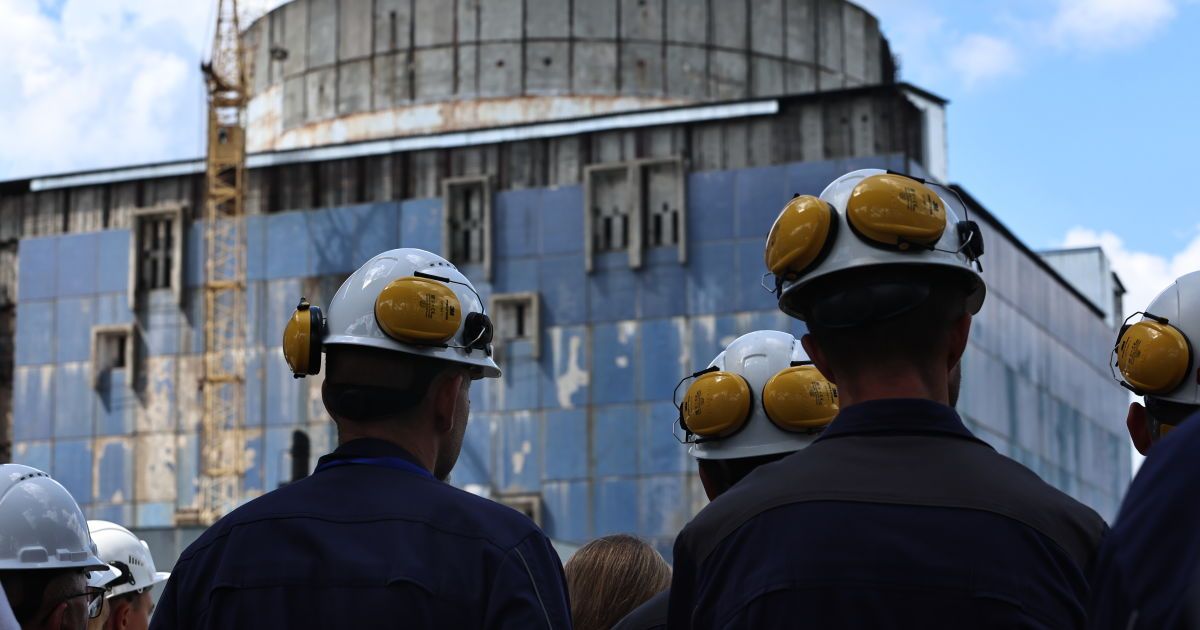
Nuclear power plant / © Getty Images
Russian ballistic missile attacks pose the greatest danger to Ukraine’s energy system, as reinforced concrete protective structures are unable to fully shield key facilities from such weapons. If transmission systems linking nuclear power plants to the grid were disabled, Ukraine would face an unprecedented power shortfall that could not be quickly offset.
The assessment was given by energy sector experts Olha Kosharna and Roman Nitsovych in comments to the publication Focus.
According to Olha Kosharna, co-founder of the Anti-Crisis Nuclear Expert Center of Ukraine, the current situation is fundamentally different from the early stages of Russia’s full-scale invasion. While Ukraine previously had a surplus of generating capacity, nearly all thermal and hydropower plants have now been damaged.
«There is no protection against ballistic missiles, ” Kosharna said.
She added that nuclear units currently produce around 7,600 megawatts of the country’s total 11,000 megawatts of generation, making them a key target for Russia.
«If all three nuclear power plants shut down, you understand what that would mean. Ukraine is already short of about seven gigawatts — equivalent to the output of seven large nuclear power units, ” Kosharna said.
Roman Nitsovych, research director at DiXi Group, said that even if reactors themselves were not damaged, strikes on distribution facilities would make it impossible to feed power into the grid.
«The reactor may be running and the turbine spinning, but electricity cannot be delivered to consumers until that equipment is repaired, ” the expert noted.
He added that in such a scenario, the energy system would lose the ability to supply consumers, and Ukrenergo would be forced to implement all planned power cuts simultaneously across the country. At the same time, the experts reassure that automatic safety systems prevent a radiation disaster, so the main risk is an energy collapse.
They also point out that Russian attacks have shifted tactics, with mass drone launches exhausting air defenses ahead of ballistic missile strikes. Restarting nuclear units after an emergency shutdown in winter is technically challenging and requires stable grid voltage, which would not be available if all nuclear power plants were taken offline.