
Foreign Companies Help to Guide Russian Missiles against Ukraine – Ukrainian Intelligence
In order to guide their missiles to the targets in Ukraine, Russian terrorists use their own technical solution similar to GPS, but the microchips used in navigation devices are supplied by foreign companies.
 Follow us on Google
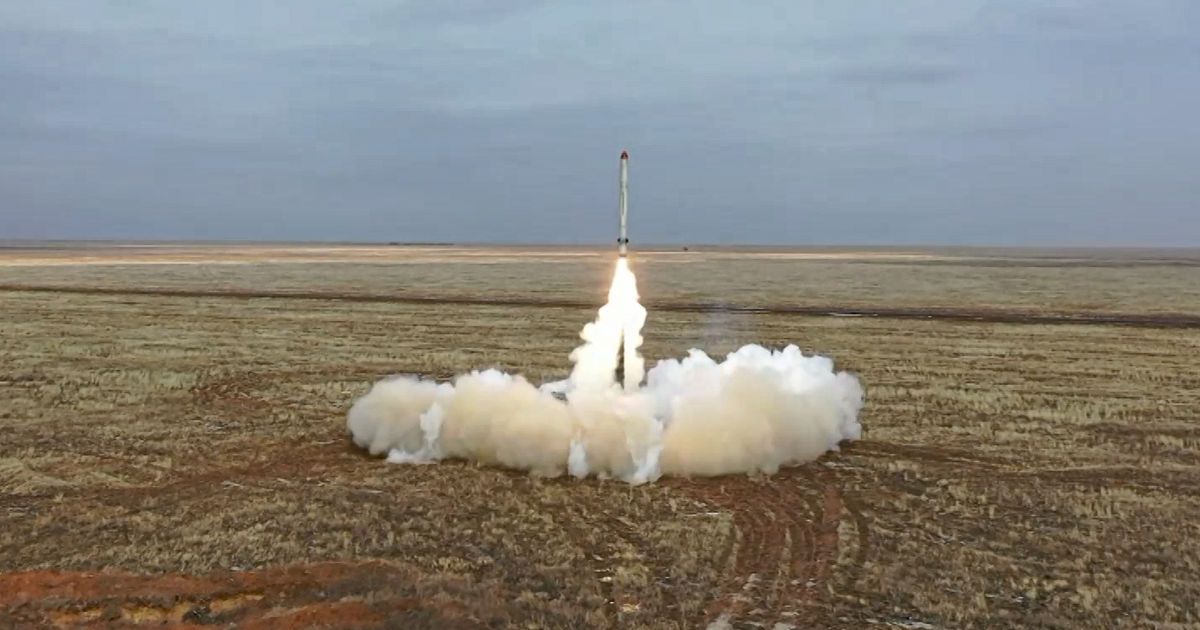
Russian missiles destroying Ukrainian cities and killing civilian would not be able to reach their targets without clear coordinates, which are determined by navigation systems. To guide the missiles, Russia uses its own technical solution called GLONASS, which is similar to GPS. Still, this system has a weak spot: it depends on microchips produced by foreign companies, the Defence Intelligence of the Ministry of Defence of Ukraine reports.
What Is GLONASS and How It Is Used by Russia
GLONASS was developed back in Soviet era, in 1982. This navigation system is dual-purpose, but now it is used by the Russian military to guide deadly missiles at Ukrainian cities.
“ Russia's GLONASS system, which is used to aim missiles and drones, has a weak spot: it depends on microchips produced by foreign companies. Russian missiles and drones use foreign-made GLONASS-enabled microchips. These chips are normally civilian, but the Russians use them for military purposes. The chips receive and process GLONASS coordinates, and the missiles use this information to navigate in space and target Ukrainian civilian and energy infrastructure”, Ukraine intelligence officers report.
The chips are used in, at least, such weapons as: Orlan-10 and Shahed-136 drones, Tornado-S and Smerch MLRS, Iskander, Kalibr and Kinzhal missiles, as well as Kh-101, Kh-555, Kh-38, Kh-59MK, Kh-31 aviation and cruise missiles.
What Companies Produce the Chips?
Defence Intelligence reports that a number of American and European companies still continue to produce microchips that support Russia's GLONASS:
Linx Technologies (USA);
Broadcom (USA);
Qualcomm (USA);
Telit (USA);
Maxim Integrated (USA);
TRIMBLE (USA);
Cavli Wireless (USA);
u-blox AG (Switzerland);
STMicroelectronics (Switzerland);
Sierra Wireless (Canada);
NovAtel (Canada);
Septentrio (Belgium);
Antenova (Great Britain).
According to the Defence Intelligence, Russia continues to purchase GLONASS-supporting microchips thanks to numerous shell companies and distributors.
“Without foreign-made GLONASS-enabled chips, Russians will have to build their own microelectronics from scratch. Export control and control by manufacturers will not work in this case, as Russia is constantly inventing new ways to circumvent sanctions and purchase technology”, Ukrainian Defence Intelligence notes.
The Defence Intelligence urges the foreign companies to stop producing chips with GLONASS support, and remove the function of supporting this navigation system from all their devices.
Consequences of Missile Strikes
During the last two week, Ukraine suffered some of the worst missile strikes since the start of the full-scale Russian invasion.
On November 15th, Russia launched around 100 missiles targeting Ukrainian cities and villages. At least one person was killed, when a Russian missile hit an apartment block in Kyiv. The massive strikes cause power outages and water supply interruptions in Kyiv, Kharkiv, Zhytomyr, Lviv, Ternopil, Rivne, Khmelnytskyi and many other localities.
On November 23rd, Ukraine defence forces shot down 51 cruise missiles of 70 and five kamikaze drones launched by Russian troops against Ukraine. Despite the high performance of air defence units, the Russian strikes caused serious damage to the country’s energy and civilian infrastructure. Most Ukrainian cities went into total blackout. Russian missiles hit three apartment blocks killed 10 civilians.
The massive strike against Ukraine also affected Moldavian grid causing power outages in part of the country.
Read also:
How Much Will Restoration of Mariupol Cost: Architect Describes the Plans
Invaders Rigged with Explosives Even Children Toys During They Escape from Kherson
Situation with Power Supply in Ukraine: Weather Slows Down Recovery, 70% of Demand Is Met