
How long Russia can continue its war against Ukraine: the importance of long-range weapons and pressure points for Putin
A military expert explained the enemy's missile strikes and why the Russian dictator does not want peace.
 Follow us on Google

Russia's war against Ukraine / TSN.ua collage
Russia’s recent massive missile strikes on November 17 reaffirmed to Western politicians that president Volodymyr Putin is not interested in peace talks, nor does he intend to stop military operations in Ukraine.
German Chancellor Olaf Scholz says that the Russian dictator has not changed his mind about the war. French President Emmanuel Macron has the similar position. He states that Putin does not want peace and is not ready to negotiate, but will only intensify hostilities in Ukraine.
Both European leaders insist on increased military aid to Ukraine.
How long can Russia wage its war?
TSN.ua asked a military expert: if the war continues, what are the prospects for Ukraine and how long is Russia capable of escalating the war?
Military expert Ihor Romanenko estimates that Russia could continue its military campaign until at least the end of 2025, possibly even a year longer. Despite sanctions, Russia bypasses restrictions and leverages its significant manpower and resources.
"Based on the analysis of the state of the Russian economy and military potential, analysts predict that Putin definitely has the opportunity to conduct hostilities until the end of 2025, and possibly for one more year. It all depends on what the enemy's losses will be. By the way, now the Russians are suffering very serious losses, but they have the opportunity for quick recovery, which allows them to continue combat operations," Ihor Romanenko, a military expert, retired lieutenant general and deputy head of the General Staff (2006–2010), told TSN.ua.
Lifting the ban on strikes on Russia
Lieutenant General Ihor Romanenko adds that Putin seeks only to continue the war. That is why the dictator responded to Western proposals, Trump’s plan, calls from Scholz, and other politicians with massive missile and drone strikes on Ukraine.
"Missile strikes on peaceful Ukrainian cities by the Russian dictator demonstrate that his intentions are entirely different - he wants war. With his missile strike, Putin shattered all hopes of a possible transition to negotiations. The response to such aggressive actions was the lifting of the ban for Ukraine on the use of Western long-range weapons: from the U.S., the use of ATACMS, and from France and Great Britain, the use of Storm Shadow and SCALP missiles. Of course, Russia’s reaction to this will be predictable - they will again frighten the world with nuclear weapons and the threat of World War III. Although the lifting of the ban currently concerns Kursk region, where a reinforced division of North Korean military personnel has been deployed to assist Russian troops," Ihor Romanenko explains.
Why allies’ actions must be decisive
The expert adds that Russia will try to pressure the leadership of key world countries supporting Ukraine, particularly the three states that lifted the ban on long-range strikes on Russian territory. This is already an old playbook from Putin, which he activated every time Ukraine awaited the delivery of HIMARS systems or F-16 fighters from its partners.
"First and foremost, these will be nuclear threats, which Putin has voiced before. For us, this means that in the near future, we must use the opportunities provided by our allies as efficiently as possible. This concerns $7 billion in military aid promised to us by the beginning of next year. Overall, to compel the Russian dictator to negotiate, our allies' actions must be more decisive, particularly from the Biden administration, because discussions about ending the war in a single day or month, as U.S. presidential candidate Trump promised, are no longer relevant. He promised to do this immediately after winning the election, but it didn’t happen," the military expert notes.
Pressing Putin’s "pressure point"
According to Ihor Romanenko, Putin is very concerned and displeased with Western sanctions, which are quite painful for Russia, and this "pressure point" must be pressed even harder. Sanctions should be further intensified."
Many experts recall the "Reagan-style" sanctions when the U.S. applied them jointly with OPEC representatives, specifically by drastically lowering oil prices, thereby destroying the economic foundation of the USSR. Something similar can be done now regarding Russia - there are opportunities, but this process takes considerable time. Therefore, we must quickly and energetically fulfill our "homework" on mobilization and work with allies to receive effective modern weaponry. Only in this way can we counter new manifestations of Russian aggression," the military expert emphasizes.
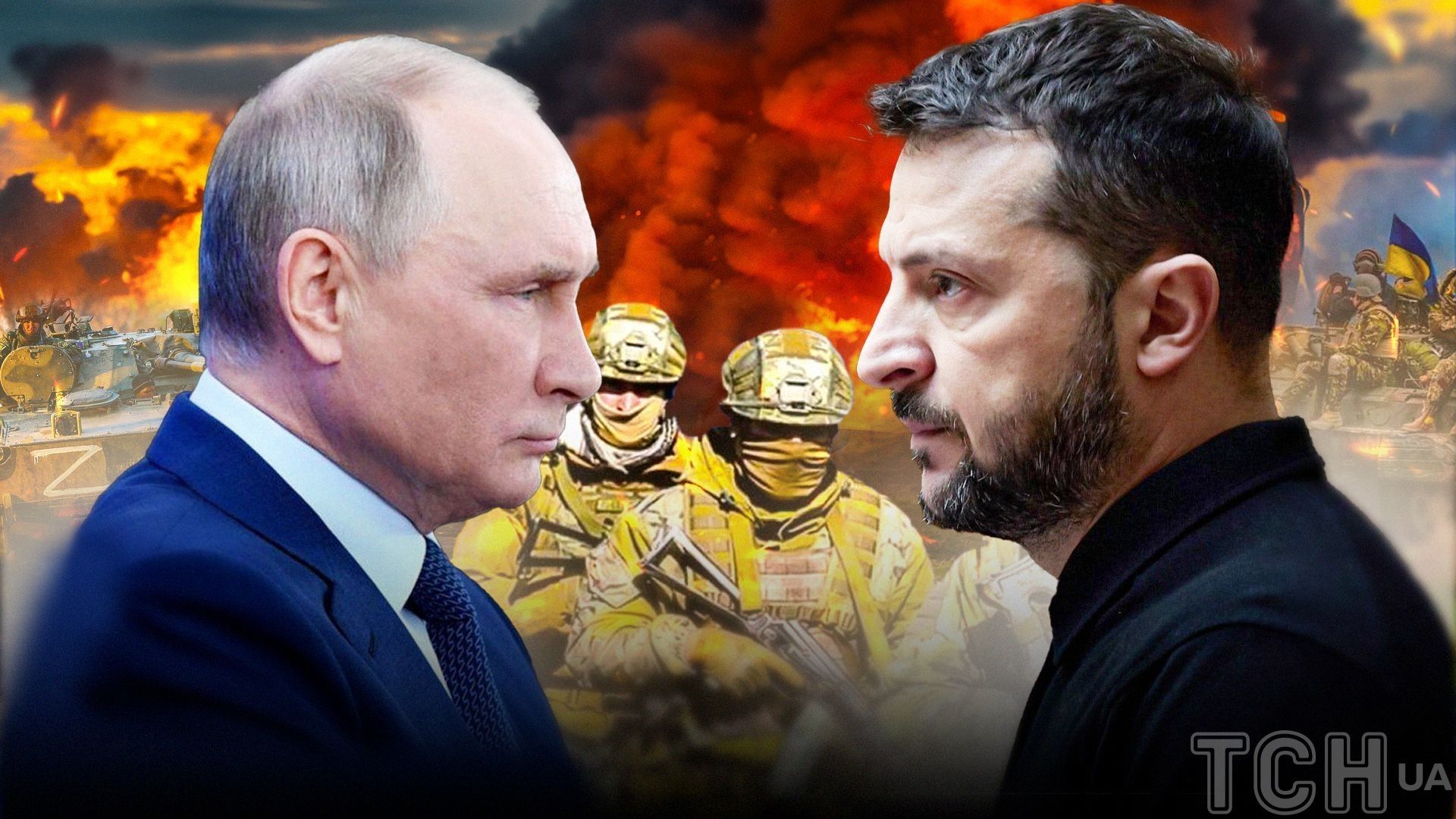
How the war in Ukraine will end / TSN collage
Russia does not want peace
Ihor Romanenko adds that, at present, Putin does not want peace.
"As I have said before, the Russian dictator understands only one language - the language of force. Therefore, global democracy must compel him to make peace. Russians are seizing territories of neighboring countries and presenting this to the world as "special operations for peace enforcement," while it is pure aggression. Our goal, together with our allies, is to stop the aggressor and force him, at a minimum, to cease hostilities," Ihor Romanenko concludes.
Read also:
Russian attack on a dormitory in Hlukhiv: death toll rises to 10, including 1 child
Ladyzhyn TPP in Vinnytsia region ceased operations after Russian strike on November 17
Effective use of ATACMS could influence Kim Jong Un's decision to send troops to Russia – an expert