
"Putin was waiting": Zhdanov warned of increased danger for Ukraine
According to the military expert, missile strikes may become more frequent.
 Follow us on Google
Oleh Zhdanov / Photo: TSN.ua
On the morning of March 21, the Russian army launched a massive missile attack on Kyiv. After a break of 44 days, the enemy fired 31 missiles. All targets were shot down by the Air Force of the Armed Forces of Ukraine.
Military expert Oleh Zhdanov explained in a comment to TSN.ua why this attack was special, why Russia made a long pause, and when it could strike again.
The missile strike on Kyiv on March 21
According to Oleh Zhdanov, the peculiarity of this attack lies in its combined nature. Russia employed several types of missiles – both cruise and ballistic.
"The complexity lies in their interception because it requires distinguishing between complexes by their purposes. For example, "Patriot" complexes could no longer divert their attention to cruise missiles because they can work against ballistic ones," - the military expert explained.
He noted that this time the Russian army did not use "Shaheds."
"Last time, Russia employed a triple combination. All launched missiles, two ballistic and 29 cruise ones, were shot down today. The enemy's main target was Kyiv. Part of the missiles was successfully intercepted on the territory of the region, and part directly over Kyiv," Oleh Zhdanov said.
Why did huge craters appear in Kyiv
In photos from the missile debris crash sites in Kyiv, there are huge craters, despite the fact that they were shot down by air defense systems. The military expert explained that the issue lies with ballistic missiles.
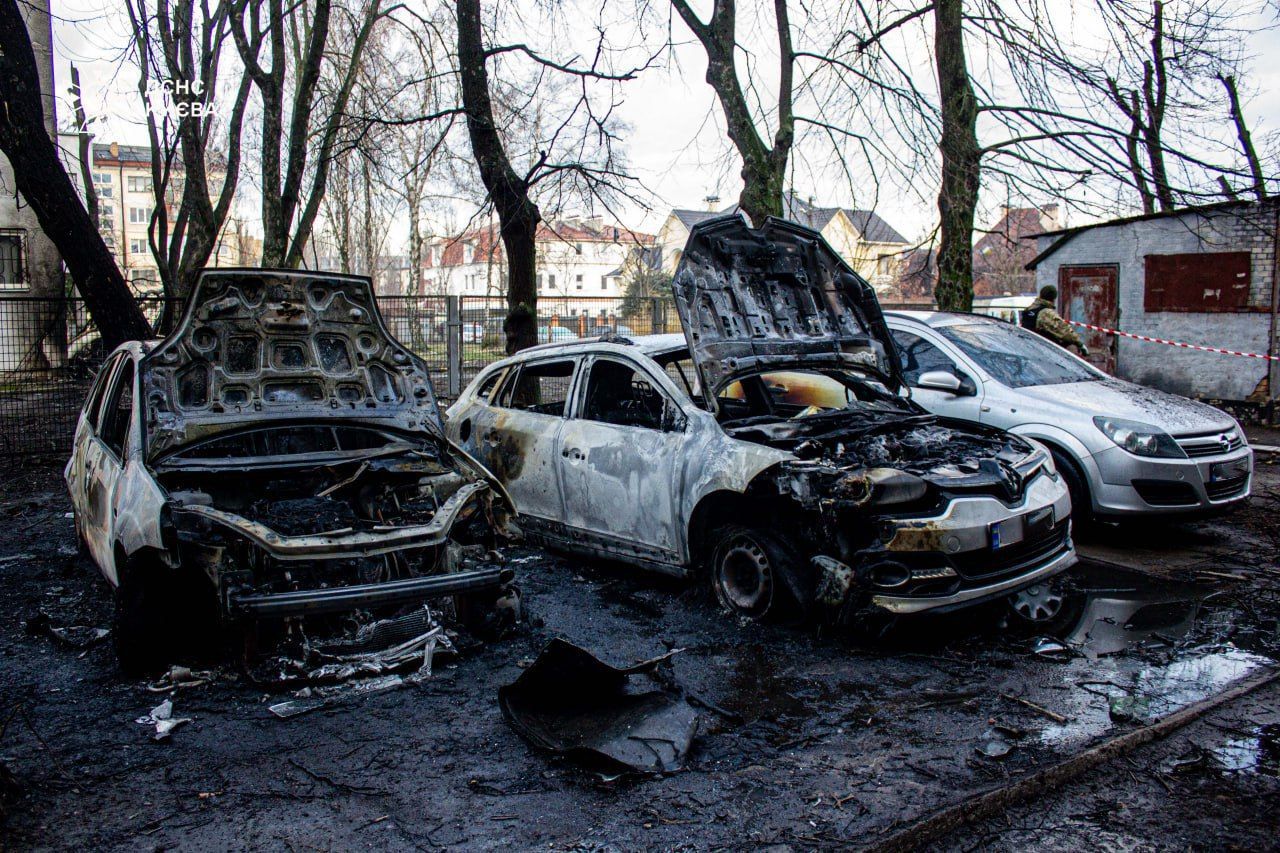
A warhead of a Russian "X-101" missile was discovered near a residential building in Kyiv / Photo: State Emergency Service of Ukraine on Telegram
"Ballistic missiles are intercepted by the "Patriot" system. It has a special missile, which is such a metal block. It does not contain explosives and hits the missile itself. In other words, one missile per target. It does not explode but simply deflects it from its trajectory. Due to the impact, the missile deviates from the target," Oleh Zhdanov explained.
According to him, a successful hit destroys the missile, which can explode in the air. This is the safest option.
"However, considering that the main part of the missile usually has the thickest shell, it is the strongest, it happens that the main part falls and explodes like a conventional aviation bomb. That's why we see such huge craters," the military expert explained.
Unusual whistling during the attack
Many residents of Kyiv report online that they heard an unusual whistling during the morning missile attack. Oleh Zhdanov says that it is usually formed by cruise missiles when they are intercepted by air defense systems.
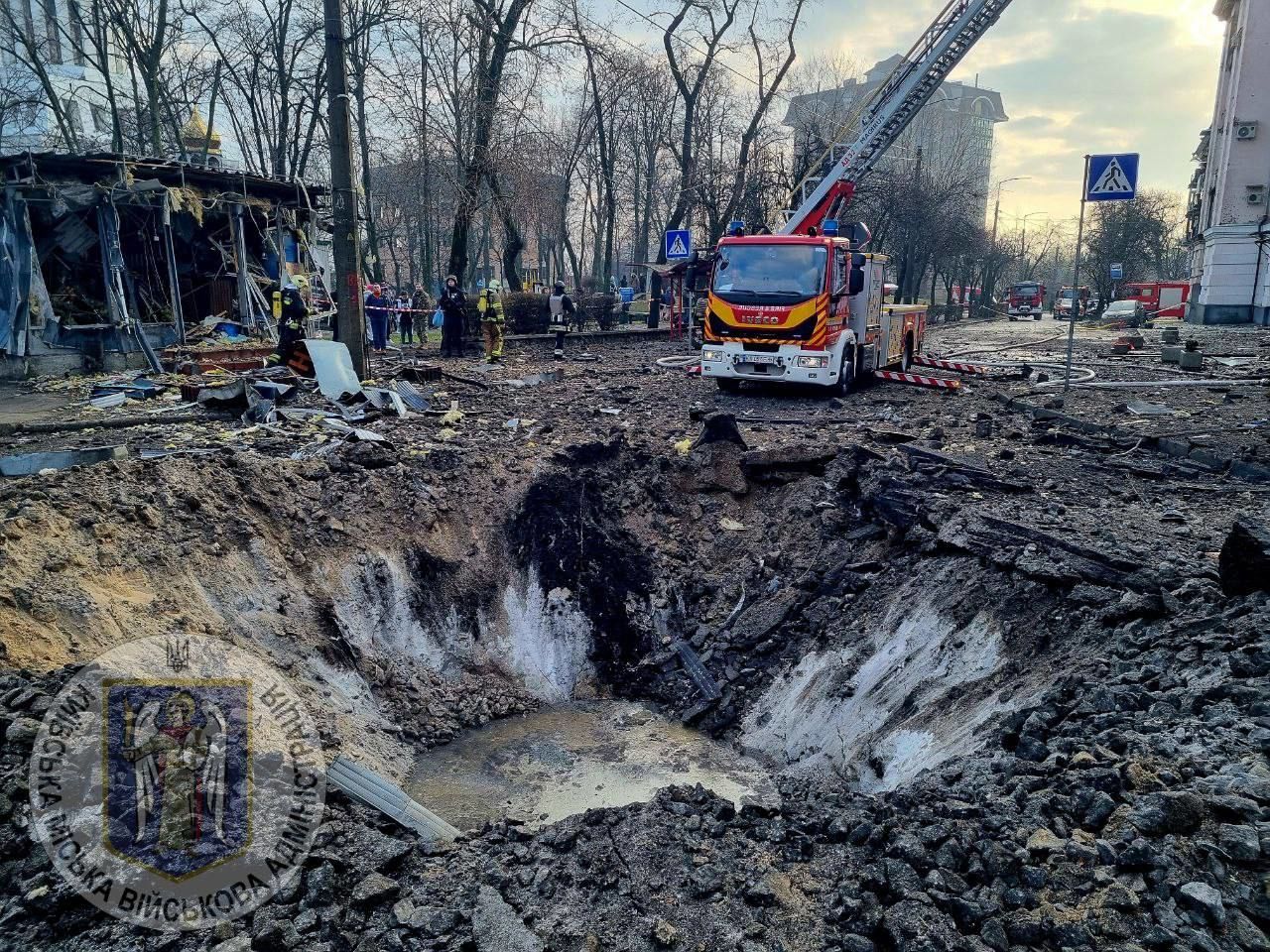
Missile attack on Kyiv, March 21 / Photo: Kyiv City State Administration
"When a missile flies, it emits a sound like a regular jet aircraft. It is subsonic. Everyone has seen in war movies how a plane is shot down. It nosedives then. When a missile is hit by a missile of the air defense system, it catches fire, breaks into fragments and falls to the ground with the same characteristic whistle as a dive bomber," the military expert said.
Where was Russia aiming
Oleh Zhdanov emphasized that the Russians did not just directly attacked Kyiv. At first, the missiles flew to the west of Ukraine and reached almost the Polish border.
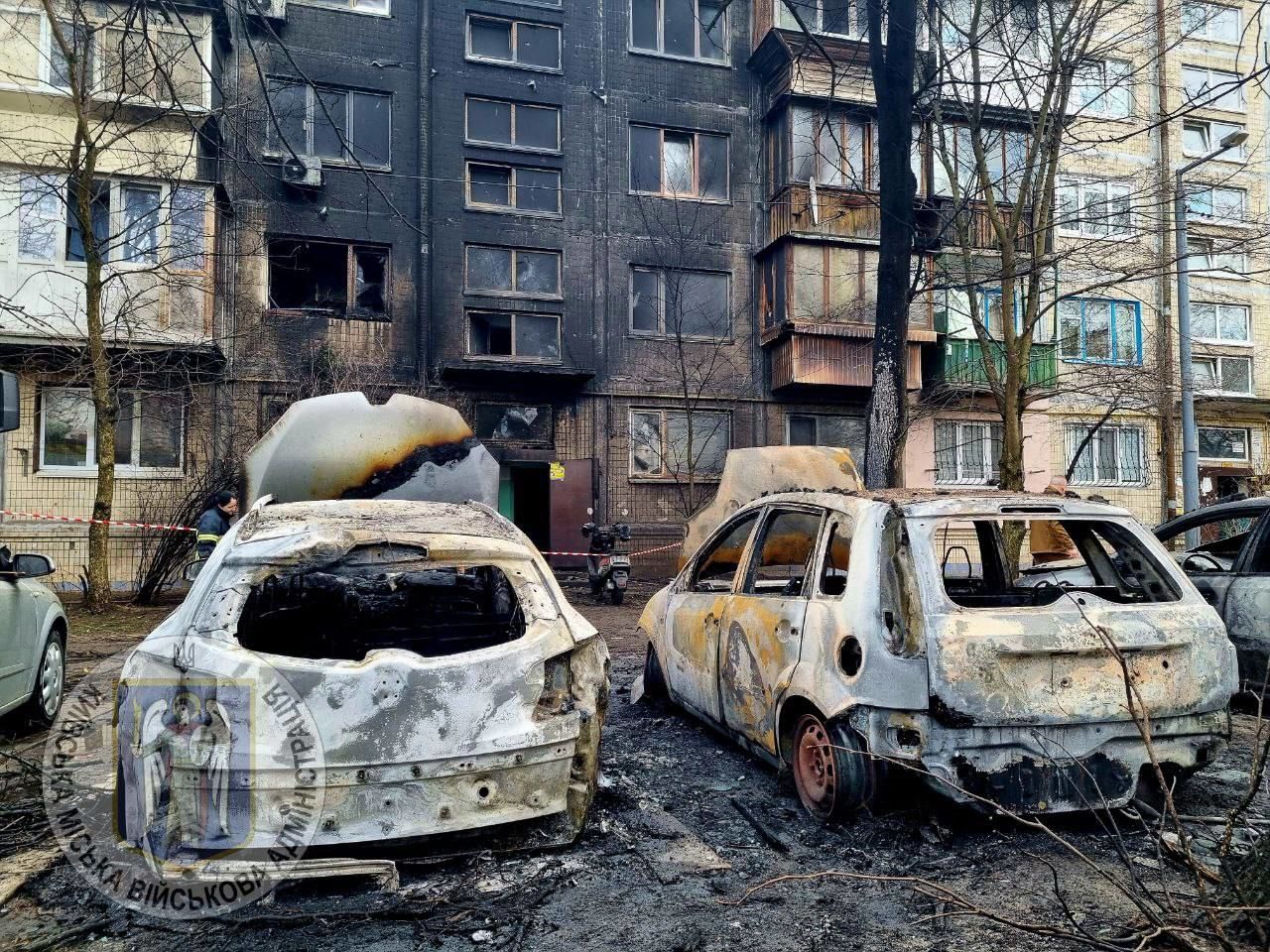
Missile attack on Kyiv, March 21 / Photo: Kyiv City State Administration
"Poland once again raised combat aircraft into the air to intercept these missiles. And then the missiles turned around and headed towards Kyiv. The ballistic missiles waited until the cruise missiles approached. Launches were made in such a way that both ballistic and cruise missiles were simultaneously in the vicinity of the city of Kyiv. They annoyed our Western partners, and then the main target was the capital. Russia's main goal is to terrorize the population and force the country's leadership to capitulate," the military expert says.
When the enemy can strike again
According to Oleh Zhdanov, the Russian army may repeat a massive attack tonight. The enemy doesn't need much time to prepare.
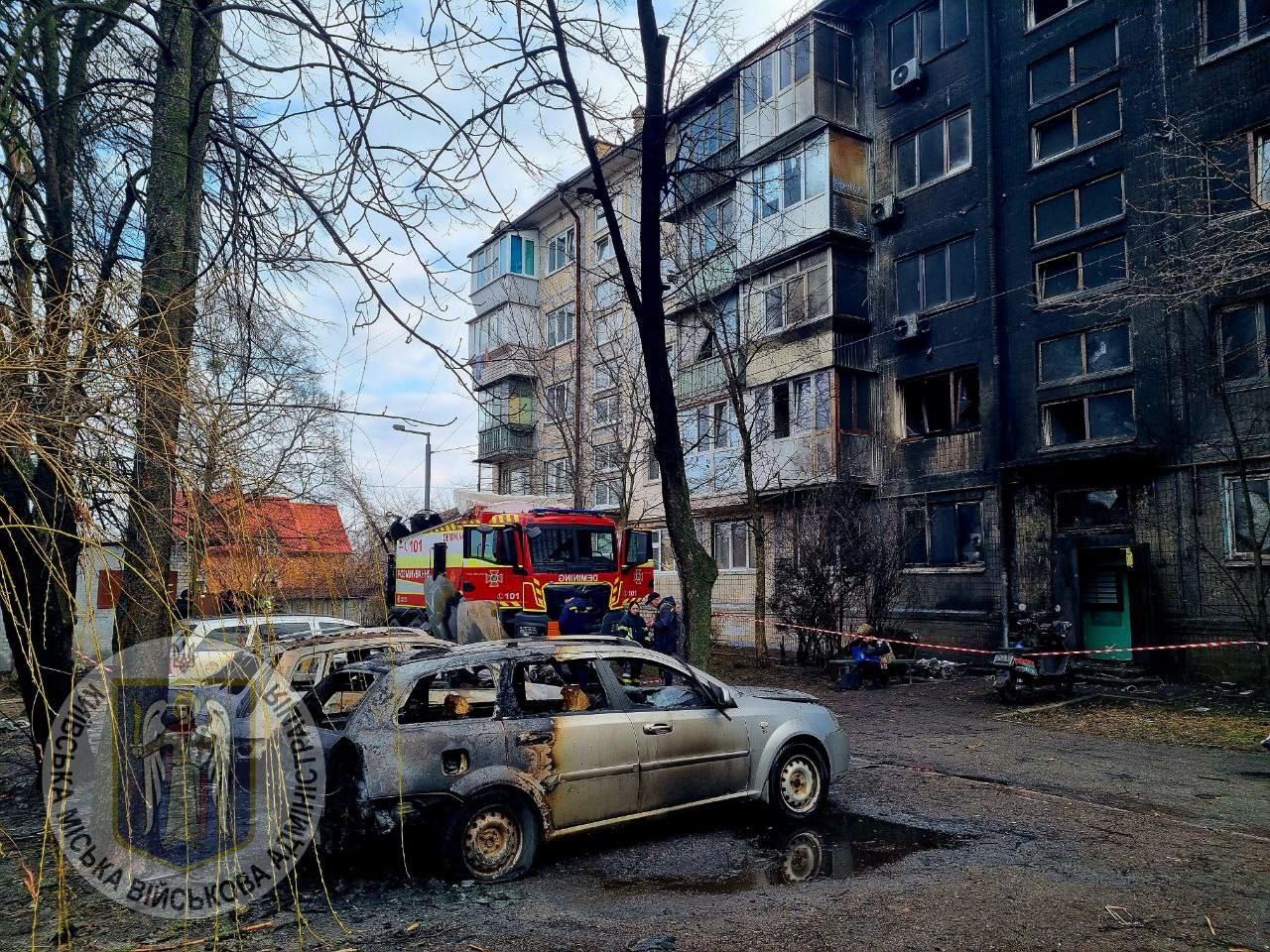
Missile attack on Kyiv, March 21 / Photo: Kyiv City State Administration
"I think that the main factor behind the absense of missile strikes was Putin's "election" in Russia. Putin was waiting. Now his hands are free, he has "secured" his position for six years. Unfortunately, now he is returning to the old "scheme", and the frequency of these strikes may depend on the availability of missiles in the Russian army," the military expert said.
Read also:
Zelenskyy reacted to the missile attack on Kyiv and addressed to partners
A loud explosion was heard in Mykolaiv: what is known about the attack and the victims