
Russia develops costly Starlink jamming system: Here’s the catch
Russian forces are attempting to suppress Starlink operations in Ukraine using expensive electronic warfare (EW) systems worth around $1.5 million. However, each system has limited capabilities and can only target a single satellite.
 Follow us on Google
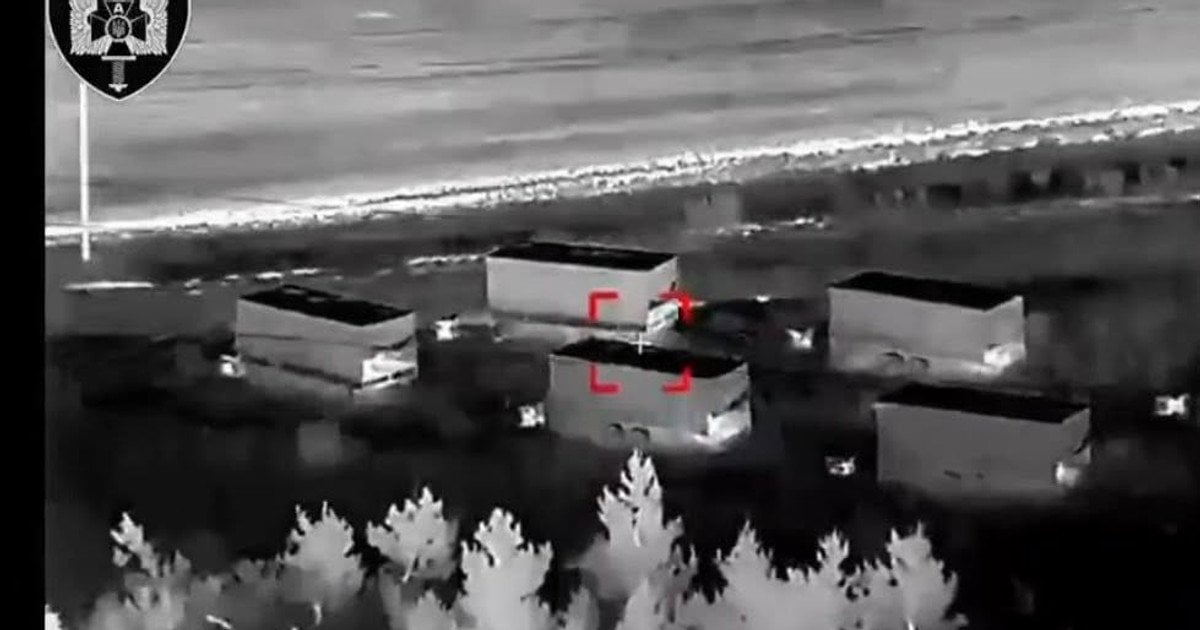
«Volna Kupol Garant» EW system
The Russian occupiers continue their efforts to jam Starlink, spending $1.5 million on each EW system. But there is a catch—each system can only jam one Starlink satellite at a time.
Serhii «Flash» Beskrestnov, an advisor to the Minister of Defense, shared more details on the matter.
How Russia is trying to jam Starlink
Russian troops are trying to counter the Ukrainian Armed Forces' use of Starlink by deploying specialized EW systems called «Volna Kupol Garant» (Wave Dome Guarantor).
Serhii «Flash» Beskrestnov, a radio technology expert and advisor to the Minister of Defense, detailed the specifics of this hardware, which is manufactured by the «Russian Dome» enterprise in temporarily occupied Crimea.
According to him, the system’s primary task is to block Starlink communication channels using high-power jamming. To achieve this, the system requires massive power capacity and precise tracking of each individual spacecraft.
The complexity of the design, combined with corruption at multiple stages of production, has driven the price of this system to astronomical levels—the cost of a single «Volna Kupol Garant» unit reaches $1.5 million.
«Technically, a Starlink satellite receives signals from terminals in the 14–14.5 GHz range. This range is divided into 8 channels, each 62.5 MHz wide. The Russians basically took 8 satellite dishes, pointed them at the satellite, and each dish transmits interference on its own channel. That’s it. The satellite goes „deaf,“ Beskrestnov writes.
Significant limitations
Despite its high cost, the «Volna Kupol Garant» has a number of critical downsides, including its bulky size, minimal operational radius, and low efficiency—one system can only act against one satellite.
Given that the global Starlink constellation currently numbers over 10,000 active satellites in orbit, such effectiveness is negligible. Dozens of spacecraft constantly pass over each ground terminal, replacing one another every few minutes and covering a zone with a radius of up to 1,000 km.
In light of this, Russia’s multi-million dollar purchases of these systems are a highly inefficient and expensive luxury.
The «Volna Kupol Garant» system was first spotted in 2023 in the Kharkiv direction, but the Russian hardware was quickly detected and destroyed back then. There were no mass attempts to deploy this equipment until 2026.
The escalation in enemy EW activity began after the Ukrainian Armed Forces launched medium-range strikes on Russian logistical hubs. Recently, the commander of the 422nd Separate Unmanned Systems Regiment published a video showing the destruction of the first such system, and later, the unit showcased the elimination of another.