
"Shaheds" may learn to evade air defense: Expert warns of new Russian tactic
Ukraine remains critically dependent on Western partners for “major air defense,” meaning surface-to-air missile systems. However, the supply of these systems is unstable, making it impossible to rely on them as a consistent means of protecting Ukrainian airspace.

 Follow us on Google
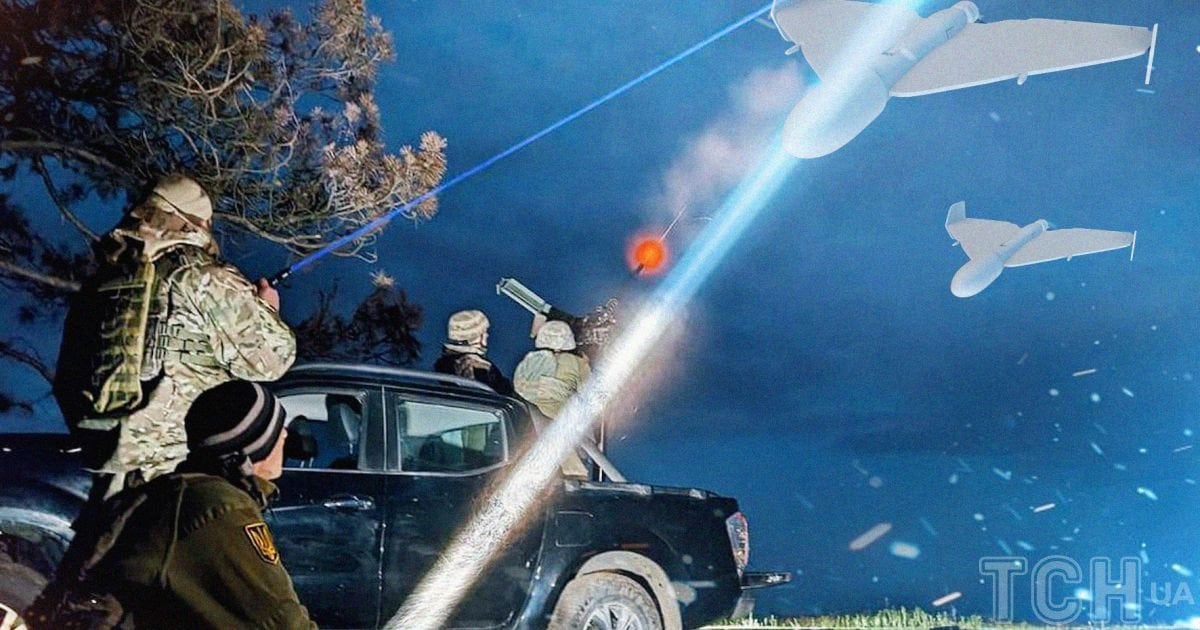
«Shaheds» will learn to evade
Russia is increasing the intensity of its massive drone and missile attacks on Ukraine. On June 29 alone, the enemy deployed 537 aerial attack assets, including 477 Shaheds and their decoys.
Electronic warfare and intelligence expert Serhiy “Flash” Beskrestnov shared insights into the scale of these attacks, Ukraine’s defenses, and looming threats this autumn.
UNIAN reports this.
Dependence on the West and the scale of “Shahed” production
The expert emphasizes that Ukraine is heavily reliant on Western partners for “major air defense” (anti-aircraft missile systems). However, their supply is “unstable,” making it impossible to count on them as a constant source of air defense.
According to Serhiy Beskrestnov, Russia is actively increasing the production of “Shaheds,” having found in them a “relatively cheap and effective weapon” against Ukraine. They have also developed an “effective tactic of breaching air defenses through massive attacks on cities” and plan to scale this up. According to his information, Russia is building another factory.
“To increase production fivefold, it took them just over a year. So, I wouldn’t be surprised if, in a year, we see an attack with 700–800 UAVs in a single night,” the specialist predicts.
He adds that the Defence Intelligence estimates a fivefold increase in production, while Beskrestnov himself believes it could be sevenfold. This “trend” will continue, as Russia has already launched production in Izhevsk and Alabuga, and nothing prevents them from scaling further.
Threat to energy infrastructure in winter and countermeasures
Serhiy “Flash” Beskrestnov is convinced that Russia will launch new strikes on Ukraine’s energy infrastructure this autumn and winter. He explains that such attacks are less effective in summer. However, in winter, with a significant stockpile of “Shaheds,” the enemy could massively target the energy sector, as it is a “painful issue.”
Regarding countermeasures against “Shaheds,” the specialist highlights several approaches:
- Electronic Warfare (EW): It does not shoot down “Shaheds” but prevents them from hitting their targets by “shielding” specific objects. Drones affected by EW lose their signal and become more vulnerable to other means of destruction, such as mobile fire groups. EW “absolutely helps but is not a panacea.”
- Mobile Fire Groups: Their effectiveness, according to Beskrestnov, is “significantly lower” than the 40% claimed by Syrskyi — around 20%. He explains this by Russia’s tactic of flying “Shaheds” at high altitudes (2–4 kilometers), where small fire groups are ineffective, as “it’s impossible to shoot down a small dot in the sky with a machine gun.”
- Aviation (fighters and helicopters): Ukrainian aviation is highly effective but faces challenges. Fighters struggle to hunt “Shaheds” at low altitudes because their speed significantly exceeds that of the drones (180–200 km/h for “Shaheds” versus three to five times higher for fighters). Helicopters are very effective but insufficient in number for large-scale operations. Light aircraft, such as the Yak-40 in Odesa, also show results when a pilot and gunner shoot “Shaheds” from above.
- Major Air Defense: This includes systems like “Gepard” and missile complexes. Here, Ukraine also depends on its partners.
Focus on anti-aircraft drones and future challenges
Currently, the greatest emphasis is on anti-aircraft drones to shoot down “Shaheds.” These are drones similar to FPV but with better characteristics: speeds up to 300 km/h, the ability to operate at high altitudes, and specialized payloads. Ukraine already has 3–4 proven manufacturers of such drones.
The global task is to scale production, recruit, and train crews, as these require greater skills. A critical element for the effective operation of anti-aircraft drones is a network of radar stations (RLS) that allow precise detection of “Shaheds.”
“Units of attack UAV pilots should prevent "Shaheds" from penetrating deep into Ukraine altogether,” Beskrestnov emphasizes.
He calls for ensuring a layered defense with 2–3 levels along the border or frontline. Otherwise, shooting down “Shaheds” over cities could lead to “significant civilian casualties.” Ukraine has long used similar drones to shoot down enemy reconnaissance UAVs, but this technology is only now being actively developed for “Shaheds.” The difference lies in speed: reconnaissance drones fly slower (40–90 km/h), while modern “Shaheds” reach 200–220 km/h. To hit a “Shahed,” an anti-aircraft drone must be significantly faster (280–350 km/h), and developing such high-speed UAVs has been the main challenge.
Russian countermeasures and Ukrainian drone development
The Russians are already aware of Ukraine’s anti-aircraft drones. Serhiy “Flash” Beskrestnov urges thinking ahead about possible Russian countermeasures. The simplest and most effective strategy for the Russians could be installing cheap cameras on “Shaheds,” allowing them to maneuver—move up/down or left/right—when a threat is detected. He stresses that these upgrades are very cheap and could be quickly integrated.
“We need to look at what maneuvering capabilities "Shaheds" have and what the Russians can do with them so that we understand what methods we need to add now. Otherwise, we might face a situation where we quickly produce 10 or 100 thousand drones, and they turn out to be ineffective,” the expert warns.
Regarding the overall state of drone development, Beskrestnov notes that Ukrainian manufacturers are also scaling up capacities, and production growth depends only on funding and components. Unlike Russia, which has no issues with resources for production, Ukraine faces “specific financial problems,” which is “solely a matter of budget.”
In the future, Russia may deploy jet-powered “Shaheds,” which have already been observed in test flights, as well as Iranian “Shaheds” with artificial intelligence. However, the specialist doubts their widespread use due to high costs. Jet-powered “Shaheds” are more expensive, and their effectiveness is not yet clear. AI-equipped drones are also very costly (equivalent to 5–7 “Lancets”) and are likely to be used only for specific, high-priority targets.
Russia is focusing on both quantity and quality. They are constantly improving “Shaheds,” working on engines, navigation systems, and flight characteristics.