
Why Ukraine’s EW doesn’t always stop "Molniya" drones: "Flash" explains
The number of Russian "Molniya" drones on Ukraine’s front line is increasing, raising questions among troops about why electronic warfare systems do not always work effectively.

 Follow us on Google
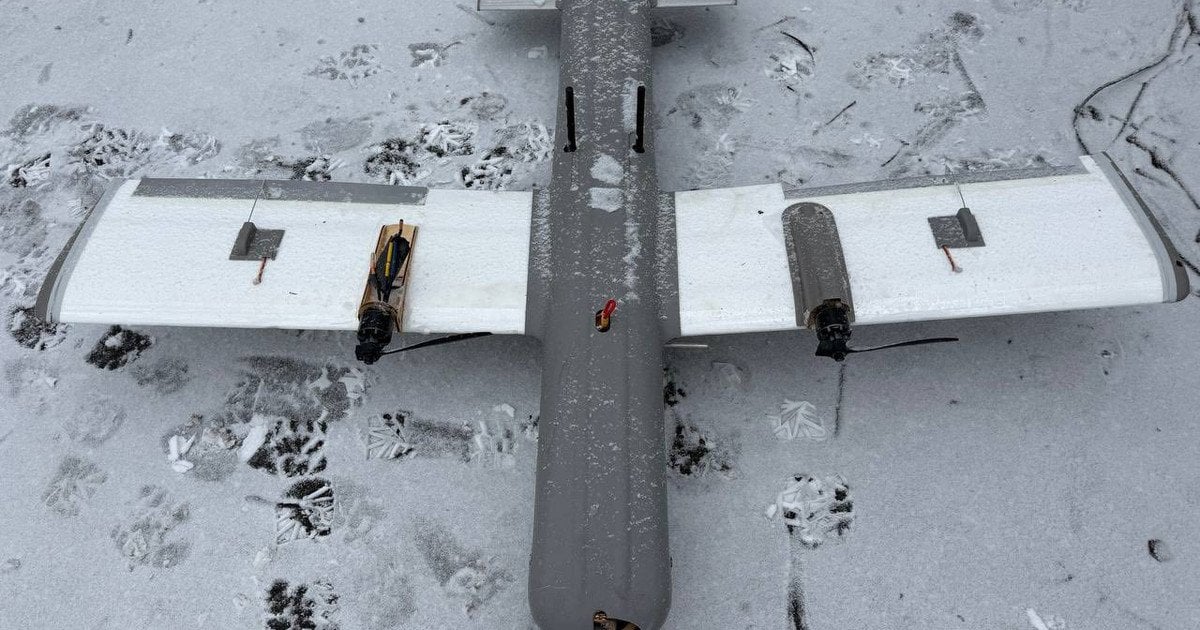
"Molniya" drone
Russian "Molniya" drones are becoming more frequent on the front line, used for reconnaissance as well as attacks. Ukrainian troops have increasingly asked why electronic warfare (EW) tools cannot always effectively neutralize them.
Serhii “Flash” Beskrestnov, a radio technology expert and adviser to Ukraine’s Defense Minister, explained the problem.
He says Ukraine’s electronic intelligence (ELINT) systems can detect "Molniya" drones because they transmit video signals during flight.
However, the main challenge is different: it is unknown at what frequency the drone is being controlled.
“Molniya" only receives control signals and does not transmit back, so determining the operator’s frequency is difficult. It can be anywhere from roughly 150 MHz to 2800 MHz,” Beskrestnov said.
Suppressing the entire range over long distances is impossible, and jamming random frequencies without knowing the exact one is ineffective, he added.
Another challenge is the operator’s location. The control device may be 30–60 kilometres away from the drone, making the signal hard to track.
Moreover, many drones, including FPV UAVs, operate simultaneously on the front line, each controlled on different frequencies. In this “signal chaos,” finding the right control channel is extremely difficult.
The expert says the situation is not critical. Ukrainian electronic warfare teams use experience, intuition, and inter-unit coordination to suppress some of these drones.
Beskrestnov also points out that Russian forces face a similar challenge when trying to counter Ukrainian strike drones.