
Strike on Poland: Portnikov names 5 brazen objectives of Putin
According to Portnikov, the strike on Poland is not a coincidence but a test of the West's resilience.

 Follow us on Google
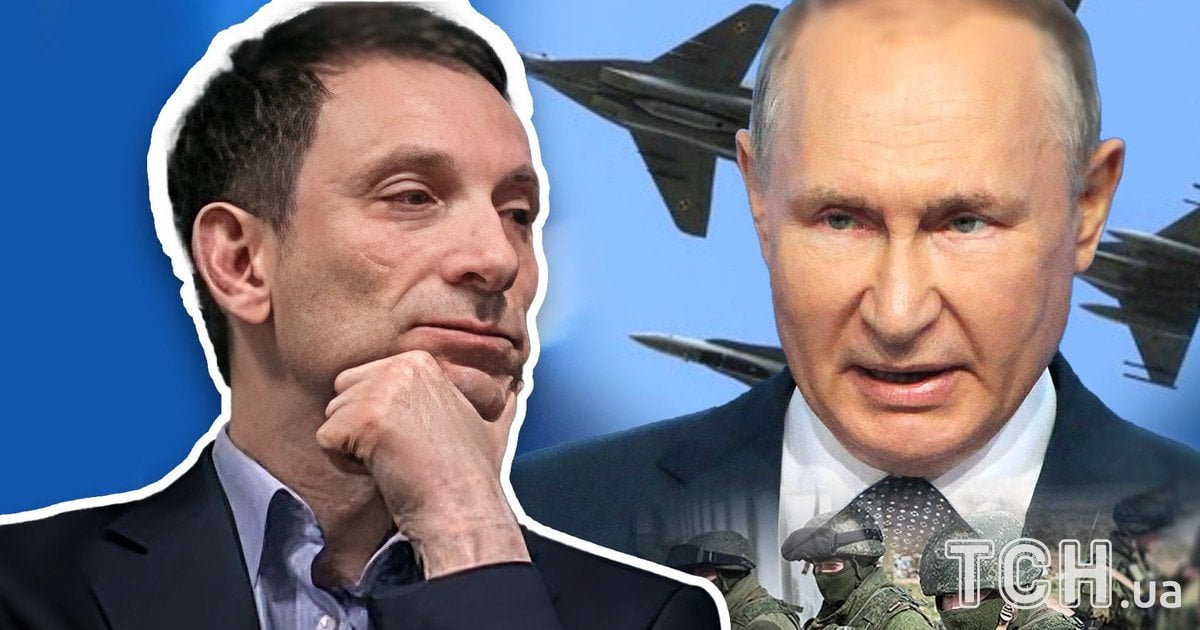
Portnikov explained why the Kremlin targeted Poland
Ukrainian journalist and publicist Vitaliy Portnikov outlined five objectives that Russia aims to achieve by launching drones at Poland.
He wrote about this on his Facebook page.
First: Testing NATO's "red lines"
"In the Kremlin, they are well aware that the West's main weakness is not a lack of weapons or finances, but political will. Ideally, Moscow wants to prove the North Atlantic Alliance's ineffectiveness as a collective institution. This test is directed personally at Donald Trump, who has repeatedly shown skepticism regarding U.S. allied commitments. For Putin, it would be a victory to demonstrate to the world that the American President is not ready to take risks for Warsaw or Vilnius," Portnikov writes.
Second: Creating an atmosphere of fear in Central Europe
According to the journalist, terror and the threat of war always breed political extremism. Far-right and far-left forces, which openly or covertly sympathize with Moscow, gain an opportunity to strengthen their positions. As a result, Europe's political landscape increasingly resembles that of Orbán, where cooperation with the Kremlin becomes the norm, and solidarity with victims of aggression becomes a "luxury."
Third: Provoking discussions about Europe's own defense capabilities
The more Europeans talk about the need to strengthen their own armies and revive the defense industry, the louder the voices calling for reduced aid to Ukraine will become.
"Moscow is trying to convince the West that it is better to prepare for a hypothetical future war than to help Ukraine in the war that is already ongoing," the journalist noted.
Fourth: Fueling anti-Ukrainian sentiments
"The flow of Ukrainian refugees in Europe has already become a convenient trump card for populists who stoke xenophobia. The strike on Poland is a signal: the war is close, and Ukrainians are a "reminder" that the war could reach your home. The Kremlin wants Ukrainians to be seen as a burden rather than allies in the fight against the aggressor," Portnikov explains.
Fifth: Preparation for more large-scale aggressive actions
According to the journalist, the Kremlin is currently calculating scenarios for further war based on the reactions of Washington and Brussels. If NATO's response to the strike on Poland proves weak, it will be an invitation for Putin to take even bolder steps.
"This is exactly how, step by step, Nazi Germany tested the world's readiness to respond — from the Rhineland, to the Sudetenland, to Prague. And each time, the West convinced itself that "this is not yet war," that "this can still be endured." Now Putin is acting in the same way. Whether NATO has the resolve to respond to the strike on Poland will determine not only the fate of Ukraine but also the fate of the West itself," Vitaliy Portnikov concluded.