
U.S. withdrawal from NATO: How Trump’s intentions will ruin America — Portnikov
Ukrainian journalist Vitaly Portnikov argues that even "freezing" U.S. participation in NATO would not benefit the United States itself. President Donald Trump might exploit the ongoing war with Iran to reconsider America's role in the Alliance. However, such a move would not only be fruitless but fundamentally harmful to America.

 Follow us on Google
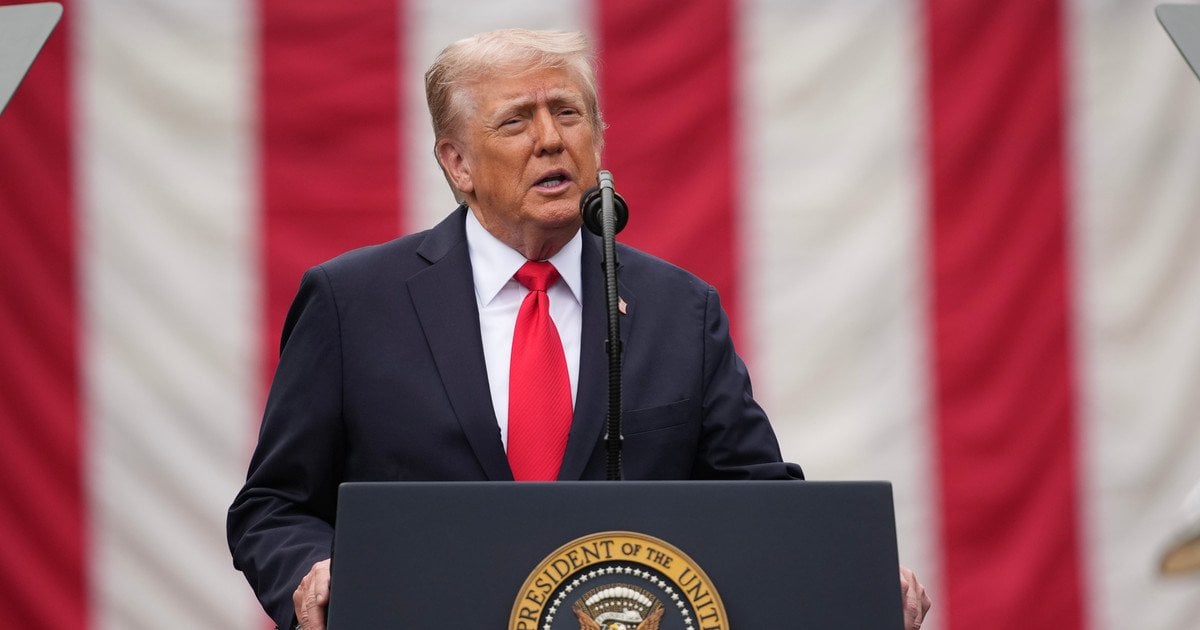
Donald Trump / © Associated Press
Political commentator Vitaly Portnikov made the remarks on his YouTube channel.
Portnikov says that the president would face significant hurdles. Withdrawing from the North Atlantic Alliance requires Congressional approval.
"Even if we imagine such a decision being made by bypassing standard U.S. procedures, a court could simply suspend it within months—much like what happened with tariffs, which the administration was forced to abandon under judicial pressure," Portnikov reminded.
The analyst emphasizes that even a "freeze" in NATO participation would backfire.
Despite Washington's current grievances against European allies regarding their involvement in the Iranian war, European logistics remain critical for U.S. military operations in the Middle East. Portnikov specifically pointed to U.S. military bases in Europe, such as Ramstein; dismantling them would cause the U.S. to lose far more than it gains.
What comes after NATO?
According to Portnikov, exiting the Alliance would necessitate a search for new allies—none of whom are currently in sight for the U.S.
"Trump might be considering an alliance with the autocratic leaders of two nuclear powers: Russian president Vladimir Putin and Chinese leader Xi Jinping. However, Trump should ask whether the Russian and Chinese leaders actually desire an alliance with America. On the contrary, they are likely exploiting the current administration's short-sighted and adventurous policies solely to weaken U.S. global influence and replace it with their own," the journalist noted.
Damage to America
Portnikov believes Trump’s desire to use the Iranian war to fulfill one of his greatest political dreams—leaving NATO—stems from a deep undervaluation of Euro-Atlantic integration's importance to the U.S. itself.
"Will the American president succeed in realizing this ambitious dream and turning the U.S. into an isolated state, capable of fighting numerous enemies alone while they wait for America to weaken?" Portnikov asks rhetorically.
He believes Trump’s intentions will face opposition not only from Congress but also from the American public and judicial institutions.
"Trust in America as a security guarantor could be undermined for decades, if not forever—even if the Trump era ends in an ignominious fiasco for the far-right politician. In a world where a professional politician is replaced by yet another populist with massive ambitions and a blind faith in money, there will be no true trust in such an America. And it remains to be seen if Americans themselves will trust such a country," Portnikov concluded.