
Belarus closes forests near borders: Security Service General outlines risks behind Minsk’s move
Belarus has banned access to forests in several border districts. Viktor Yahun, a retired Major General of the Security Service of Ukraine, believes that these formal fire-protection restrictions should also be viewed in a security context — given their proximity to Ukraine, Poland, and Lithuania.

 Follow us on Google
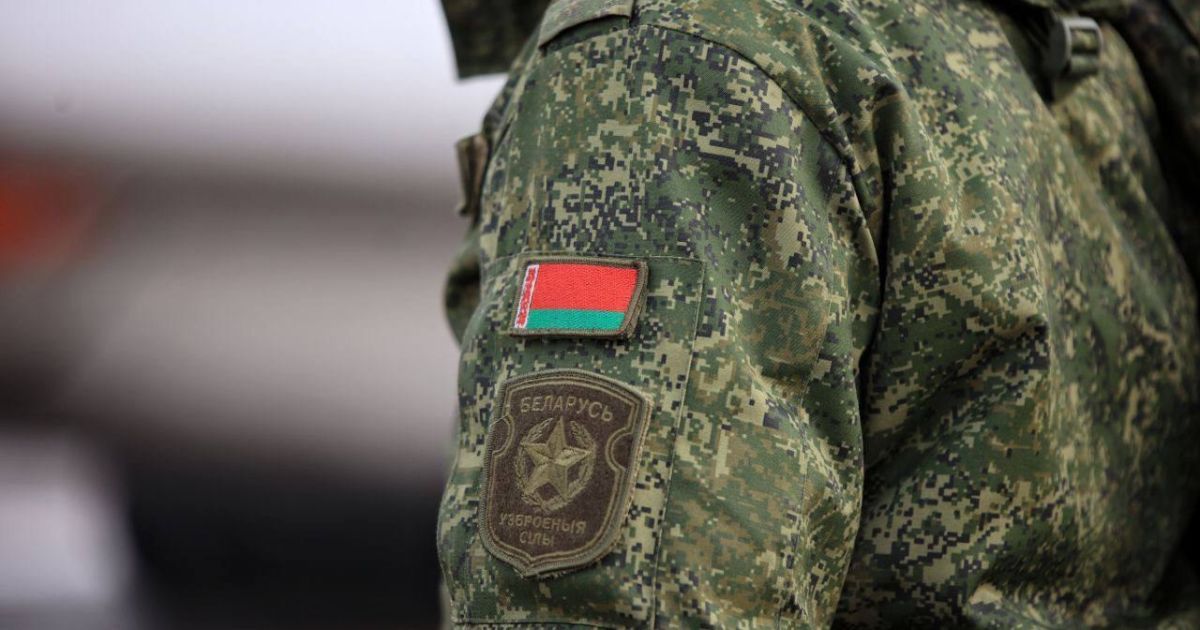
A Belarusian serviceman
As of May 15, Belarus introduced restrictions on visiting forests in 19 districts of the country.
As noted by retired SSU Major General and former Deputy Head of the Security Service of Ukraine Viktor Yahun, the geography of these restrictions draws particular attention.
According to him, 12 of the closed districts directly adjoin the state border with Ukraine, Poland, and Lithuania. The other districts effectively a single contiguous area with them in the west and southwest of Belarus.
«Formally, we are talking about fire safety measures and seasonal restrictions. However, the very configuration of the closed territories, their concentration precisely in the border zone, as well as the general context of Minsk’s recent statements and actions, force us to consider these measures in a military-political dimension as well,» Yahun writes.
In military practice, restricting civilian access to forest and border areas can be used for the covert movement of troops, deployment of field logistics, and setting up temporary depots, command posts, or engineering positions.
In addition, such measures reduce the risk of information leaks through photo or video recording of military hardware and personnel movements.
The situation unfolds against the backdrop of reports from Ukrainian intelligence about the activation of military infrastructure in Belarus and the intensification of joint military activity between Minsk and Moscow.
Possible scenarios for Ukraine
Based on the geography of the closed districts, the expert highlights two potential directions where such actions could have military significance.
«The first is the Ukrainian direction. The greatest attention is drawn to the southern and southwestern parts of the Brest region, which borders Ukraine’s Volyn and Rivne regions. This specific section is important from the perspective of Ukrainian logistics, as a significant part of the transport and rail routes supplying Western military aid passes through Volyn,» the major general explains.
One of the possible scenarios is creating a threat in the Volyn direction, particularly in the Kovel and Lutsk areas. Even without a large-scale offensive, the mere risk of a strike from Belarus could force Ukraine to hold additional reserves on the northern border.
The second scenario is connected with the Sarny–Rivne–Varash direction. Its importance is determined not only by the rail infrastructure but also by the location of the Rivne Nuclear Power Plant. Even a limited threat to this area could have a military-political and psychological effect.
Threat to NATO and the Suwalki Corridor
The second potential vector is the western one. It is connected with the so-called Suwalki Corridor — a narrow strip between Belarus and Russia’s Kaliningrad region that connects the Baltic states with the main territory of NATO.
In Western military assessments, this direction has long been considered one of the most vulnerable in the Alliance’s security system.
The concentration of closed districts in the western part of Belarus could theoretically create conditions for the covert deployment of forces near the Polish and Lithuanian borders. In a crisis scenario, this could be used to demonstrate force, stage provocations, or threaten land communications between the Baltics and the rest of NATO.
Sign of an imminent offensive?
Still, Yagun warns against misinterpreting the latest moves as a clear trigger for an immediate assault.
«Belarus and Russia could be weaponizing the psychological threat on the northern border without actually pulling the trigger,» Yagun said. «The real goal is to lock down allied forces, forcing Ukraine, Poland, and the Baltics to bleed resources, tie up air defenses, and scatter their reserves,» Yahun says.
This phase is about generating leverage and military options rather than a confirmed intent to invade. Still, a combination of factors—geographical constraints, Minsk’s rhetoric, joint military activity, and the strategic value of the borderlands—warrants increased attention from Ukraine and NATO.