
How the war might end: Kuleba outlines two possible scenarios
Former minister Kuleba named the condition under which Ukraine could emerge from the war stronger.
 Follow us on Google
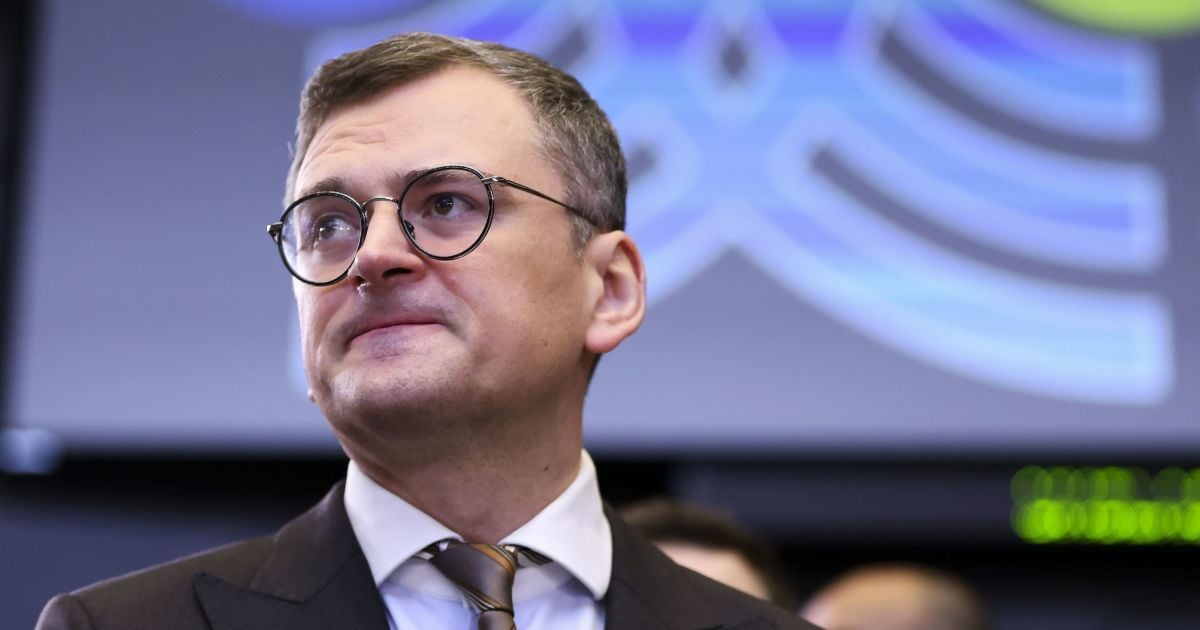
Dmytro Kuleba
Former Ukrainian Foreign Minister Dmytro Kuleba voiced his vision of how the war might end, outlining two possible historical scenarios — the “Finnish” and the “Azerbaijani-Armenian.”
He spoke about this in an interview with Obozrevatel.
Kuleba says he has only an “indefinitely optimistic scenario” for Ukraine. According to it, the country emerges from the war “bloodied” but as a stronger state and returns to the Western world, “from which we were stolen 300 years ago.”
The key point in this scenario: Ukraine emerges from the war without part of its territories, but without legally recognizing the loss of these territories. Then, according to the former minister, events could unfold in two ways.
The “Finnish” scenario
The first path, which Kuleba called conditionally Finnish or Danish, entails a difficult but resolute decision by the elites and the people.
The diplomat cited the example of Denmark, which in the 19th century lost Schleswig and Holstein, and Finland, which lost a war to the USSR — yet both countries “accepted it and said: okay, we will build on what we have” and created successful states within their de facto borders.
At the same time, Kuleba stresses that he is not an advocate of this scenario, but acknowledged it as a historical example of a possible decision.
The “Azerbaijani” path
The second scenario, called the “Azerbaijani-Armenian algorithm,” envisions readiness for a protracted struggle to restore territorial integrity.
Under this path, Ukraine would prepare to reclaim or diplomatically regain those territories over the course of decades, awaiting the moment when it can do so.
“We are much stronger than it seems… therefore the only question will be who uses the time after the ceasefire more effectively,” Kuleba concluded.
The former minister emphasizes that regardless of the chosen path, Ukraine must speak of the 1991 border inherited from the Soviet Union as the state’s non-negotiable border.
Kuleba also notes that he does not see in society any serious demand for the “vision of a Greater Ukraine” with the borders of the Ukrainian People’s Republic, which stretched into the territory of Russia, Poland, and Belarus. Therefore, he said, politics should not be distracted by such issues.