
Massive strike on Odesa: Expert explains new dangerous Russian tactic
Russian forces combined drones, ballistic, and hypersonic missiles during a nighttime strike on Odesa.
 Follow us on Google
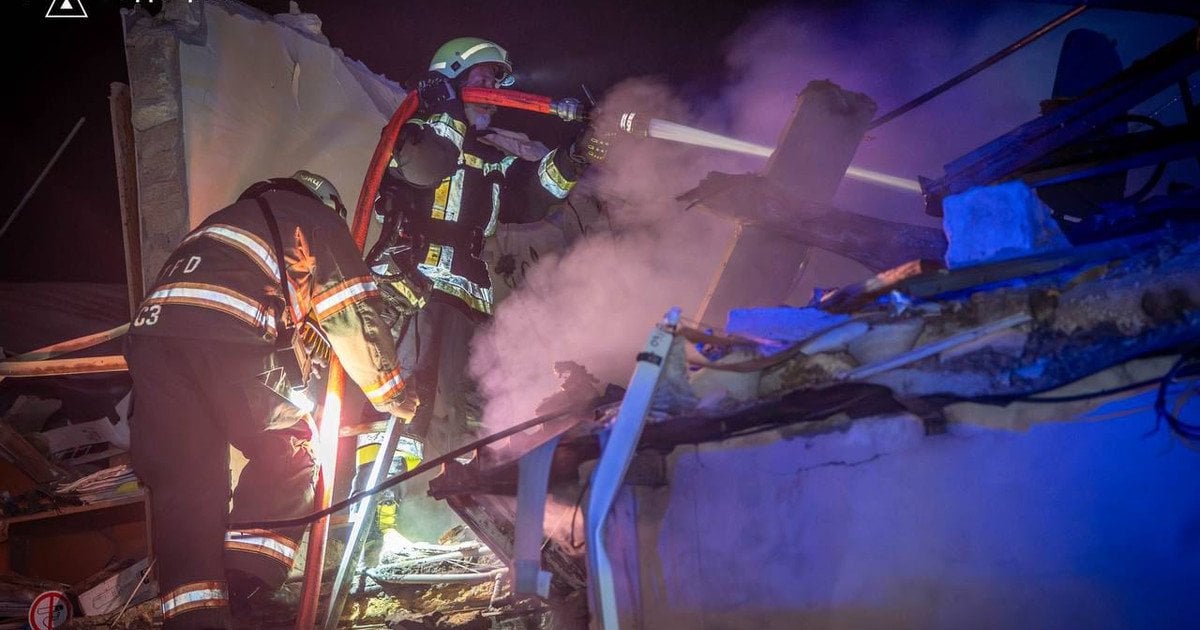
The attack on Odesa / © State Emergency Service
The attack on Odesa on the night of December 13 marked another example of Russia employing high-speed weapons of various types.
Ivan Kyrychevskyi, a serviceman of the 413th «Raid» Regiment and a weapons expert at Defense Express, told LIGA.net about the strike.
He said that the assault included not just Iskander ballistic missiles, regularly targeting the city and port facilities, but also Oniks hypersonic anti-ship missiles.
The expert highlighted that Russia deployed Kinzhal hypersonic missiles for the first time in the latest strike. Their ballistic trajectory makes interception much more difficult.
Kyrychevskyi noted that Kinzhal missiles are only vulnerable in the final stage of their flight, when their speed drops from approximately Mach 5 to Mach 4. At this point, they could theoretically be intercepted by Patriot systems, although the key issue remains the availability of missiles for these systems.
The military expert said that the strike on Odesa demonstrated a new, highly effective Russian attack tactic. The enemy first launches hundreds of drones to wear down Ukrainian air defenses, then follows with missile strikes of multiple types on a single city.
In his view, Russia is deliberately abandoning dispersed attacks across the country, concentrating all strike capabilities on specific population centers.
Kyrychevskyi stressed that currently, there are practically no countries in the world capable of repelling such concentrated attacks.
He noted that even nations with powerful air defense do not have enough systems to counter these massive strikes, posing serious security challenges for Ukraine.