
Peacekeepers in Ukraine: experts explain which countries could send their troops and what Russia wants
Experts have analyzed whether foreign troops could be deployed to Ukraine.
 Follow us on Google

Peacekeepers
The idea of sending peacekeepers to Ukraine has been discussed in the West for some time.
This is stated in a story of TSN correspondent Vitaliy Afanasienko.
The issue of placing "blue helmets" along the so-called demarcation line has once again come up among European partners. In informal talks among Western politicians, numbers such as 50,000 or 100,000 peacekeepers are being mentioned. However, given the lengthy front line, such a contingent would likely be insufficient.
"President of Ukraine has said that the contingent should consist of at least 200,000 soldiers from partner countries, NATO countries. And he also emphasized that the United States should be represented," says military expert Petro Oleshchuk.
Without U.S. involvement, blue helmets from European countries alone might undermine trust in NATO's omnipotence, experts believe. At the same time, it is still unclear under which mandate peacekeepers could enter Ukraine. Simply put, a UN mandate implies peacekeeping support, while a NATO mandate essentially means forcing peace.
"Although Ukraine is not yet a NATO member, due to the presence of significant NATO military forces, any aggression against Ukraine and any violation of relevant agreements would mean aggression against NATO, which, as practice shows, Russia does not want," says Petro Oleshchuk.
NATO countries do not want this either. Former NATO Secretary General Jens Stoltenberg made it clear that the first breach of the peace would mean war between NATO and Russia. Therefore, the peacekeeping option under a UN mandate remains. However, this would require a paradoxical condition — the agreement of the aggressor country.
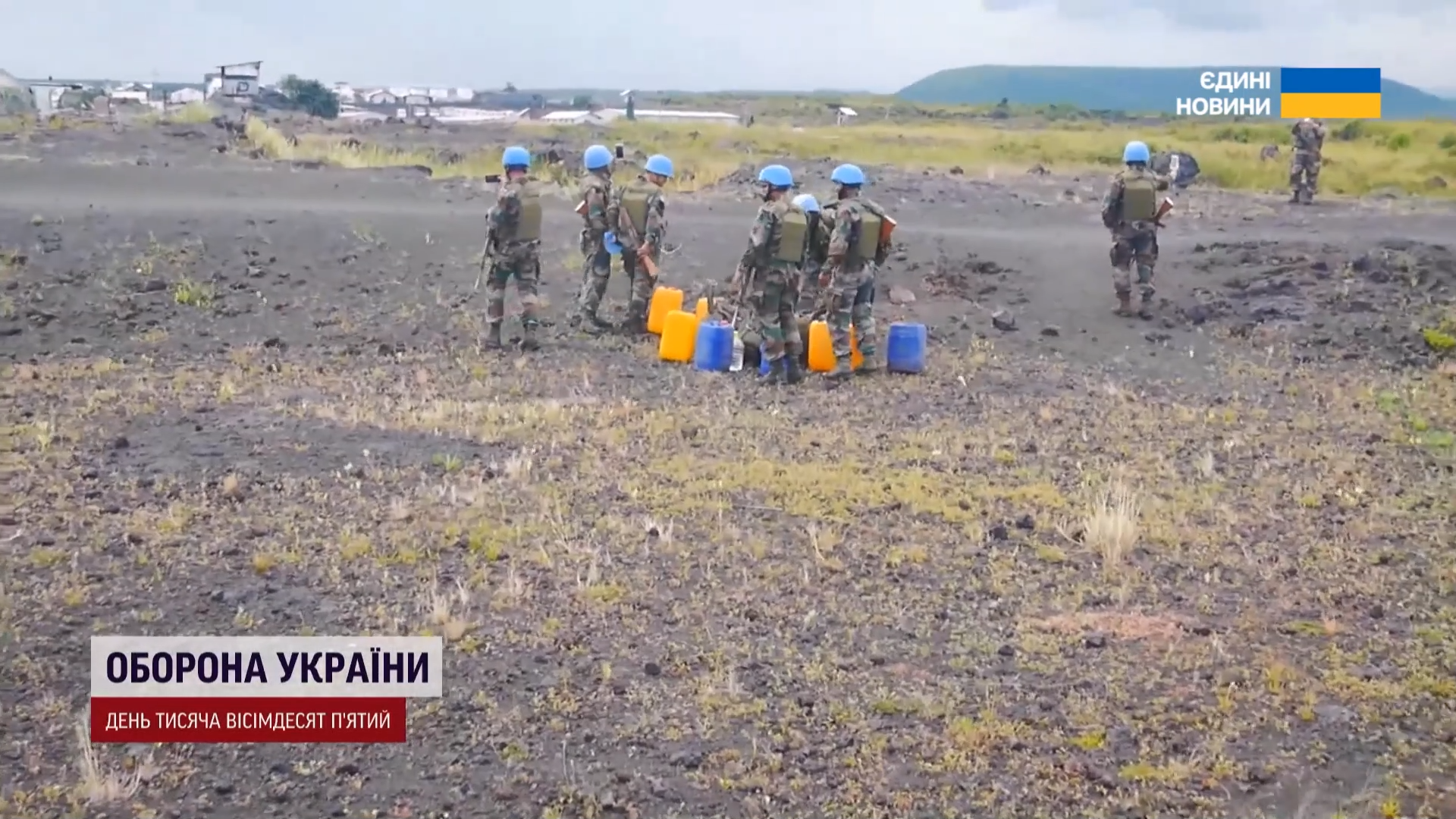
Experts explain whether there will be peacekeepers in Ukraine
"And in the near future, under current conditions, Russia will not agree to this. Even the OSCE mission, which existed from 2014 to 2021, was quite limited and, well, I believe it had no impact on the course of the ceasefire in Donbas. Absolutely none. In that sense, Russia is a member of the UN Security Council, and at any moment it can veto this decision. And no one in the UN can overturn this veto," says military expert Mykhailo Zhyrohov.
An alternative option that Russia would likely not veto would be to include peacekeepers from countries such as India, Bangladesh, and China in the UN peacekeeping forces. Western media have already openly discussed this possibility. At the same time, today, to ensure stable peace, peacekeepers must be equipped not only with small arms but also tanks, anti-aircraft systems, and other heavy weaponry, according to experts. Their role would be to stand exclusively along the demarcation line, ensuring that no side fires upon the other. This should be clearly stated in the mandate, ensuring that the peacekeeping contingent does not abandon its positions after the first shot. This is crucial to avoid repeating the tragic events of 1995.
"When Dutch peacekeepers also left the town of Srebrenica, where the largest genocide since World War II, before the Russian-Ukrainian war, occurred. They simply left, and only Ukrainians, 86 of our peacekeepers, were able to evacuate that people from the village of Žepa. Among our allies, there are positive trends. Several countries, including France, Britain, the Baltic states, and Italy, have expressed their willingness to send peacekeepers," military expert Dmytro Zhmaylo says.
Recently, President Zelenskyy stated that the idea of deploying a European peacekeeping contingent in Ukraine is still under discussion, but clarified that this mission cannot be the only guarantee of security.
"First and foremost, we emphasize the issue of NATO membership, which the Americans and some Europeans still oppose. We say, okay, if not NATO, there must be other effective mechanisms that work for U.S. allies outside NATO, like for South Korea, Japan, Taiwan, and Israel. Why is it possible to strike "Tomahawks" at Yemeni Houthis and protect the skies over Israel, but this cannot be done in Ukraine regarding defense?" Dmytro Zhmaylo says.
Read also:
Which territories could Ukraine return in exchange for Kursk region
Ukrainian gas storages almost empty: stocks insufficient for the economy – an expert
The situation is not in favor of the Ukrainian Armed Forces: a military analyst warns of danger