
Strike on buildings in central Kyiv: why Russian "Shaheds" were able to reach it
Russian strikes on the New Year's morning were not related to military targets.
 Follow us on Google
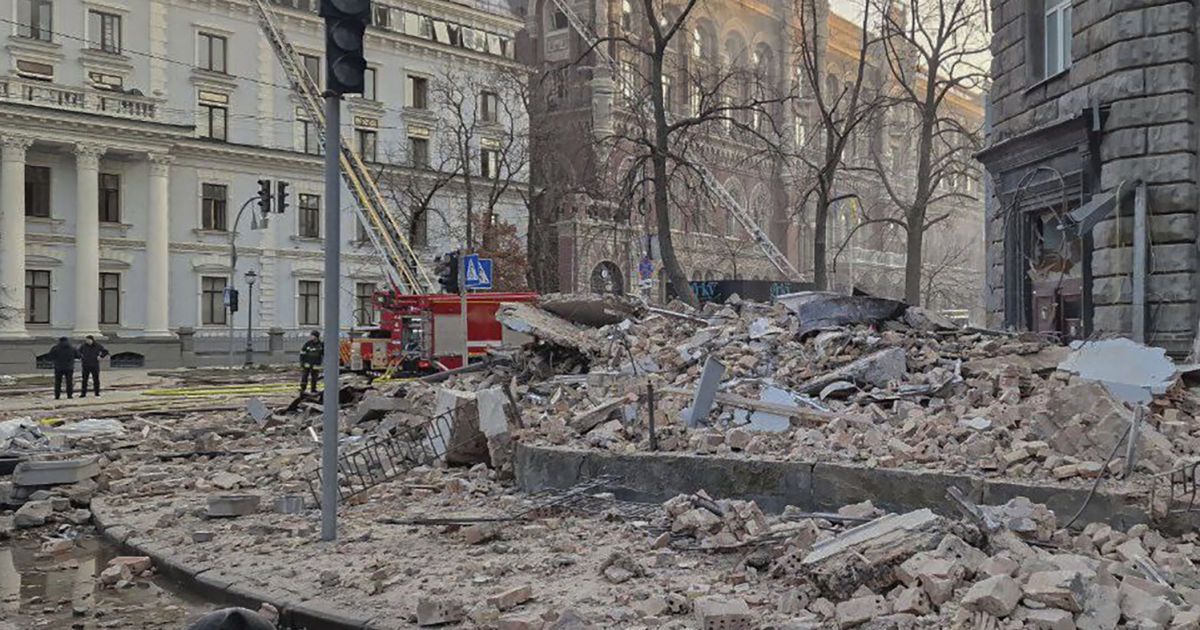
Drone strike on the center of Kyiv, January 1. / Photo: Associated Press
Russian "Shaheds" during the early morning attack on January 1 were able to reach central Kyiv after depleting the air defense system.
This opinion was expressed by military expert Mykhailo Zhyrohov on the air on Radio NV.
According to him, the Russian drone attack on the night of January 1 was unconventional - drone launches occurred without "decoys," which are imitation drones.
"At least in Chernihiv and Kyiv regions, there were at least three waves of these "Geraniums" ("Shaheds" – Ed.)... They exhausted the air defense systems and mobile fire groups that protect the approaches to Kyiv. That's why they were able to get so far and penetrate deep into the air defense system," Zhyrohov explained.
The Russian strikes on New Year's morning were not related to military targets. In Zhyrohov's view, the Russian invaders had identified certain air defense deployment areas and launched drones from the sides that were less protected.
"It was a demonstration that they can pass the air defense system of Kyiv. It was a very difficult night. It wasn't easy, especially since the Russians had roughly determined where the air defense systems were located. It was reconnaissance, and where the mobile fire groups were positioned. And they struck quite powerfully and demonstratively," Zhyrohov said.
The Russian military put in a lot of effort to have the opportunity to send strike drones to central Kyiv.
"The losses are disproportionate because, in fact, if we look at the year, about 90% of these "Geraniums" are shot down. These are enormous costs that they are putting into such strike drones," the expert emphasized.
Read also:
Russia has established a foothold across the river near Lyman – DeepState reports a new threat
Neurobiologist Ihor Zima was killed in a Russian attack on the capital