
The occupied Crimea is turning into a semi-desert: what's the reason (satellite photos)
Most of the peninsula's territory will become unfit for agriculture and even for human habitation.
 Follow us on Google
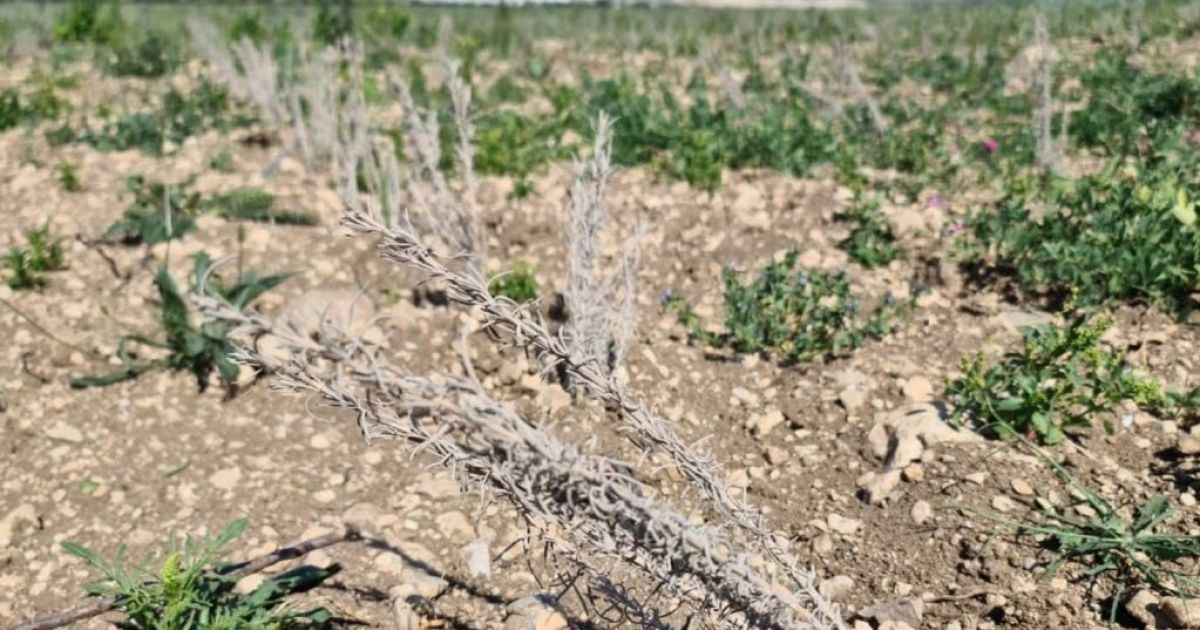
Modern vegetation in the Crimea / Photo: ChrisO_wiki on X platform
After the destruction of the Kakhovka Hydroelectric Power Plant, Russian-occupied Crimea is turning into a semi-desert. Experts predict that around half a million people will be forced to leave the area, which is becoming uninhabitable.
This information comes from an independent researcher known as ChrisO_wiki on the platform X, who shared corresponding satellite photos of the peninsula.
According to the expert, the vegetation cover in the irrigated areas of southern Kherson region and Crimea has decreased by 85%. Additionally, the winter of 2023-2024 was extremely dry, with precipitation amounting to only 10-50% of the norm, and in the mountainous areas of Crimea, only 17% of the norm. As a result, rivers have dried up, and reservoirs have been significantly depleted.
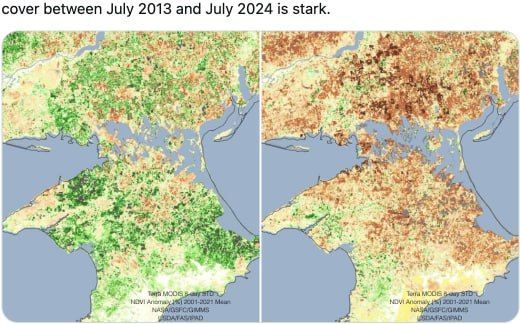
Difference in vegetation cover between July 2013 and July 2024 / Photo: ChrisO_wiki on X platform
This could make most of the territory unsuitable for agriculture and even for human habitation.
"Overall, the reservoir supplied about 12,000 kilometers of canals on both sides of the Dnieper. The Kakhovka Canal alone irrigated 220,000 hectares of land and supported the livelihoods of hundreds of thousands of people in agriculture and heavy industry," the post states.
The transformation of the occupied peninsula into a dry area is already leading to a significant decline in agricultural yields and the threat of water shortages.
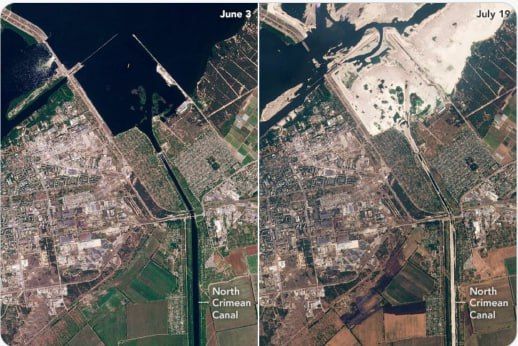
Satellite photos recorded the drying up of the North Crimean Canal / Photo: ChrisO_wiki on X platform
According to the researcher, the current situation may revert northern Crimea to the ecological conditions that existed over 100 years ago.
"It was a hot, arid, dusty plain with frequent droughts, dust storms and crop failures. The indigenous Crimean Tatars made their living from subsistence farming and crafts, not agriculture," he noted.
ChrisO_wiki also quoted an English traveler who described the interior of Crimea in the summer of 1855 as a place of "melancholy desolation," where "grasses and flowers had turned to dust and ash, the surface was a perfect desert and could support only a few plants and bushes."
Read also:
China made a clear statement regarding Ukrainian sovereignty and weapons for Russia - Zelenskyy
Explosions have rocked Kharkiv again: it's already the fifth hit