
Humiliating «slaps» to Putin: War enters new phase after refinery strikes, with Crimea trapped
Ukrainian long-range strikes are hitting key elements of the Russian war machine—oil infrastructure, the shadow fleet, and logistics—increasingly harder. Experts believe this moves the war into a new phase and deprives Russia of a sense of a safe rear.


 Follow us on Google
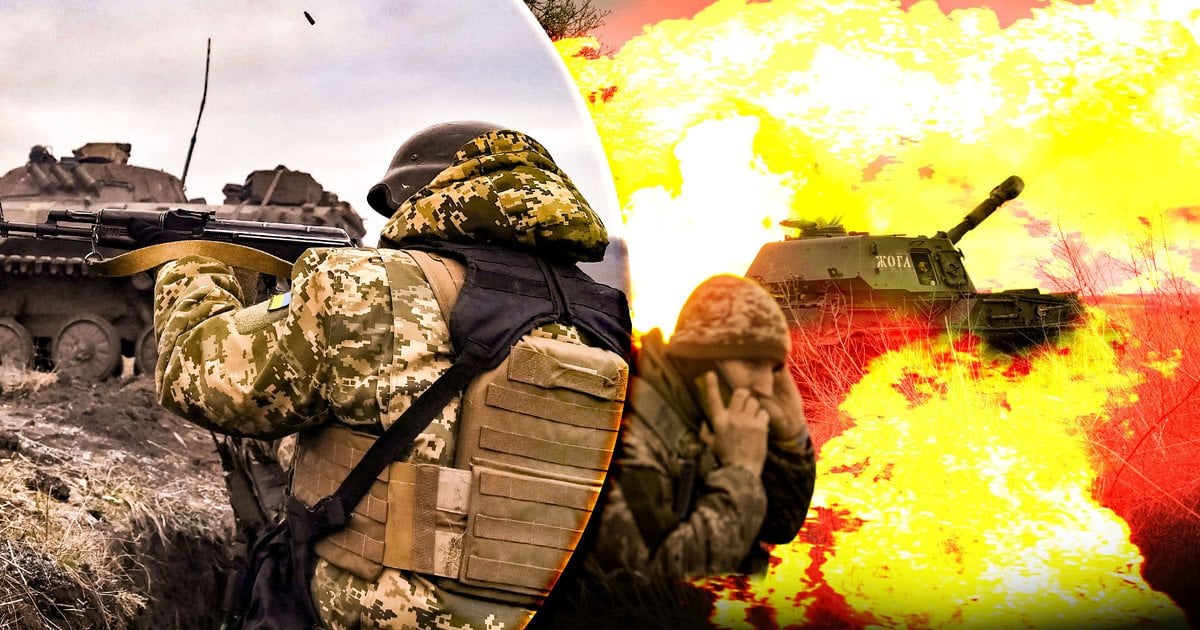
War in Ukraine / © TSN
The war in Ukraine is entering a new phase, with Ukrainian long-range strikes hitting key elements of the Russian war machine—oil infrastructure, the shadow fleet, and logistics in the occupied territories—increasingly harder.
TSN.Tyzhden reports in more detail on how the war in Ukraine is transforming.
According to military expert Hamish de Bretton-Gordon, a retired British Army colonel, the missiles and drones now reaching Moscow and St. Petersburg are bringing the war closer to wealthy Russians.
Previously, the Kremlin shifted the main burden of the war onto Russia’s poorer regions, ethnic minorities, and prisoners. Now, following heavy losses suffered by the Russian military, major Russian cities increasingly fear that the war could reach their own families.
One of the most symbolic strikes hit St. Petersburg at the start of the International Economic Forum, which Russian propaganda presents as the country’s «economic showcase.» Against the backdrop of the event, Ukrainian drones attacked targets near the city, with thick black smoke billowing over the Gulf of Finland, disruptions reported at Pulkovo Airport, and mobile internet down across the city.
Military expert Ivan Stupak believes the strike had not only a military but also a psychological effect. According to him, forum guests could see firsthand that investing in the Russian economy during wartime is becoming increasingly risky.
A separate focus of Ukrainian attacks is Russia’s oil infrastructure. It is the Baltic ports that secure a significant share of Russia’s oil and petroleum product exports, providing the foreign currency inflows to finance the war.
Key targets included Ust-Luga, Primorsk, Vysotsk, and the St. Petersburg port terminal. Energy expert Mykhailo Honchar explains that the Baltic complex is currently the main route for Russian oil exports.
«This entire Baltic complex is Russia’s main hub for oil and petroleum product exports. It used to be the Black Sea complex, but now it is the Baltic, which accounts for nearly half of all Russian oil and petroleum product exports, ” he noted.
In the past month alone, Ukraine carried out 30 strikes against oil and gas infrastructure inside the Russian Federation. The attacks continued into June. Among the recent targets was the Tyumen refinery, one of Russia’s largest private oil refineries, located more than 2,000 kilometers from the Ukrainian border.
The consequences of these strikes are already being felt inside the Russian Federation. Fuel shortages are emerging in Russia, and fuel rationing was introduced even in the Russian capital. Moscow was also forced to restrict exports of gasoline and aviation kerosene, turning to Belarus for additional supplies.
In effect, Putin, who for years used energy resources as a tool of leverage, is now forced to «borrow gasoline» from Lukashenko. Against this backdrop, Russia has already restricted exports of gasoline and aviation kerosene, and may be preparing new restrictions on diesel.
Another critical element of the Russian war economy is the shadow fleet. This is a network of tankers and gas carriers that the Kremlin actively built up after 2022 to bypass sanctions and sell oil.
At the same time, Russia’s restrictions on gasoline and aviation kerosene exports, along with potential new limits on diesel, demonstrate that the refinery strikes hit not only the country’s military logistics but also its domestic fuel market.
The Russian corvette «Boiky,» which was struck in Kronstadt near St. Petersburg, is also linked to this system. According to Ivan Stupak, the ship was intended to escort Russian shadow fleet vessels in international waters and protect them from seizure.
«Its main task was to act as a bodyguard for vessels operating as part of the Russian Federation’s shadow fleet. Now, it will not be able to carry out this mission, ” Stupak said.
According to various estimates, Russia transports more than half of its oil via the shadow fleet. A significant number of these vessels are aging and often lack proper insurance. At the same time, according to Honchar, some of these tankers are directly or indirectly linked to EU countries.
A separate front in this war is Russian logistics in the occupied south of Ukraine. This primarily concerns the R-280 highway, which the Russians previously called part of the land corridor to Crimea, but which Russian military bloggers now increasingly refer to as the «highway of death.»
The highway passes through Rostov-on-Don, Novoazovsk, and the occupied cities of Mariupol, Berdyansk, and Melitopol, before leading to Crimea via Chongar. It was intended to serve as an alternative to the Crimean Bridge should the latter come under attack.
However, Ukrainian strikes in the operational rear have effectively disrupted this plan. Fuel tankers, trucks, and other Russian military equipment are increasingly being destroyed along the route. Over recent months, the number of strikes targeting Russian logistics, ammunition depots, command posts, hardware, and supply routes in the operational rear has quadrupled.
New drones, including the Hornet and Morrigan, play a critical role in this effort. Some of these UAVs utilize artificial intelligence components, enabling them to operate at significant distances and strike moving targets. The Morrigan, officially unveiled in late May, is designed to hunt down Russian logistics deep behind enemy lines, with a range that can reach up to 300 kilometers.
As a result of these logistical strikes, Crimea is becoming increasingly isolated in terms of fuel supplies. According to Mykhailo Honchar, while the peninsula has not yet become an «island» in a fuel sense, the primary methods of mass delivery are already severely restricted.
Fuel shortages and queues at gas stations are being reported across Crimea. Local residents are buying up gasoline in jerry cans to resell it at higher prices. Reports of food disruptions are also beginning to emerge.
In this way, Ukraine is systematically waging a war of attrition against logistics—destroying everything that supplies the Russian military with fuel, weapons, equipment, manpower, and funding. The strikes on oil infrastructure, the shadow fleet, transport routes, and supply depots demonstrate that for Russia, the sense of a safe rear is vanishing.