
Russia intensifies attacks on Ukraine: Zhdanov warns when to expect new missile strikes
What was unique about the missile strike on June 6, and where was Russia aiming?

 Follow us on Google
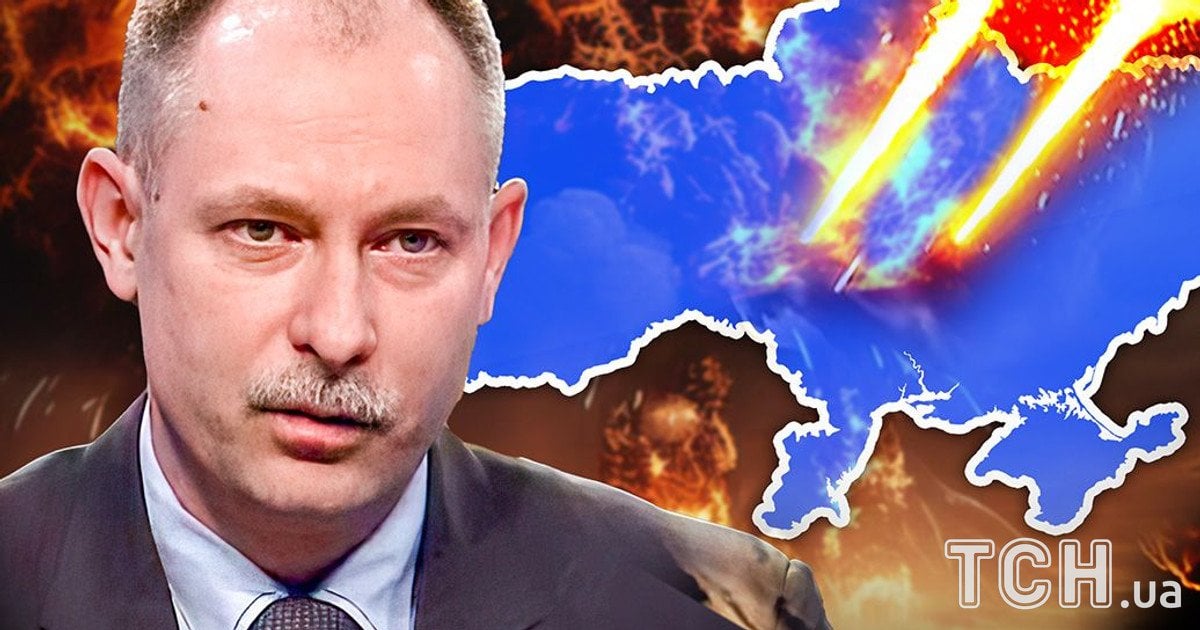
Oleh Zhdanov / © TSN
On the night of June 9, the Russian army launched another massive strike on Ukraine. Russia attacked with 499 air assault assets — drones and several types of missiles. The strike targeted the Kyiv, Chernihiv, and Rivne regions, including the town of Dubno.
Where was the enemy aiming, what was unique about the attack, why did ballistic missiles «disappear» over Kyiv, what to expect from Russia next, and can the attacks continue at the same pace? Military expert Oleh Zhdanov told this in a comment to TSN.ua.
What was unique about the missile strike on June 6: Where Russia aimed
According to Zhdanov, the Russian attack had two distinctive features. First, Russia targeted the small town of Dubno in the Rivne region. Oleh Zhdanov explains: there is one of Ukraine’s operational airfields located there, which Russia was likely targeting.
«Most likely, the Russian Federation, based on some of their intelligence, was looking for F-16s there. Perhaps they were also searching for the Swedish Saab long-range radar reconnaissance aircraft. Why? Because Western media reports suggest that the air battle with a Su-35 over Kursk was the first direct combat engagement in history between an F-16 and a Su-35. They also write that we might have used this Swedish Saab aircraft to illuminate the target, enabling a strike via the Link 16 system, to which we have finally been connected and can now use,» says Oleh Zhdanov.
The unique aspect, the expert explains, is that a Ukrainian pilot can fly the aircraft without even activating the onboard radar system — essentially in stealth mode.
«Coordinates of the target are illuminated, and the data for striking it is transmitted through this system from other reconnaissance assets and radar stations of such an aircraft. In other words, the Su-35 pilot might not even have known he was under attack. That’s likely why they were searching. And that’s why the main strike was focused on Rivne and Dubno,» says Oleh Zhdanov.
Russia’s ballistic attack on Kyiv
The second distinctive feature of the Russian attack on June 6, according to Oleh Zhdanov, was the significant use of decoy measures, possibly the most extensive since the start of the full-scale invasion. This is why missiles heading toward Kyiv, as reported by monitoring channels, seemed to «disappear» in the airspace.
«This is done using electronic warfare and radio-technical reconnaissance stations, creating the simulation of a salvo. Our operators see a large blip on the screen in that area, which is usually classified as a large number of missiles. But this simulation only lasts as long as the station’s beam can sustain it. If a radar reconnaissance station has a detection range of 300 kilometers for aircraft, it can create this blip at that distance,» explains Oleh Zhdanov.
However, the power eventually runs out, and the simulation stops, the expert says. That’s why we get reports that the missiles are no longer observed.
«And their number — if you noticed, when Telegram channels reported the detection of massive launches, including ballistic missiles, and then the Tu-95s approached the launch lines twice with missiles. And messages stated that a „large number of missiles“ had been launched, with the exact count to be clarified later. So, at the initial stage, we can’t count how many missiles were actually launched. We just see that there seem to be many. But then, as the missiles spread out in different directions, we can count them and say, for example, 10–15 missiles are in the air. If it was a simulation, it simply disappears at the maximum range of the radar. It’s there, and then it’s gone — like turning off a light,» says Oleh Zhdanov.
According to him, this is a good sign for Ukraine. It indicates that Russia can no longer create such massive strikes, especially with missiles. Overall, during the attack, the enemy launched relatively few missiles but more «Shahed» drones.
«By the way, as our analysts, linked to the air forces, previously noted, they can launch up to 500 „Shaheds“ at us. A thousand is questionable — they’d need to stockpile. But up to 500, they might be able to maintain such a high rate of „Shahed“ usage for a certain period,» says Oleh Zhdanov.
What to expect from Russia next
In the expert’s opinion, Russian attacks will continue at the same pace in the near future. At the same time, according to Oleh Zhdanov, the recent strikes cannot be called Putin’s response to Ukraine’s successful special operation to destroy Russian strategic aviation.
«It can’t be called a response because, as it turns out, Russia’s capabilities are already very limited. They can’t launch 100 missiles of various types across Ukraine today. Their use is very limited. „Shaheds“ are a problem for us, yes, but they’re not missiles. There’s a difference between 50 kg of explosives and 300 kg,» says Oleh Zhdanov.
He recalled that Ukrainian President Volodymyr Zelenskyy, in a recent address, urged people not to ignore air raid alerts.
«Everyone is saying this because people tend to relax a bit and don’t always go to shelters. And today, the number of „Shaheds“ is significant, and you’ve seen what „Shaheds“ do to residential buildings. Especially when a „Shahed“ falls and explodes in a residential building. These aren’t industrial structures that can withstand such an explosion or prevent harm to people. So, he’s absolutely right to say not to ignore the alerts,» the expert explains.
Oleh Zhdanov notes that the attacks have intensified recently, primarily due to «Shahed» drones rather than missiles.
«I think the attacks will continue at this pace. Perhaps they’ll manage to ramp up something, though it’s unlikely. I think they’ve reached a plateau of their capabilities. Until their economy increases the production of „Shaheds“ or missiles, there won’t be significant changes. The fact that they’ll continue and try to maximize the number of strike assets with „Shaheds“ — yes, that’s quite likely,» Oleh Zhdanov says.