
Zhdanov warns of possible Russian missile strike, names key targets and date
When the next large-scale strike might occur, which targets remain priorities for Russia, what to expect by the end of winter and how many missiles Russia currently has.

 Follow us on Google
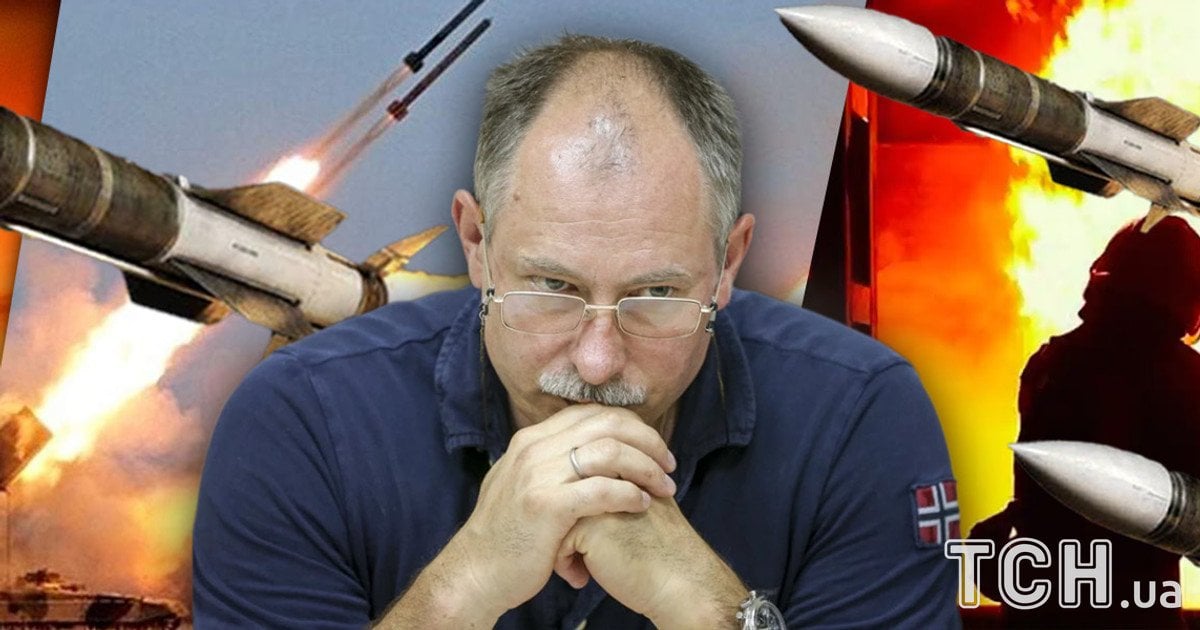
Oleh Zhdanov / © TSN
Russia keeps terrorizing Ukrainians, striking critical infrastructure and the energy sector. The Russian army is trying to exhaust the country during the winter, and deprive civilians of electricity and heating. At the same time, Ukrainian cities are seeing increased activity by reconnaissance drones that could be used to guide future missile attacks.
When the next large-scale strike may occur, which targets remain priorities for Russia, what to expect by the end of winter and how many missiles Russia currently has, were outlined by military expert Oleh Zhdanov, speaking to TSN.ua.
Will Russia continue attacks on the energy sector?
Zhdanov says strikes on energy infrastructure remain one of Russia’s key pressure tools. The capital continues to be a particular focus, as Kyiv plays a decisive role in shaping public sentiment. Power outages, he says, are seen by the Kremlin as a means of psychological pressure on Ukrainians.
«The capital has a very strong influence on shaping public opinion. That is why they will continue trying to shut down Kyiv. And even if there is no electricity — we somehow manage to get by, and power still returns to our homes, even if not on a permanent basis, ” Zhdanov said.
At the same time, Zhdanov explains that Russian forces have been able to identify weaknesses in Ukraine’s air defense system. He said this was influenced both by internal problems and by disruptions in the supply of air defense missiles from partners. These factors, in his view, have encouraged Russia to continue striking Kyiv.
«They will continue. They have found a weak spot in the structure of our air defense. This is the result of mobile fire groups being repeatedly reassigned to infantry units, among other things. There are also shortcomings in diplomatic engagement with partners over missile supplies. Why are there such gaps in the supply of air defense missiles? Everyone stays silent, and then the president comes out and says, „Thank God, I managed to secure a batch of missiles.“ So were we sitting without missiles before? What were our diplomats and negotiators doing with partners at that time? The Russians realized this is a major failure on our part. That is why they continue striking the capital, ” he said.
At the same time, the intensity of the attacks, Zhdanov says, directly depends on the political situation and the course of negotiations.
«In my view, they will try to shut Kyiv down completely. However, there is one nuance — everything will depend on the political situation and the negotiations, ” the expert added.
Which cities Russia chooses for large scale attacks and why
Speaking about frontline regions, Zhdanov said Russia was guided not only by political motives, but also by military logic linked to the positioning of Ukrainian reserves and logistics.
«For frontline cities — Sumy, Kharkiv, Chernihiv, Dnipro, Zaporizhzhia and Kherson — in my view, beyond the political aspect, the military component is more significant, ” he said.
The expert explains that large cities near the front become unavoidable deployment points for troops, as stationing significant forces in open fields, especially in winter, is impossible.
«Where can reserves and troops be kept? Only in residential areas, ” he said. „You cannot deploy troops in open fields — they would freeze. You cannot set up tents, heat that many people or hide equipment there. They understand this too. Generations of generals were trained at the same institutions — the same Russian, Moscow-based academies.“
As a result, by striking frontline cities, Russia is trying to achieve both political and military objectives at the same time, Zhdanov said.
«On the one hand, they are pursuing a political objective by leaving communities without conditions for living, which can be classified as genocide. On the other, they are trying to achieve a military objective by disrupting logistics and striking reserves and troops stationed in these cities, ” Zhdanov said.
What to expect from Russia by the end of winter
Zhdanov said he was not optimistic about the coming months.
He said Ukraine would face a constant threat of new strikes on energy infrastructure until the end of winter, warning in particular of the risk that attacks could be redirected at substations distributing electricity from nuclear power plants.
«Our prospects are not good. Until it gets warmer, we will not get out of this. And if they shift fire, as some Russian military bloggers are now suggesting, towards substations… In this case, the bloggers act as jesters. As the saying goes, what the king thinks, the jester speaks. So if the bloggers say strikes should target substations distributing nuclear power generation, then most likely Russia’s General Staff is planning such attacks. Whether they carry them out will depend on the situation. But believe me, everything will be planned and missiles allocated for it, ” said Oleh Zhdanov.
How many missiles Russia has stockpiled
Zhdanov says Russia is seeking to maintain what it calls a minimum reserve of missiles, but is also being forced to use outdated munitions, which could point to a shortage of modern weapons.
«I think they are keeping a minimum reserve of at least 900 missiles of various types, ” Zhdanov said.
When Russia could launch its next strike
Zhdanov says the likelihood of a new large-scale strike would depend directly on the outcome of negotiations and the Kremlin’s response to them.
Some experts believe Russia could carry out at least one or even two large-scale strikes on Kyiv before the next round of talks.
Zhdanov also outlined a possible timeframe for a new attack.
«So I would expect another large-scale strike closer to February 1, ” he said.