
"Reparations loan" for Ukraine: Zelenskyy reveals how funds will be used
Ukraine is seeking a “reparations loan” from the European Union, based on frozen Russian assets, to help rebuild the country and ensure macro-financial stability. However, if the war continues, the funds would instead be directed toward defense, military support and weapons.

 Follow us on Google
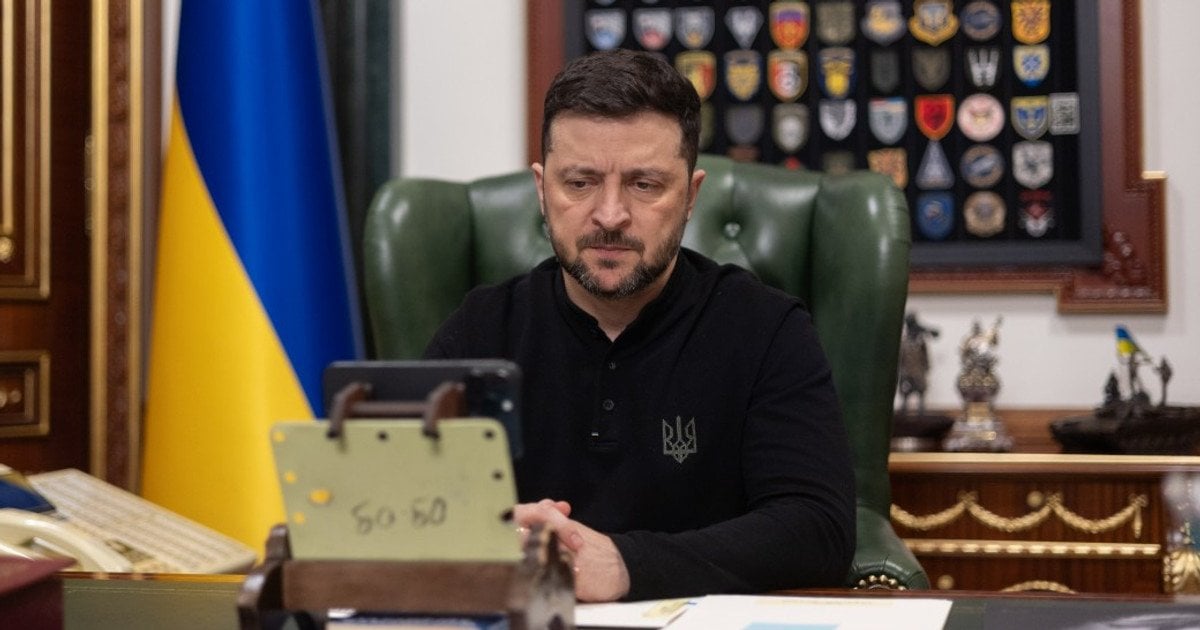
Volodymyr Zelenskyy / © Офіс президента України
Ukraine hopes to secure a “reparations loan” from the European Union based on frozen Russian assets. If there are problems with the loan, Kyiv expects to turn to alternative financing options for the same amount.
Allocation of the “reparations loan”
The sums involved range from $150 billion to $200 billion, with a total of $210 billion. Ukrainian President Volodymyr Zelenskyy said this, while speaking to journalists, 24 Kanal reported.
According to the head of state, any form of financing is critically important for the country.
“This is a financial security guarantee for Ukraine. It is part of our guarantees, like NATO’s Article Five, like weapons,” Zelenskyy stressed.
Two options for using the funds are currently under consideration:
- Plan A — if the war ends. In that case, the financing would be used for rebuilding the country and ensuring macro-financial stability.
- Plan B — if Russian aggression continues. Under this scenario, at least €40–45 billion in financial assistance per year is expected, to be directed toward defense, support for the armed forces, air defense systems and weapons.
“Imagine that there is no war: €45 billion a year would be a very serious injection into Ukraine’s macro-financial stability, into our recovery and, again, into the same critical infrastructure — but this time it would not be about support, it would be about restoration,” the president said.
Zelenskyy added that alternative financing options to replace Russian assets are difficult, but Kyiv is discussing them with the European Union, primarily with European Commission President Ursula von der Leyen. Without these funds, Ukraine would face a budget deficit.
Eon October 23 in Brussels, European leaders agreed on a political decision to secure Ukraine’s financial needs for 2026–2027. However, they did not back a loan based on frozen Russian assets due to objections from Belgium, the Financial Times reported.
How the EU plans to support Ukraine
The European Union remains committed to providing financial support to Ukraine. European Commission President Ursula von der Leyen said Europe had proposed covering two-thirds of Kyiv’s needs over the next two years, amounting to €90 billion.
“We are committed to Ukraine’s reconstruction and future prosperity. Europe will remain its strongest and most reliable partner,” von der Leyen said.
She believes that discussions on aid at the next European Council meeting will be decisive.
At the December 17–18 European Council meeting, EU leaders are expected to focus on a proposed “reparations loan” for Ukraine backed by frozen Russian assets. The majority of EU member states support the idea, but Belgium, Hungary and Slovakia oppose it, while Italy, Malta and Bulgaria are pushing for alternative funding options.
Financial support options
The EU is currently discussing several possible ways to provide financial support to Ukraine. Two main approaches are in focus: a “reparations loan” using frozen Russian assets, and a European loan scheme where member states would pool funds over the next two years to fund Kyiv.
A third, less-prioritized option would see bilateral loans or aid from individual EU countries.
Meanwhile, the EU is discussing a so-called “transitional loan” for Ukraine. It would be financed through EU borrowing to provide financial support in the first months of 2026. Experts say this measure would buy time to finalize a full reparations loan with Russian assets in a way acceptable to all sides, including Belgium.