
Not enough missiles for everyone: Why Ukraine faces critical air defense shortage
Global stockpiles of Patriot interceptor missiles are critically depleted, and even transferring all US-manufactured missiles to Ukraine will not cover the country’s air defense needs.

 Follow us on Google
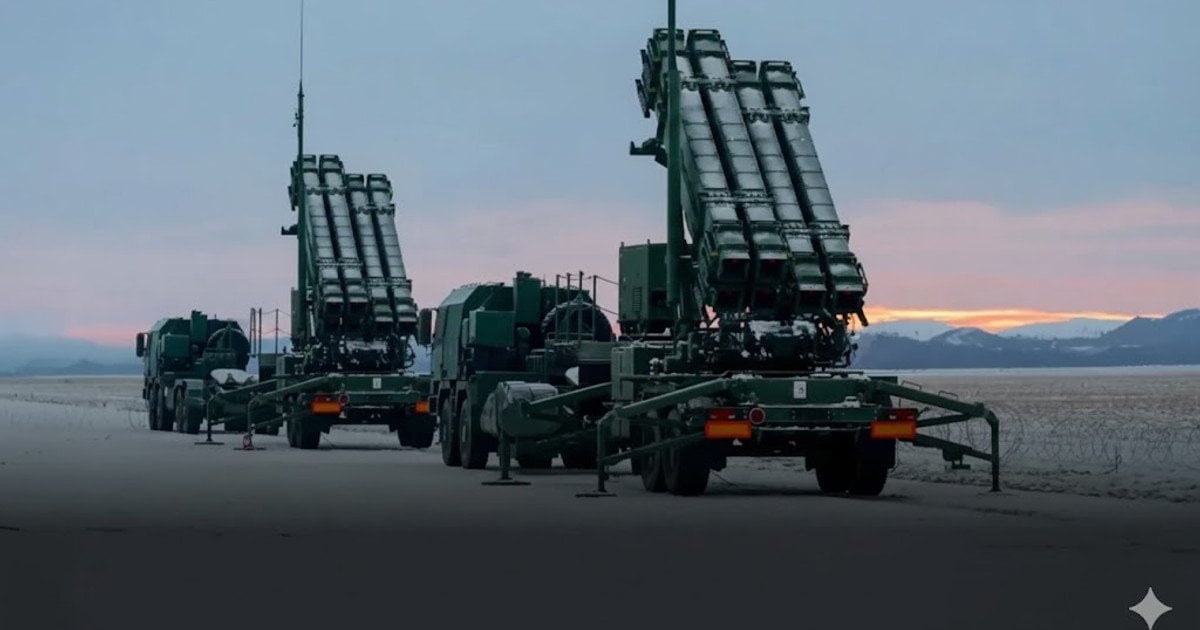
Patriot air defense systems / Illustrative image / © Ministry of Defense of Ukraine
Recently, Ukrainian President Volodymyr Zelenskyy appealed to the United States regarding a critical shortage of interceptor missiles for Patriot systems, which serve as the primary shield for Ukrainian cities against Russian ballistic missiles. The supply situation has worsened significantly due to the war in the Middle East and the limited production capacity of the US military-industrial complex.
Weapons expert and editor-in-chief of Defense Express Oleh Katkov explained in an interview with UNIAN why interceptor missiles are in critically short supply and what risks Russia’s missile campaign poses to Ukraine.
The math behind the shortage
Until recently, the total volume of Patriot air defense missile production was split mainly between the United States and Ukraine. However, following Iran’s attack on Israel, wealthy Gulf states (Saudi Arabia, Qatar, UAE) that also utilize PAC-3 systems actively joined the queue. According to Katkov, in just 39 days, the Americans and their Middle Eastern allies fired about 4,500 interceptors, causing the US to deplete nearly half of its own stockpiles.
At the same time, Lockheed Martin is capable of producing only 620 PAC-3 MSE missiles per year (approximately 56–57 units per month).
«Russia produces about 60 Iskander ballistic missiles and roughly 10 Kinzhal missiles every month. To reliably intercept a single ballistic target, two Patriot missiles are required. Even if all manufactured missiles are transferred to Ukraine… it will not be enough. The math does not add up,» the expert explains.
Domestic production: a matter of years
Amid the shortage, Ukraine has declared its readiness to manufacture interceptors independently or develop its own anti-ballistic shield. However, the expert warns that this process requires a colossal amount of time.
As an example, Katkov points to neighboring Poland, which, under an offset agreement with the US, spent seven years just to secure certification and build a plant to manufacture attitude control motors for PAC-3 MSE missiles. Therefore, establishing full-scale Ukrainian production of such missiles could take up to 10 years.