
“Return to the past”: Expert on impact of Starlink shutdown on Russian forces
The lack of a full-fledged alternative to the American system has significantly complicated Russia’s ability to wage so-called "network-centric warfare," Oleksii Hetman says.

 Follow us on Google
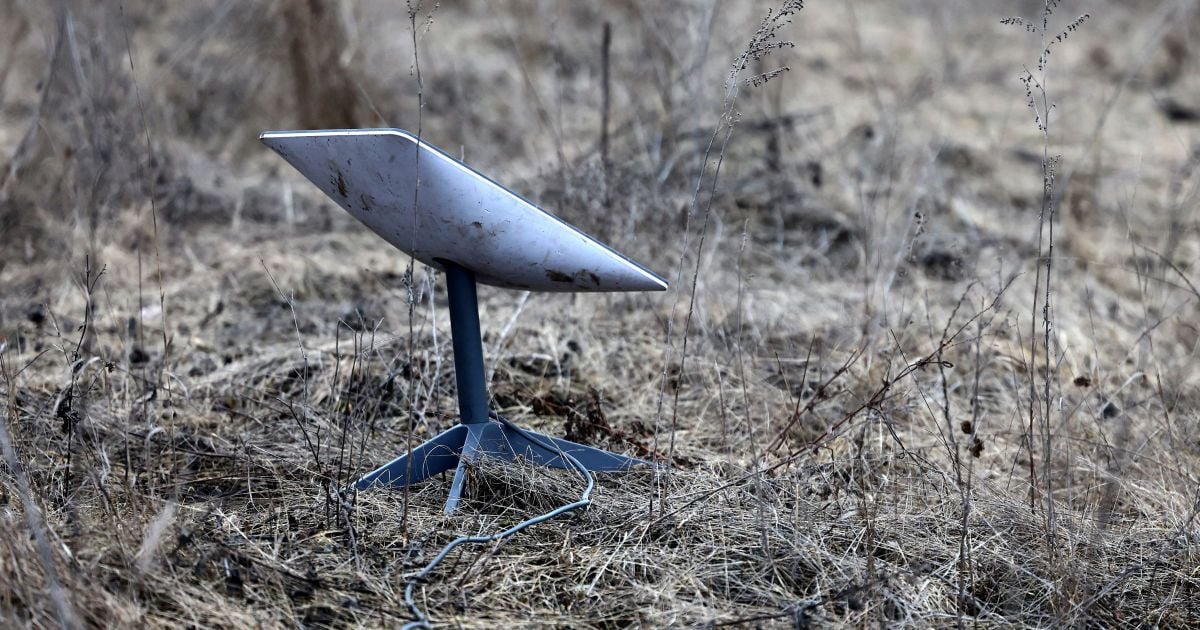
Starlink terminal
Russian forces lost their advantage in battlefield command and control after their access to the Starlink satellite communication system was restricted, according to military analyst and retired major Oleksii Hetman.
Speaking on the Kyiv24 TV channel, Hetman said the lack of a full alternative to the American system has significantly complicated Russia’s ability to conduct so-called "network-centric" warfare.
What capabilities did the occupiers lose?
Previously, Starlink allowed Russian troops to coordinate unit operations in real time. The system provided:
high-volume video data transmission;
instant communication across multiple command levels, from individual tank crews to battalion headquarters.
Starlink previously allowed Russian forces to coordinate units in real time, enabling large-scale video transmission and instant communication between different command levels, from individual tank crews to battalion headquarters.
“Without this communication capability, Russians are forced to return to primitive command methods, such as standard radios or even laying telephone cables,” Hetman said.
Has this reduced the intensity of Russian assaults?
Despite a significant drop in coordination and command quality, Russian forces have not reduced their activity. Assault attempts along the front line remain high despite the degradation of their communication systems.
The loss of technological advantage is forcing Russian troops to act less efficiently and in a more chaotic manner. Nevertheless, Russian commanders continue to pressure Ukrainian positions, relying on numerical superiority rather than advanced command-and-control systems.