
New level of electronic warfare: “Shaheds” create communication network for Russia over Ukraine
Russian forces are equipping kamikaze drones with radio modems operating on different frequencies, building a network over Ukraine to relay intelligence and control the drones.

 Follow us on Google
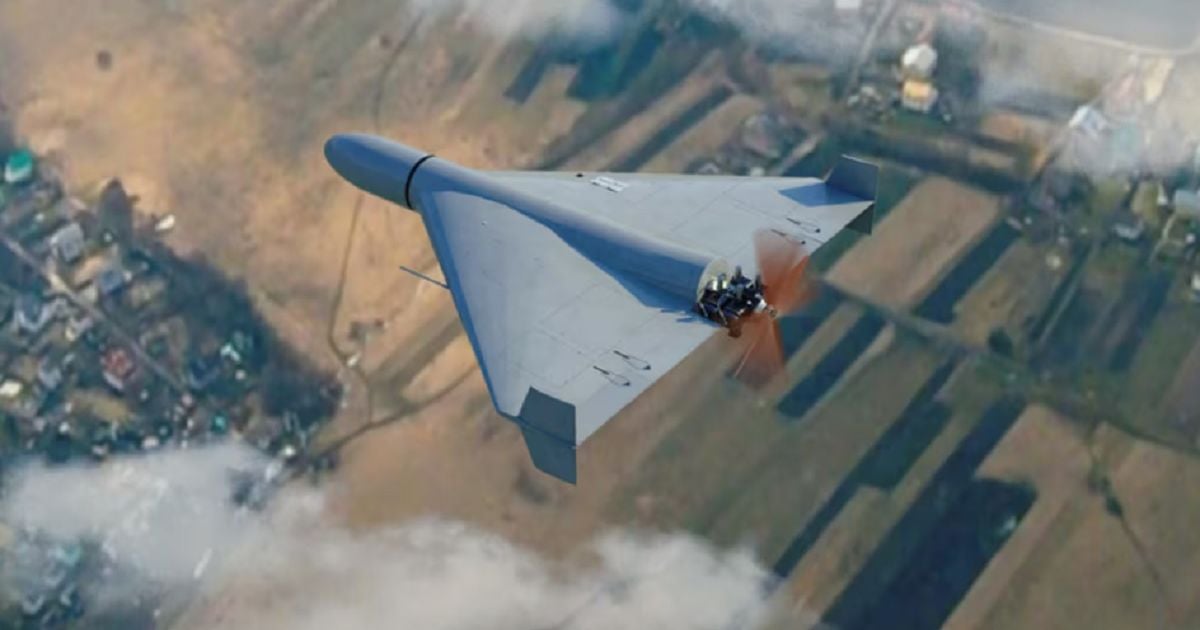
“Shahed”
Russian troops have started equipping kamikaze drones “Shahed” and “Gerbera” with new radio modems across multiple frequency bands, forming a full-fledged airborne communication network.
Electronic warfare and military communications specialist Serhiy “Flash” Beskrestnov reported this in his Telegram blog.
He noted that the Russians no longer rely on a single Chinese modem in the 1300–1500 MHz range. Downed Shaheds have revealed other models, including 3200–3400 MHz modems, and devices operating in the 2700–2900 MHz range have also been detected.
Beskrestnov points out that Chinese manufacturers produce a wide range of modems across different frequency bands, making electronic countermeasures increasingly challenging: “As you can see, our radio war is just getting started.”
He explains that the modems on the drones create a branching communication network, where several "Shaheds" and "Gerberas" in the air simultaneously transmit data to each other and directly to Russia.
This forms a “web” that is hard to suppress, as the signal is duplicated across all modems.
Within this network, the Russians gain two key advantages:
real-time transmission of intelligence data,
control of Shaheds during flight in real time.
Beskrestnov emphasizes that controlling and countering this process is critically important for the country’s defense capabilities.
He says that he has already alerted military leadership to the scale of the threat.