
Ukrainian colonel explains why Putin fears Ukraine receiving Tomahawk missiles
Every Tomahawk missile is capable of carrying a nuclear warhead, one of the main reasons for the dictator’s panic.

 Follow us on Google
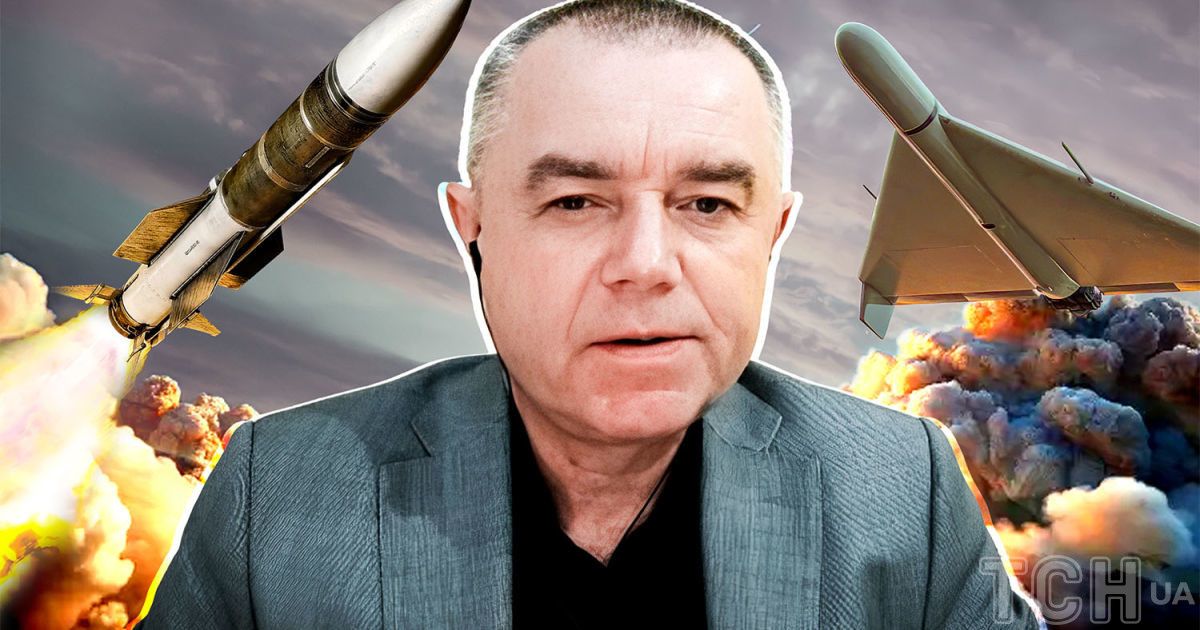
Roman Svitan / © TSN.ua
A recent statement by U.S. President Donald Trump about a «near-finalized decision» to supply Ukraine with Tomahawk cruise missiles prompted an immediate and sharp threat from Vladimir Putin about deteriorating relations.
Military expert and retired Ukrainian Armed Forces Colonel Roman Svitan told 24 Kanal that the Kremlin’s fear of this weapon is grounded in practical reasons.
Why Tomahawk poses a mortal threat to Russia
Roman Svitan emphasized that every Tomahawk missile can carry a nuclear warhead, which is a primary reason for the dictator’s panic. However, even non-nuclear variants could inflict colossal damage on Russia.
The expert explained that Tomahawks are difficult targets to intercept. According to him, if Ukraine manages to obtain «several hundred Tomahawks,» it would mean:
The Russian economy could be effectively crippled.
Even «a few dozen» of these missiles could damage most of Russia’s military factories.
«If our country receives several hundred Tomahawks, the Russian economy can be written off… It may not be possible to completely disable them, but the damage will cause Russia’s military machine to falter. For him (Putin), that’s almost equivalent to death,» Svitan noted.
He added that from Ukrainian territory, Tomahawks could reach key enemy military targets in the Urals.
Political threat to the dictator
Colonel Svitan stressed that even partially successful use of this weapon would have a devastating political impact within Russia.
«Putin understands perfectly well that if, out of a hundred missiles, the Russians manage to shoot down half, the rest will cause a furor in Russia. For the dictator, this means serious problems,» the expert explained.
Roman Svitan suggests that Trump might use this decision as leverage, and the transfer of missiles could take place before his meeting with Xi Jinping at the Asia-Pacific Economic Cooperation forum at the end of October.