
Massive “Shahed” attacks: Why it's getting harder to shoot down drones and how to counter them
Russia continues to terrorize Ukraine with Iranian-made drones. What can be done to counter them?

 Follow us on Google
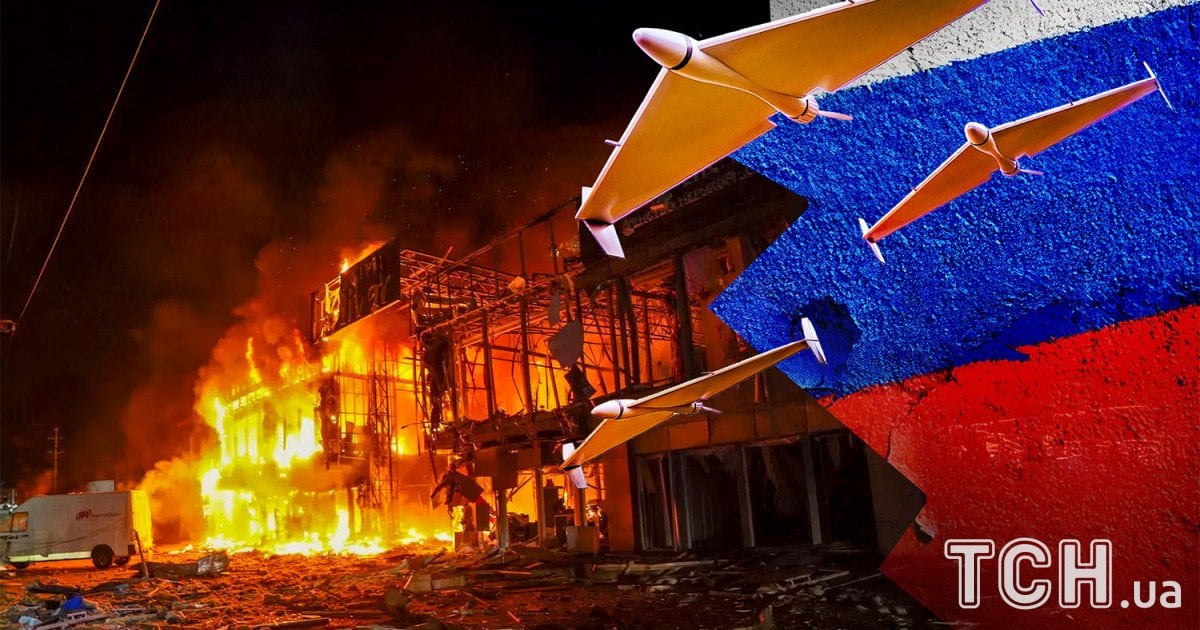
Russia massively attack Ukraine with drones
Ukraine is urgently seeking effective ways to resist Russia’s “Shahed” drone terror. In just the first 20 days of June, Russia launched over 3,500 attack drones on Ukraine. The enemy has successfully scaled up production of these deadly Iranian UAVs and is expected to further increase both the number and intensity of attacks on Ukrainian cities. Experts warn that time to develop adequate defenses is running out. The good news, however, is that Ukrainians are capable of producing counter-drone weapons domestically.
This is reported in a piece by TSN correspondent Mariya Vasylyeva.
The danger of Russia’s new tactic
Russian attacks on major Ukrainian cities have become significantly more threatening in June. The Russians have changed their tactics: instead of spreading out attacks across the country, they now focus hundreds of “Shaheds” and dozens of missiles on just one or two cities, overwhelming air defense systems.
Previously effective defensive measures are losing their efficacy. “Shaheds” are becoming harder to neutralize with electronic warfare (EW) systems. They typically fly at altitudes around two kilometers, which makes it nearly impossible to take them down with machine gun fire from mobile units. The drones dive toward their targets from high altitudes as a swarm.
Things are expected to get worse, and there’s almost no time left, warns military communications specialist Serhii “Flash” Beskrestnov:
“As you know, I’m an optimist and only raise the alarm in extreme cases. But with this level of drone production and escalation, Russia will flatten our entire country with "Shaheds." If we don’t act now, our infrastructure, industry, and defensive facilities are done for.”
How to counter Russian attacks
According to the military expert, the primary countermeasure should be interceptor drones — and mass production should have started long ago. Many companies are already working on such technologies, with some successfully intercepting Russian reconnaissance UAVs. In addition to models like Zala, Lancet, and Orlan, the first “Shaheds” have also been shot down this way.
However, scaling production remains a critical bottleneck for Ukraine’s defense industry, which moves too slowly.
One of the main advantages of anti-drone drones is their cost. Compared to a “Shahed,” an interceptor drone can be orders of magnitude cheaper.
“The maximum cost of a tool, that hits a "Shahed", shouldn’t exceed $5,000, in my opinion — possibly even less once we scale. A single "Shahed" costs anywhere from $50,000 to as much as $250,000,” the expert says.
The downside of interceptor drones is the time needed to train operators and to create a coordinated command system. The biggest problem, according to Commander-in-Chief Syrskyi, is the extremely low number of radars. Israeli radar systems are currently helping detect enemy drones, but thousands more are needed. Recently, the Netherlands agreed to urgently supply 100 such radar units.
Another promising direction for building an air shield, Syrskyi believes, is light aircraft.
“Deploying an F-16 costs $40,000–50,000 per flight hour, including maintenance, parts, fuel, and more. In contrast, a light aircraft itself costs $60,000–70,000. Mounting a machine gun on it is relatively easy. The advantage of light aviation? Compared to interceptor drones, for instance, it can operate in all weather conditions — and it’s much faster.”
A major advantage of both interceptor drones and light aircraft is that “Shaheds” can be taken down before reaching cities, reducing destruction from falling debris. The downside is time lost. At a drone production facility in Alabuga, Russia is already developing tech to help “Shaheds” evade Ukrainian interceptors, which are still being produced more like boutique weapons than mass-market defense systems.
Ukraine’s survival now depends on whether it can gain a technological edge in this deadly race.
▶ You can watch the video on the TSN YouTube channel at this link: TSN 20:00 WITH ALLA MAZUR LIVE! SUMMARY NEWS JUNE 27 — FRIDAY