
«Putin is hurrying»: Zhdanov reveals Russia’s goals behind strikes on energy sector
Military analyst Oleh Zhdanov outlined the tactics behind Russian strikes on Ukrainian energy infrastructure.

 Follow us on Google
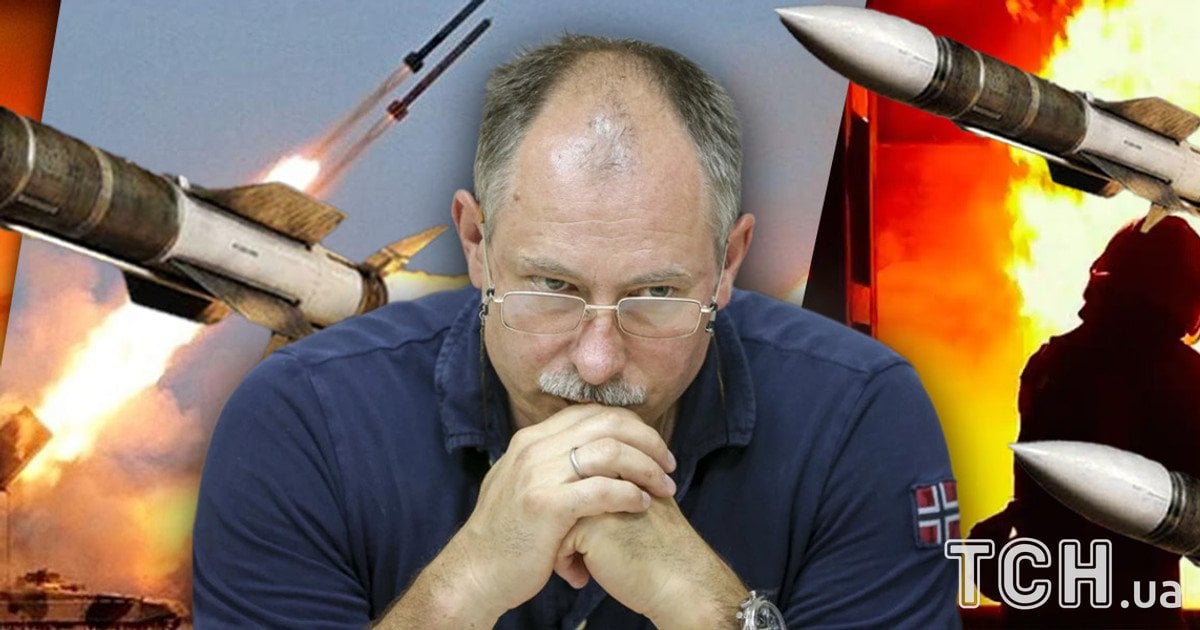
Oleh Zhdanov outlined Russia’s tactics / © TSN
Russian strikes on the energy sector continue to deprive Ukrainians of power and heating. In Kyiv, Dnipro, Kharkiv, and other cities, electricity may be unavailable for up to 15 hours at a time, and in many buildings heating goes out along with power. Meanwhile, Russian attacks have continued daily — Moscow is seeking to use the cold weather to its advantage.
Military expert Oleh Zhdanov told TSN.ua how strikes on the energy system affect Ukraine’s capabilities on the front lines, what the Kremlin aims to achieve, and when the attacks might pause.
Why Russia is hurrying
According to Zhdanov, Russia is attempting to exploit the cold to plunge Ukraine into blackouts, thereby strengthening its position ahead of potential negotiations.
«Russia is indeed rushing to use the cold weather to cause blackouts. They want to create, through the genocide of our people, conditions for a stronger negotiating position, ” he says.
The expert connects the Kremlin’s haste with political developments in the United States. He says that by early summer, the US election campaign will effectively get underway:
«Why by summer? Because from around June 1, careful preparations for the US elections will begin. If we discussed that from January 1 they would start unpacking and revealing dirty laundry, that has happened. The Epstein files, scandals, and so on. From June 1, the campaign will effectively begin. The race will start, so to speak, although officially it begins in early September.»
Oleh Zhdanov believes Donald Trump will seek to show a rapid result in ending the war.
«Trump will do everything to stop the war. Simply stop it. He does not care how, under what conditions. He wants us to stop shooting, and the Russians too. And he will go out and say: I stopped the ninth war, I saved you from nuclear war. He is already addressing this issue, ” Zhdanov said.
For this reason, he added, Russian dictator Vladimir Putin will try to extract the maximum advantage before that moment.
«Putin also understands that in May Trump may set conditions he cannot refuse, which is why they are hurrying, ” the expert said.
How power outages affect the front line
Oleh Zhdanov is convinced that strikes on the energy sector do not have a critical impact on military capabilities — many processes can operate on alternative power sources:
«And overall at the front — I do not know what we still have from industry that works and requires the industrial grid. It can be replaced with generators. As of today, so many generators have been brought into the country that, if deployed, even during the day the lights will be on. But the question is where they are and who is using them.»
In any case, in his opinion, enterprises do not need them at present.
«This is not metallurgy, which requires megawatts of electricity. Today an enterprise can operate using local generation, either gas-powered or with internal combustion engine generators. So this will not have much impact. More or less powerful and large-scale enterprises are located outside our country, ” the expert explained.
Russia’s main bet is on public sentiment
The biggest impact of strikes on the energy sector, according to Oleh Zhdanov, may be psychological. The Kremlin hopes for a potential change in public attitudes.
«Regarding the population, that’s the question. On one hand, it angers us further, and the degree of resistance increases. But sooner or later, psychologists say, a tipping point may occur when people give in and public opinion starts to shift. That is what the Russian Federation is counting on, ” the expert said.
He stresses that most units at the front operate independently.
«Power cuts do not significantly affect military operations. Logistics runs entirely on fuel. Fortunately, fuel is available, partners supply it, everything moves. Some railway use remains, but we deploy diesel locomotives where electric ones cannot operate. At the front, all fighters are autonomous. Only headquarters, perhaps in operational depth, may be connected to the industrial grid. Otherwise, everyone uses generators. So this does not greatly affect the front, ” Zhdanov said.
He adds that troop morale depends directly on what happens in the rear.
«Morally, the front responds like a mirror. As they say, the army reflects the state, and the front mirrors public opinion. If public opinion raises hostility toward the enemy, the front will react accordingly. If public sentiment shifts toward „better a bad peace than a good war,“ then the front will adopt the same attitude. The front is a reflection of society, ” the expert believes.