
«Target number one»: Zhdanov names where Russia struck during the attack and what might be next
On the night of July 28, Russia launched another massive strike on Ukraine, using drones and missiles.

 Follow us on Google
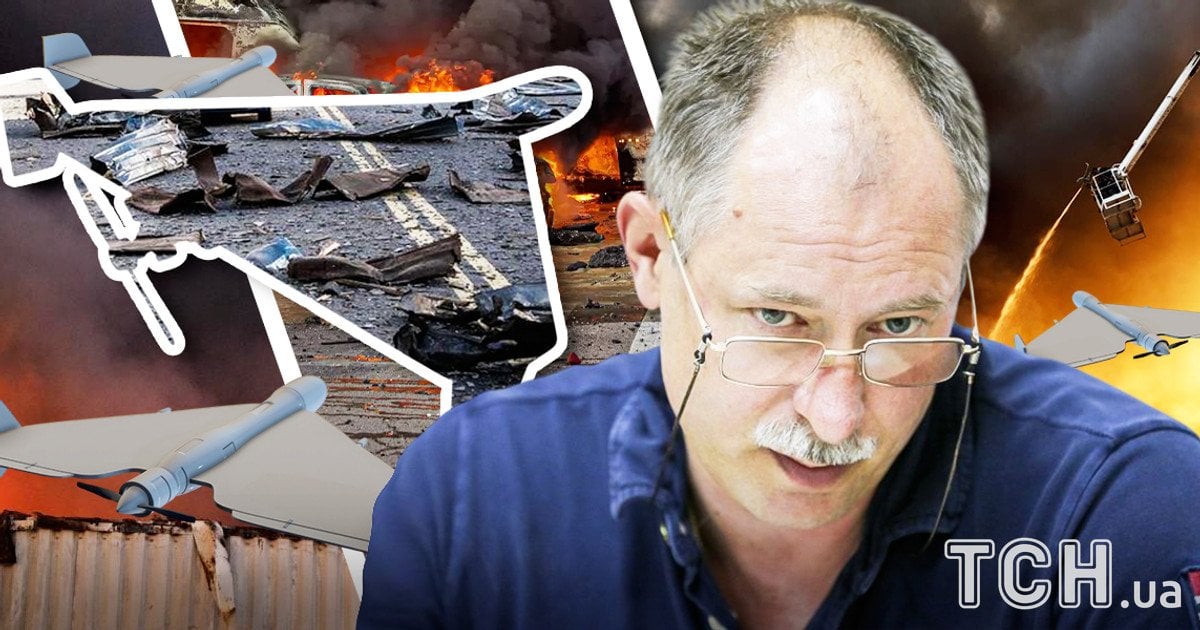
Oleh Zhdanov / © TSN
The Russian army has adopted a new tactic: during a massive attack on Ukraine, 20–30 drones target a single object. They may take different routes but converge on the target at roughly the same time, starting the attack and causing greater damage.
Military expert Oleh Zhdanov shared this to TSN.ua.
What made the latest attack on Ukraine unique
According to him, unfortunately, the Russian army currently has an ample supply of missiles and «Shahed» drones. During recent massive attacks, particularly on the night of July 28, Russia has been targeting our airfields.
«They started with Vasylkiv — there was a massive attack, then Ivano-Frankivsk, where there’s an airfield, and now Starokostiantyniv. They are trying to maximally disrupt our airfield infrastructure to prevent us from supporting flights. Today, we’ve been increasingly using aviation with French AASM Hammer and American JDAM munitions. And quite accurately — they are highly precise. We’ve already destroyed numerous Russian headquarters, regiments, and brigades. Every day, when you look at the General Staff’s reports, there’s a section about „strikes by Ukraine’s defense forces on areas of enemy concentration.“ This means we are working to destroy accumulations of enemy manpower and equipment within a tactical depth of up to 50 kilometers. Our aviation poses a threat to the Russians,» Oleh Zhdanov explained to TSN.ua.
Where Russia aims: what might be next
During the attack on Starokostiantyniv, Ukrainian air defenses shot down almost all targets, says Oleh Zhdanov: 309 UAVs and two Kh-101 missiles. According to the Air Force, two missiles of different types and 15 strike UAVs hit their targets. Kh-47M2 aeroballistic missiles did not reach their targets.
«Unfortunately, they have enough missiles. It should be noted that in Starokostiantyniv, almost everything was shot down. This is very good. It shows that we are protecting such facilities as airbases on our territory. This was another Russian attack on another target. It’s hard to say which airfield will be next. Unless they switch to something else. But for now, it seems that airfields are their number one target,» says Oleh Zhdanov.
Russia has accumulated about a thousand drones
The Russian army may have amassed over a thousand strike drones of various types, but, according to the expert, it is unlikely capable of launching them all simultaneously within a single day.
«It’s unrealistic. They would have to continuously launch drones throughout the entire day. Even last night, there were 320 drones and three to four waves of launches to achieve that number of drones in the air. So, lifting a thousand drones into the air would require launching them non-stop for a whole day. That’s currently unlikely and almost physically impossible,» explains Oleh Zhdanov.
At the same time, Russia continues to stockpile both missiles and drones:
«Unfortunately, Russian industry is now fully geared toward military production. This is one of the reasons why Putin does not want to cease fire or agree to negotiations. It’s beneficial for him. He has shifted the economy to a war footing, and China is providing supplies for missile production. We’ve said that only a steady supply chain would allow Russia to accumulate missiles. This means China is meeting all these criteria.»
When Russia might launch the next massive strike
According to our intelligence, Russian industry is currently producing around 230 drones per day, says Oleh Zhdanov. However, this includes both combat drones and decoy drones.
«It’s easy to calculate. Every day, they launch a certain number. For example, over three days, they launched 50–60–90 drones, and 230 minus 90 means 140 drones went to storage. In three days, that’s already 450 drones, plus the 230 produced in the current day — that’s 680 drones. In just 3–4 days, they could have a thousand drones at their disposal. But, thank God, they are not capable of launching them all at once,» says Oleh Zhdanov.
The Russian army is using a new tactic
According to the expert, it’s harder for Ukrainian air defenses to shoot down air targets when they are dispersed across the country, as was the case during previous massive attacks:
«Because today, drones can maneuver; they are programmed for more complex flight paths. They can circle in certain areas, change altitude, as altitude significantly affects the operation of our radar stations. When they fly very low, they fall below the radar’s line of sight.»
The Russian army has now changed its tactics and opts for massive strikes on one or two targets during an attack, Oleh Zhdanov says.
«This is more effective in that the greater the number of drones, the higher the likelihood that they will break through our defenses and achieve some success in hitting the target. Plus, if 2–3 drones hit a target, the effect is minimal. But if 10 out of 20 hit the target, the destruction will be much greater and far more catastrophic for us. The Russians have mastered this tactic, and 20–30 drones are sent to a single target. They may take different routes, but they converge on the target at roughly the same time and begin attacking it,» Oleh Zhdanov explains.