
Ukraine’s accession to the EU: When it is possible and which country is stalling the process
Ukraine could become an EU member by 2030, but one country is slowing down the process. What is known?

 Follow us on Google
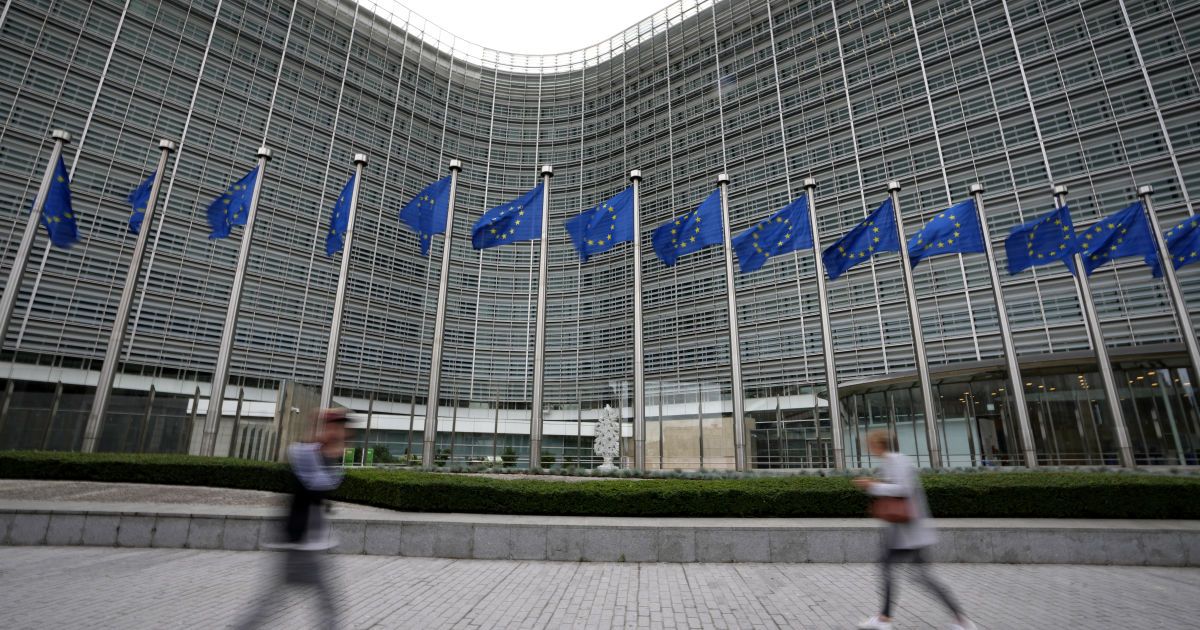
Ukraine may become an EU member in 2030 / © Associated Press
Lithuania, Denmark, and Sweden will assist Ukraine in its EU accession. Representatives of these three countries have presented a project under which they will effectively take the entire accession process under their patronage. Lithuanian Foreign Minister Kęstutis Budrys once again outlined the deadline for Ukraine’s EU membership - January 1, 2030.
This was reported in a story by TSN correspondent Oksana Tkachenko.
Lithuania, Denmark, and Sweden will help Kyiv align its legislation with European standards as quickly as possible and will provide support at all levels on the path to membership. The project’s slogan is "Ukraine in the EU - not if, but when."
Head of the EU’s Directorate-General for Neighborhood and Enlargement Negotiations, Gert Jan Koopman, reminds that the EU is not just access to benefits enjoyed by its citizens but also a significant list of rules, which every Ukrainian citizen must be prepared to follow.
“Do not forget that accession negotiations are not actually negotiations in the traditional sense. You are joining a club. And you must accept the rules of this club,” says Gert Jan Koopman, Director-General of the European Commission for Enlargement and Neighborhood Policy.
Lithuanian Foreign Minister Kęstutis Budrys shared his experience of Lithuania’s EU accession, describing how difficult the process was for the former post-Soviet country, at times resembling the swallowing of a bitter pill. However, all efforts later paid off handsomely.
“In just over 20 years, Lithuania’s economy has grown fivefold—sixfold, to be exact. Incomes have increased fivefold. It’s simply a miracle. In 2004, when we became a member, I couldn’t even imagine that we would be almost at the same level as other European capitals. And this is proof that you can do the same. The same applies to pensions. You might be surprised, but our pensioners now receive pensions five times higher than 20 years ago,” says Kęstutis Budrys.
Budrys reiterates the position of Lithuanian President Gitanas Nausėda on the clear deadline for EU accession—Ukraine must join the European family no later than January 1, 2030. This issue is directly linked to the security of all of Europe.
Currently, an active screening of Ukraine’s legislation is underway. All laws have been conditionally divided into six groups or clusters to facilitate comparison with European standards. This year, under the EU presidencies of Poland and Denmark, Ukraine has set an ambitious goal—to open at least three out of the six clusters, if not all of them.
Deputy Head of the Ukrainian Presidential Office Ihor Zhovkva admitted that Ukraine has already completed its "homework" in this matter, but the process is now stalled in Brussels.
“Yes, sometimes we have to push the EU and some member states. The Prime Minister mentioned today three clusters that have already passed the screening process. To reiterate, these are the foundational cluster, the internal market, and foreign relations—three clusters that Ukraine has already completed,” he said.
This issue is also acknowledged by EU Ambassador to Ukraine Katarína Mathernová, during her conversation with TSN.
“We are now in the process of seeking consensus among the 27 member states to take the next step and start negotiations. I believe that this year we will be on the path to opening all clusters,” she said
Those present in the discussion did not hide the fact that Hungary is responsible for the delay. In addition to its categorical refusal to provide military aid to Kyiv and its push for improved relations with Moscow, Budapest continues to invent new demands for Ukraine’s accession. Viktor Orbán even announced a referendum to ask Hungarian citizens whether they want Ukraine in the EU.
However, the survey is formulated in a manipulative way. Instead of outlining the benefits of Ukraine’s accession, Budapest presents its citizens with “seven risks” allegedly associated with Ukraine’s future membership.
Western media, citing anonymous European officials, report that Hungary’s behavior is testing the patience of many. As a result, Brussels is now looking for ways to bypass the obstacle.