
Controversial Red Cross statement: Ombudsman meets organization’s President
Dmytro Lubinets has invited the leadership of the International Committee of the Red Cross (ICRC) to visit Ukraine and witness firsthand the consequences of Russian strikes.

 Follow us on Google
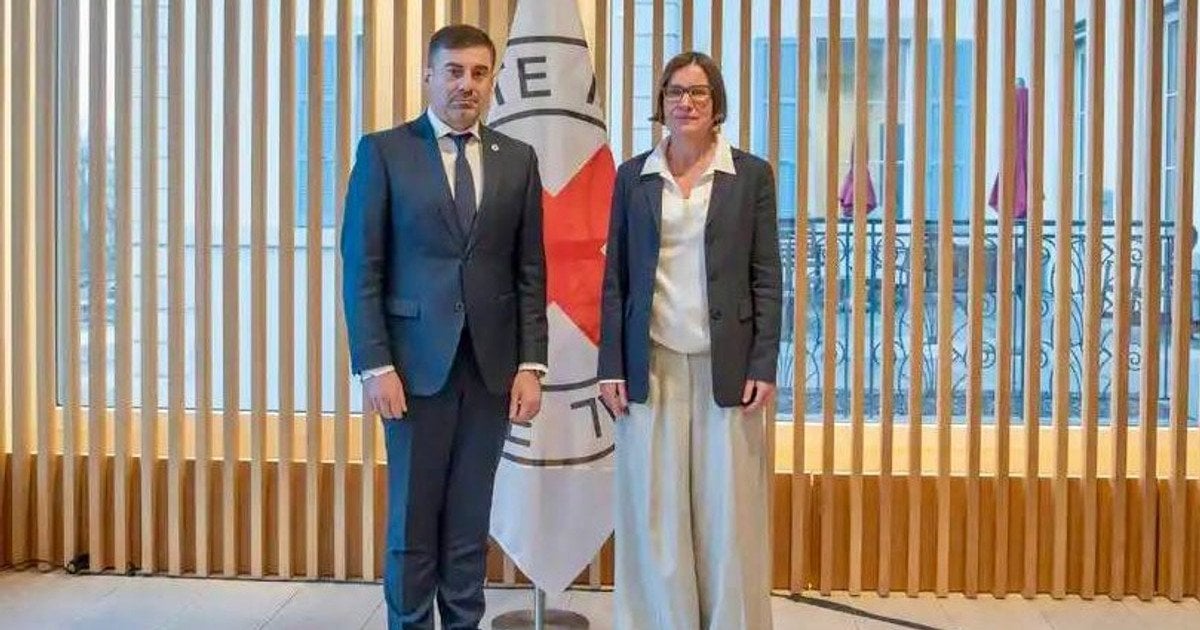
Ukraine’s Ombudsman Dmytro Lubinets and ICRC President Mirjana Spoljaric Egger
Following a controversial statement by the ICRC, in which attacks by the aggressor state were equated with strikes by Ukraine’s Defense Forces, the Ukrainian Parliament’s Human Rights Commissioner, Dmytro Lubinets, met in Geneva with ICRC President Mirjana Spoljaric Egger.
The ombudsman has shared the information on his Telegram channel.
Lubinets said he had expressed his strong disagreement and profound outrage at a statement issued by the ICRC’s regional director for Europe and Central Asia, whose signature was on the contentious document.
He emphasized that language equating the aggressor state with the defending nation was “unacceptable, and at this level — even dangerous.”
Lubinets reminded the Red Cross president that Russia is conducting a war and deliberately targeting Ukraine’s energy infrastructure, leaving millions without heating, electricity, or water amid severe winter conditions. He said attacks by the aggressor state have left Ukrainian children freezing in kindergartens, schools, on the streets, and at home.
“Russia is targeting schools, hospitals, and residential buildings. On January 9, a Russian drone struck the home of one of our colleagues. A medic, who had been saving lives after the attack, was killed. He had fled temporarily occupied Nova Kakhovka but died in Kyiv in a horrific collapse. This is not an abstract conflict but a deliberate tactic of terror against civilians,” the ombudsman cited as a concrete example of Russia’s war crimes.
Dmytro Lubinets has invited the leadership of the International Committee of the Red Cross (ICRC) to visit Ukraine and see firsthand the consequences of Russian strikes.
“For example, spending a day in our office to understand how people work under such conditions, and seeing how they live in homes where electricity is available only three hours a day, and indoor temperatures are around +7°C — similar to current temperatures on the streets of Geneva. Perhaps then the words on paper will once again reflect reality,” he said.
According to Lubinets, the meeting with the ICRC president also covered several key issues:
The ICRC’s access to Ukrainian prisoners of war and unlawfully detained civilians, including the organization’s role in verification;
Establishing an effective system for locating missing persons;
Assistance for Ukrainian citizens seeking to leave temporarily occupied territories;
Prisoner-of-war exchanges, which received significant attention.
The ombudsman has stressed that the ICRC’s foremost priority should be access to Ukrainian POWs and civilians held unlawfully by Russia.
“That is the organization’s mandate. And the lack of systematic access to our people in captivity for years has eroded trust in the ICRC,” he said.