
Taurus missiles for Ukraine: Ambassador warns of potential failure
There is a risk that Friedrich Merz may hide behind the position of the SPD and German public opinion, ultimately refusing to supply Taurus missiles to Ukraine.

 Follow us on Google
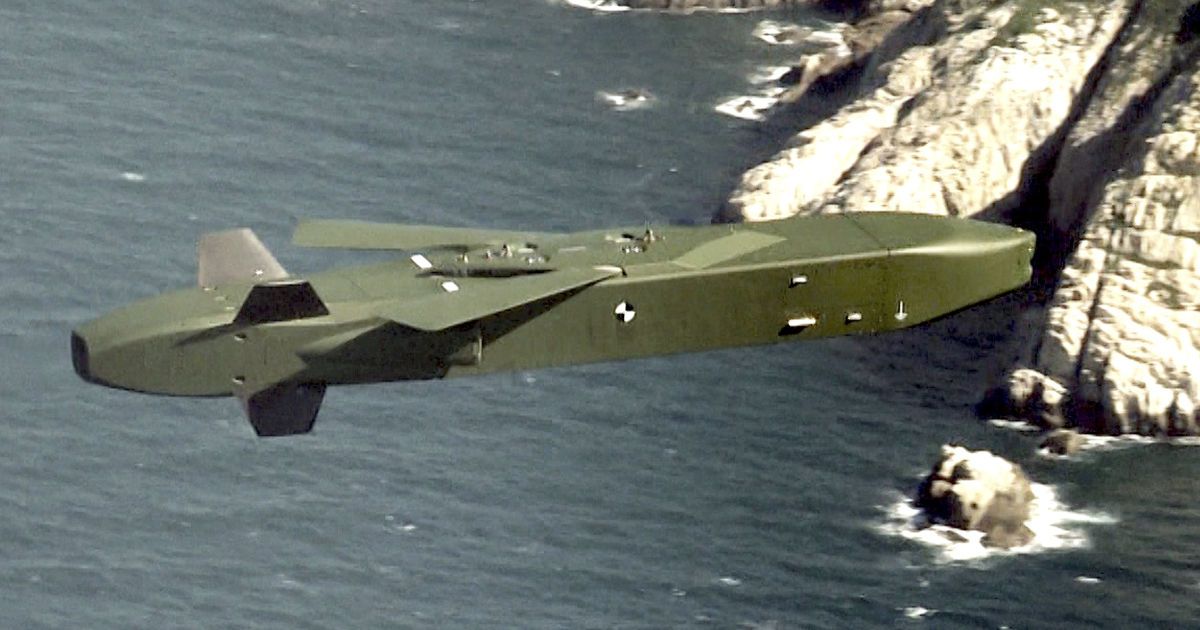
Taurus missile / © Associated Press
Ukraine’s Ambassador to Brazil, Andriy Melnyk, stated that the delivery of long-range Taurus cruise missiles to Kyiv would serve as the first litmus test for the new German coalition government led by Friedrich Merz.
The diplomat, who previously served as ambassador to Germany, said this in an interview with RBC-Ukraine.
Melnyk believes that Germany has every chance to become Ukraine’s number one partner.
Merz and German support for Ukraine
"This is a historic moment when Germany can become a true leader in Europe — not only as an economic powerhouse. The future Chancellor, Friedrich Merz, with whom we are well acquainted, has such geopolitical ambition. And now, in my opinion, Germany’s interest could be to seize the opportunity arising from the ongoing peace negotiations and assume the role of Ukraine's most important ally," the ambassador said.
In this context, he recalled that back in 2022, Merz helped Ukraine apply pressure on then-Chancellor Olaf Scholz to overcome "red lines" and provide Kyiv with heavy weaponry.
Melnyk noted that he personally knows Merz and described him as an extremely ambitious person who thinks in historical terms. The diplomat believes that Merz could go down in history as one of Germany’s most successful chancellors — especially now, as Europe and the world face their gravest situation since 1945.
"And also as a true European leader who can help save Ukraine by drastically increasing military assistance at this critical moment. At the same time, to be honest, I am not entirely confident that Friedrich Merz will actually choose this path of radical support for Kyiv," the ambassador added.
Taurus missiles — who is blocking the decision and will Ukraine receive them?
He explains that several factors are at play. One of the key issues is that the future German government will be a coalition. Merz and the Christian Democrats will partner with the Social Democratic Party (SPD) of Scholz. Most of the key SPD players will retain their government positions and influence.
"Unfortunately, while the issue of military aid to Ukraine was included in the coalition agreement, the wording is vague — it doesn’t specify quantities or timelines. This was intentional, considering the significant differences between the two coalition members. They deliberately left themselves room to maneuver. And in fact, the first litmus test for the new coalition will be whether Ukraine receives long-range Taurus missiles," Melnyk said.
According to him, the SPD has not explicitly opposed supplying Taurus missiles but has come up with dozens of arguments against it, mainly due to fear of escalation from Russia. In the ambassador's words, "It is, in fact, the Social Democrats who are sabotaging this decision."
The ambassador points out that, according to recent polls, two-thirds of German voters are against providing Taurus missiles to Ukraine. He explains this by saying that the previous government — and Scholz personally — did everything possible to scare the public into believing that such a move would mean Germany was de facto entering the war on Ukraine’s side.
However, during the election campaign and after his victory, Merz openly supported supplying Taurus missiles to Ukraine. It was, in fact, one of his campaign promises.
"Of course, he could now use the SPD's stance and public opinion as a cover to refuse Ukraine. If that happens, all hopes that Merz could become the leader of Europe and the free Western world will be lost. That would be a true failure," the Ukrainian diplomat emphasizes.