
Laser air defense has a serious flaw: Expert outlines where it works
An expert explained why laser air defense works best on ships, not on land.

 Follow us on Google
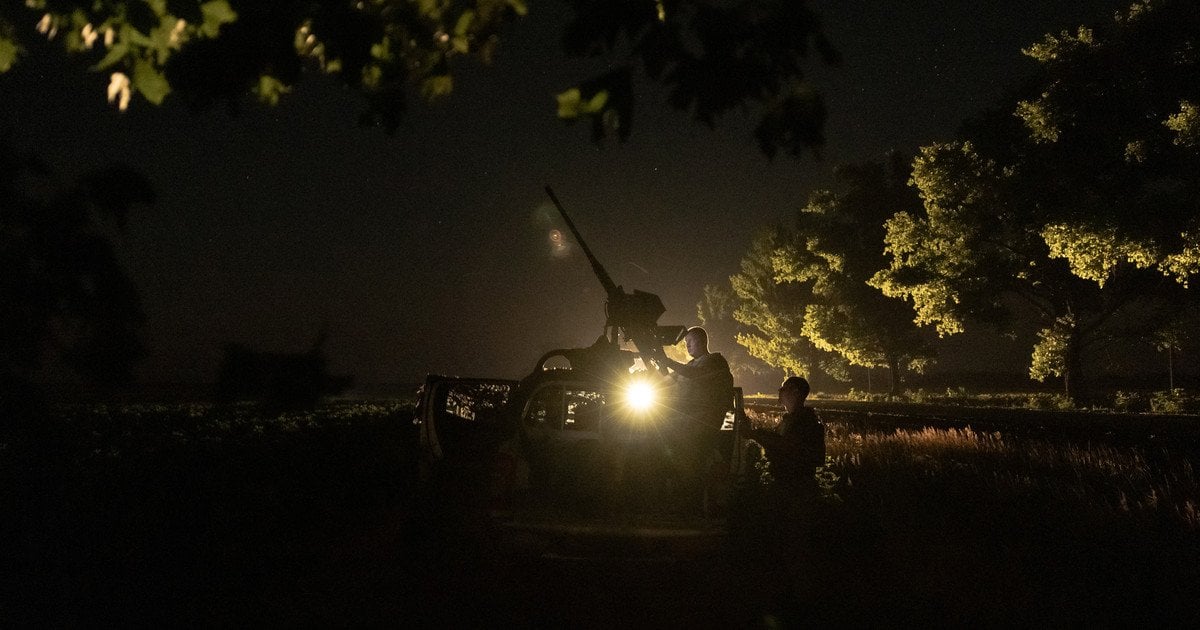
Air defense / © Getty Images / © Getty Images
Employing laser weapons to counter aerial targets is most efficient on military ships and close to major energy installations. Because of their high power requirements and limited strike range, these systems cannot yet replace main air defense systems and are only used to complement them.
Ukrainian Armed Forces reserve colonel and instructor pilot Roman Svitan expressed this view on Radio NV.
Power supply issue: where the laser works
The expert noted that a laser’s main requirement is a strong power source, making its deployment in field conditions extremely challenging.
«Laser systems were initially deployed on ships, and they are still used in some ship-based air defense units. A laser requires 50 kilowatts of electrical power. Consider a 50-kilowatt generator near a shopping centre—you’ll see the challenge. Therefore, such weapons can only be used where several tens of kilowatts are available to generate the beam,» Svitan explained.
He added that fixed energy installations or ships equipped with large diesel generators are capable of providing the power needed for these air defense systems.
Technical constraints
Svitan also said that, aside from energy demands, a key limitation of laser weapons is the difficulty of beam focusing in the atmosphere. High speeds of aerial targets significantly reduce the effective engagement range.
«Focusing a laser beam in the atmosphere is very complicated. It takes several seconds for the beam to focus. Those seconds, considering the speed of aerial targets, cover substantial distances—meters, even hundreds of meters. Focusing at 2.5–3 kilometres is very hard, so the effective range may drop to just hundreds of meters,» the expert noted.
Roman Svitan concluded that, given current technological development, laser weapons are not a «game-changer» able to shift the course of the war. Nevertheless, they are suitable as a final layer of protection for critical facilities.
«This weapon can be used near significant facilities as an additional measure to the main air defense system, rather than as a game-changer,» the expert stressed.