
Secrets of the sea "Toloka": what new underwater drones developed by Ukraine can do
For the first time, Toloka showed a family of underwater drones: from the compact TLK-200 to the giant TLK-1000, capable of delivering up to 5 tons of cargo. The drones are designed for reconnaissance, mining, mine countermeasures and even strike missions.

 Follow us on Google
Toloka
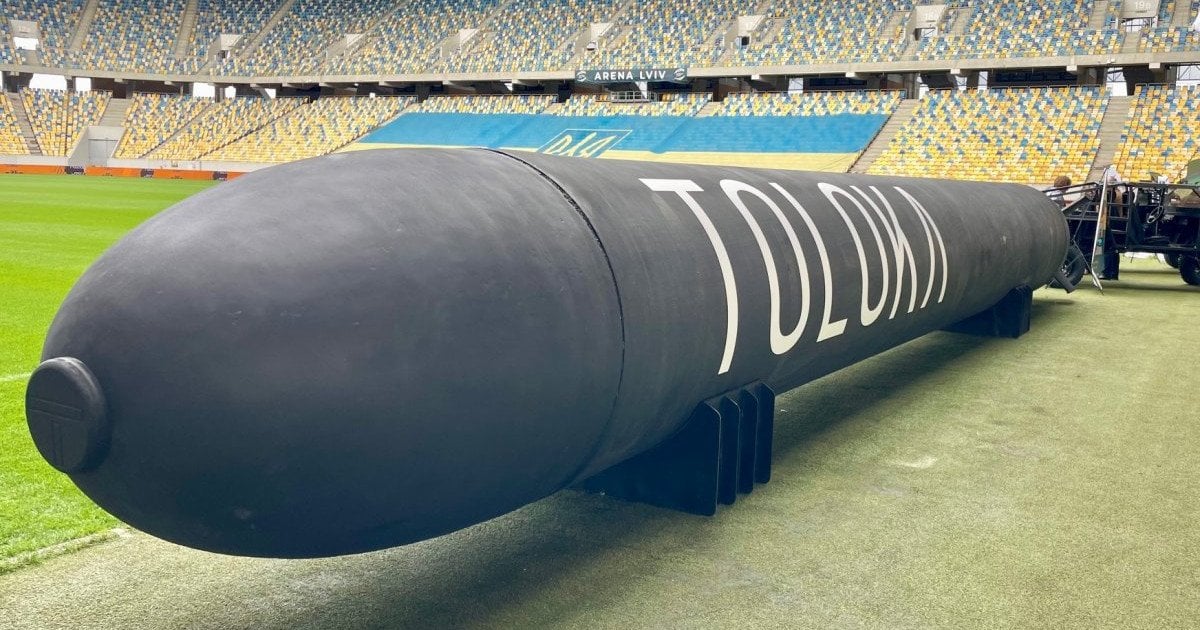
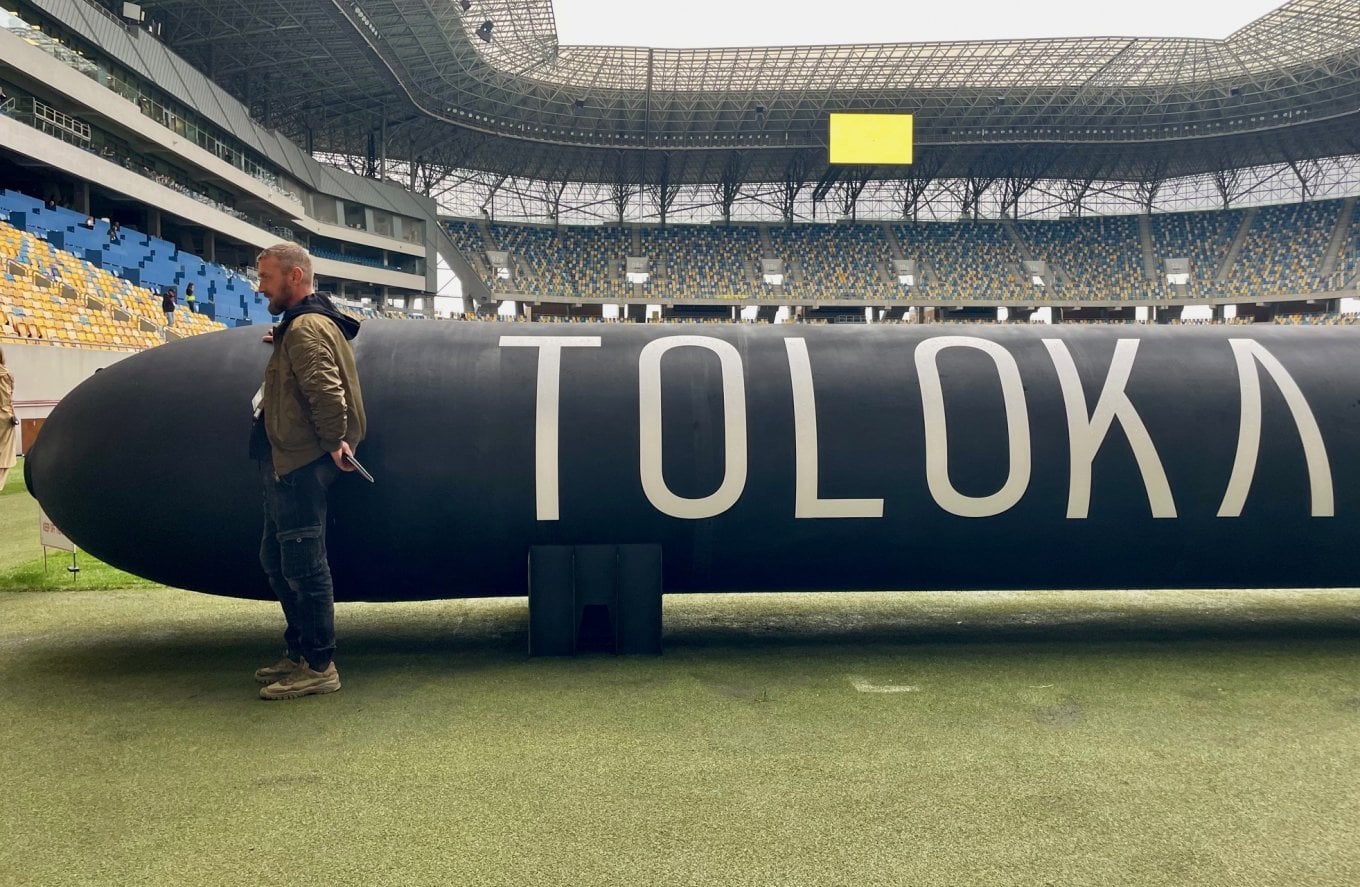
At the Defense Tech Valley 2025 exhibition in Lviv, Toloka publicly showcased the largest model in its lineup for the first time. The company presented at least three classes of underwater unmanned vehicles: the TLK-200 (Toloka 200), TLK-400 (Toloka 400) and the flagship TLK-1000 (Toloka 1000). Developers detailed the purpose, technical specifications and potential uses of each system.
Defense Express reported this.
According to company representatives, Toloka specializes in advanced unmanned underwater vehicles (UUVs) for mine countermeasures, acoustic reconnaissance and detailed seabed mapping. The drones can autonomously detect, classify and neutralize underwater mines, conduct reconnaissance and relay communications to improve the safety and efficiency of maritime operations.
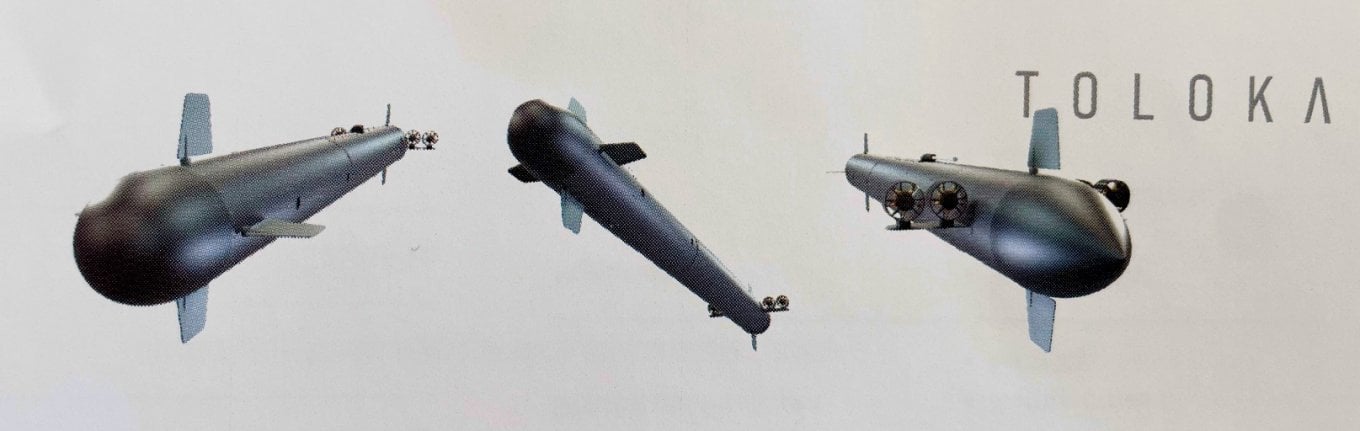
TLK-200 — compact strike and reconnaissance UUV
Toloka.
The TLK-200 is presented as a small electric autonomous vehicle for limited-distance missions. Its key specifications include:
Range up to 100 km;
Payload up to 15 kg (explosives or other cargo);
Endurance up to 15 days;
Operating depth up to 300 m;
Dimensions: approx. 200 mm hull diameter, 2.9 m length;
Electric propulsion with two motors;
Navigation: GNSS + AI-INS;
Guidance: optical camera or thermal imager, RF-source homing;
Communications: satellite radio link with FHSS for secure surface contact;
Typical tasks include reconnaissance, mining, short-range strike missions and radio-relay support.
TLK-400 — mid-range platform with larger payload
Toloka
The TLK-400 features a hybrid propulsion system and is intended for reconnaissance, mining, signal relay and strike operations. Specifications:
Range up to 1,200 km;
Payload up to 500 kg;
Endurance up to 60 days;
Operating depth up to 300 m;
Dimensions: approx. 400 mm hull diameter, 12 m length;
Hybrid drive (four electric motors plus internal combustion engine);
Navigation: AI-INS with DVL and GNSS;
Guidance: thermal imager, optical camera, RF-source homing, passive and active acoustics
Communications: satellite link with FHSS.
This platform is aimed at longer and more complex missions requiring greater payload and autonomy.
TLK-1000 — long-range «giant» for heavy transport and strike roles
The largest model, TLK-1000, is built for long-distance missions and heavy loads:
Capable of carrying up to 5 tonnes over distances of up to 2,000 km;
Endurance up to 60 days;
Operating depth up to 300 m (composite hull version) or 30 m (metal hull);
Hull diameter around 1,500 mm, length about 12 m;
Hybrid propulsion (four electric motors plus internal combustion engine);
• Guidance: thermal imager, optical camera, RF-source homing;
Navigation: GNSS, AI-INS with DVL;
Equipped with «four integrated neural networks» — optical, thermal, acoustic and inertial — for autonomous mission planning and execution;
Options for integrating special equipment for reconnaissance, mining or mapping minefields. Secrets of the sea «Toloka»: What Ukraine’s new underwater drones can do
Ukrainian company Toloka has unveiled a family of underwater drones ranging from the compact TLK-200 to the giant TLK-1000, which can carry up to five tonnes of cargo. The drones are designed for reconnaissance, mining, counter-mine operations and even strike missions.
At the Defense Tech Valley 2025 exhibition in Lviv, Toloka publicly showcased the largest model in its lineup for the first time. The company presented at least three classes of underwater unmanned vehicles: the TLK-200 (Toloka 200), TLK-400 (Toloka 400) and the flagship TLK-1000 (Toloka 1000). Developers detailed the purpose, technical specifications and potential uses of each system.
Defense Express reported this.
According to company representatives, Toloka specializes in advanced unmanned underwater vehicles (UUVs) for mine countermeasures, acoustic reconnaissance and detailed seabed mapping. The drones can autonomously detect, classify and neutralize underwater mines, conduct reconnaissance and relay communications to improve the safety and efficiency of maritime operations.
TLK-200 — compact strike and reconnaissance UUV
The TLK-200 is presented as a small electric autonomous vehicle for limited-distance missions. Its key specifications include:
Range up to 100 km;
Payload up to 15 kg (explosives or other cargo);
Endurance up to 15 days;
Operating depth up to 300 m;
Dimensions: approx. 200 mm hull diameter, 2.9 m length;
Electric propulsion with two motors;
Navigation: GNSS + AI-INS;
Guidance: optical camera or thermal imager, RF-source homing;
Communications: satellite radio link with FHSS for secure surface contact;
Typical tasks include reconnaissance, mining, short-range strike missions and radio-relay support.
TLK-400 — mid-range platform with larger payload
The TLK-400 features a hybrid propulsion system and is intended for reconnaissance, mining, signal relay and strike operations. Specifications:
Range up to 1,200 km;
Payload up to 500 kg;
Endurance up to 60 days;
Operating depth up to 300 m;
Dimensions: approx. 400 mm hull diameter, 12 m length;
Hybrid drive (four electric motors plus internal combustion engine);
Navigation: AI-INS with DVL and GNSS;
Guidance: thermal imager, optical camera, RF-source homing, passive and active acoustics
Communications: satellite link with FHSS.
This platform is aimed at longer and more complex missions requiring greater payload and autonomy.
TLK-1000 — long-range «giant» for heavy transport and strike roles
The largest model, TLK-1000, is built for long-distance missions and heavy loads:
Capable of carrying up to 5 tonnes over distances of up to 2,000 km;
Endurance up to 60 days;
Operating depth up to 300 m (composite hull version) or 30 m (metal hull);
Hull diameter around 1,500 mm, length about 12 m;
Hybrid propulsion (four electric motors plus internal combustion engine);
Guidance: thermal imager, optical camera, RF-source homing;
Navigation: GNSS, AI-INS with DVL;
Equipped with «four integrated neural networks» — optical, thermal, acoustic and inertial — for autonomous mission planning and execution;
Options for integrating special equipment for reconnaissance, mining or mapping minefields.